The Big Question Before You Start
You have an idea, a budget, and a deadline. Now comes one of the most important decisions in the whole project: do you hire your own developers, or work with an external team? Get this wrong and you can lose months and a large part of your budget. Get it right and you launch faster, spend smarter, and build on a solid foundation.
There is no universal answer. The right choice depends on your company size, timeline, budget, and long-term plans. This guide compares the three common models, explains what each really costs you in time and risk, and gives you a checklist for making a confident decision about mobile app development services saudi arabia for your business.
Option 1: Build an In-House Team
An in-house team works exclusively for your company. They sit close to the business, understand your customers deeply, and can respond quickly to internal priorities.
Advantages

- Deep knowledge of your company, brand, and customers
- Full control over priorities and day-to-day work
- Knowledge and code experience stay inside your organization
- Easier long-term culture and collaboration
Challenges
- Hiring takes time, and experienced mobile developers are in high demand
- A real product team needs several roles: product manager, designers, iOS and Android developers, backend engineers, QA testers, and DevOps
- Salaries, benefits, equipment, and management time are ongoing costs, even between projects
- Training, retention, and replacing people who leave all take effort
In-house works best for larger organizations with a long-term product roadmap and a steady stream of work. If you only need one app built once, assembling a full department is usually slow and expensive.
Option 2: Hire a Mobile App Development Company
Here you partner with a specialized team that already has the people, process, and experience. This is the most common route for startups, small and mid-sized businesses, and enterprises launching a specific product.
Advantages
- Faster start, since the team is already assembled
- Access to designers, developers, testers, and project managers in one package
- Lower upfront cost compared with building a whole department
- Exposure to lessons learned from many similar projects
- Flexibility to scale the team up or down as your needs change
Challenges
- You must manage communication and expectations carefully
- Quality varies widely between providers
- Weak contracts can create confusion about code ownership and responsibilities
- Your partner may not know your business as deeply on day one
A trusted mobile app development company saudi arabia organizations recommend can often deliver a first working version in a few months, and can bring local insight on Arabic design, payments, and user behavior that a new in-house team may still be learning.
Option 3: The Hybrid Model
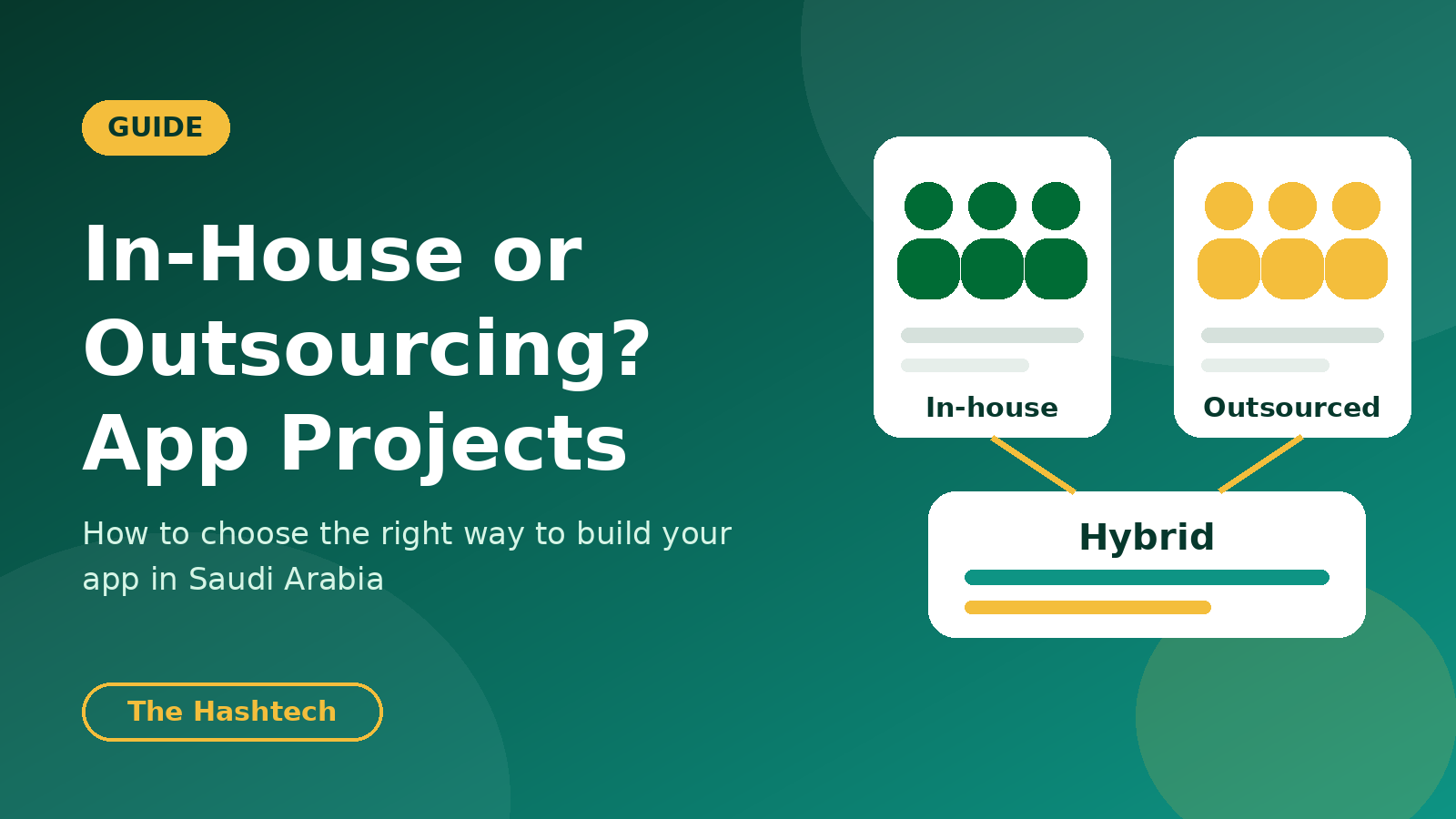
Many growing companies combine both approaches. An external partner designs the architecture, builds the first version, and sets up good practices. Later, a small in-house team takes over day-to-day improvements while the partner remains available for bigger features or peak workloads.
This model gives you speed at the start and control in the long run. It also reduces risk: you avoid hiring a full team before you know whether the product works, but you still build internal knowledge over time.
Side-by-Side Comparison
| Factor | In-house | Outsourced | Hybrid |
|---|---|---|---|
| Speed to start | Slow | Fast | Fast |
| Upfront cost | High | Moderate | Moderate |
| Control | Highest | Moderate | High |
| Flexibility | Low | High | High |
| Local market insight | Depends on hires | Depends on partner | Strong when partner is local |
| Best for | Long-term, large products | MVPs and defined projects | Growing products |
Understanding the Real Costs
Comparing costs fairly means looking beyond the headline price.
In-house costs include salaries, recruitment, equipment, software licenses, office space, management time, training, and the cost of delays when someone leaves. These continue whether or not you have a project ready.

Outsourcing costs are usually project-based or monthly. They cover design, development, testing, and project management. Ask for a phase-by-phase breakdown and clarify what happens when scope changes.
Hidden costs on both sides include app store accounts, cloud hosting, third-party services, security testing, and ongoing maintenance. Whichever path you choose, budget for life after launch, since apps need regular updates for new iOS and Android versions.
How to Evaluate Outsourcing Partners
If you decide to outsource, vet providers carefully. Check for:
- Real, live apps in their portfolio that you can download and test yourself
- Arabic and local market experience relevant to your audience
- A transparent process with milestones, demos, and written scope
- Clear ownership terms, so you receive source code, designs, and documentation
- Security practices such as testing, secure coding, and data protection awareness
- Post-launch support and maintenance options
- Client references you can speak with directly
Providers of mobile app development services saudi arabia businesses rely on will welcome these questions rather than avoid them. Treat vague answers as a warning.
Questions to Ask Before Signing
- Who exactly will work on my project, and what is their experience?
- How often will I see working progress, not just reports?
- What happens if requirements change mid-project?
- How are bugs handled after launch, and for how long are they covered?
- What are the payment terms and milestones?
- Who owns the code, designs, and accounts at the end?
What a Good Contract Should Cover
A solid agreement protects both sides. Make sure it addresses scope and deliverables, timeline and milestones, payment schedule, intellectual property and source code ownership, confidentiality, testing and acceptance criteria, warranty or bug-fix period, and support terms. Have a qualified legal professional review it before you sign, especially for larger projects.
Warning Signs
- Unusually low prices compared with other quotes
- No written scope or timeline
- Reluctance to share past work or client references
- No mention of testing, security, or documentation
- Pressure to sign quickly
- Unclear answers about who will actually do the work
A Simple Decision Guide
Choose in-house if you have a long-term product vision, ongoing development needs, a healthy budget, and time to recruit.
Outsourcing if you want to launch within months, have a defined idea, and prefer predictable costs without building a department.
Choose hybrid if you want to launch fast but plan to build internal capability as the product grows.
Frequently Asked Questions
Is outsourcing cheaper than hiring? For a single project, usually yes, because you avoid recruitment and ongoing salaries. For constant, long-term development, an in-house team can become more economical.
Will I own the code if I outsource? You should, but only if your contract says so clearly. Confirm ownership of source code, designs, and store accounts before work begins.
How long does it take to launch with a development company? It depends on scope. A focused MVP often takes around two to four months, while larger platforms can take six months or more.
Final Thoughts
The best choice depends on your budget, timeline, and long-term plans. For most businesses launching their first mobile app saudi arabia, partnering with an experienced team is the fastest and most cost-effective way to reach the market. As your product matures, you can always build internal capacity and move to a hybrid or in-house model.
Whichever route you choose, prioritize clear communication, proven experience, and a partner who treats your success as their own. Looking for expert support from a mobile apps development company in saudi arabia? Start by sharing your idea, goals, and budget, and ask for a phase-by-phase proposal.