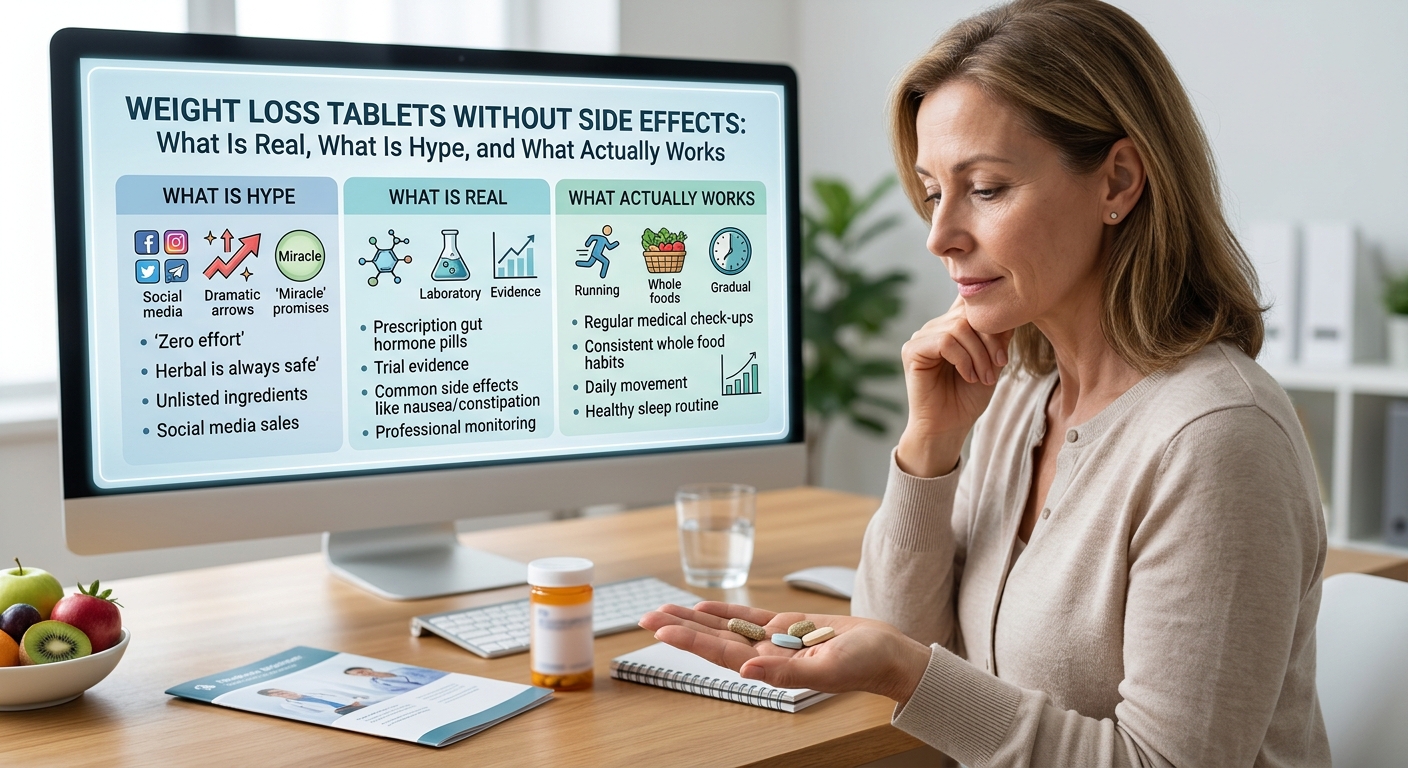
Weight loss tablets without side effects sound like the perfect answer: swallow a pill, shed the kilos, feel great. The honest truth is more interesting than the sales pitch. No medicine that changes your body is completely free of effects, but some options are far gentler than others, and a few popular “miracle” products are best avoided altogether.
Can Weight Loss Tablets Without Side Effects Really Exist?
Any substance strong enough to change appetite, metabolism or fat absorption can also cause other changes. That is simply how biology works. So when a label promises weight loss tablets without side effects, treat it as a marketing line, not a medical guarantee.
What you can realistically look for is a product that is well studied, appropriately prescribed and well tolerated by most people. Mild, temporary effects that fade as your body adjusts are very different from risks like a racing heart, dangerous blood pressure or hidden drug ingredients.
Why “Natural” Does Not Always Mean “Safe”
Many people assume herbal fat burners are harmless because they come from plants. In reality, some supplements contain high doses of stimulants, and several have been found to include undeclared ingredients that were never listed on the label. These can cause palpitations, sleeplessness, anxiety, digestive upset or interactions with other medicines.

Be especially cautious if a product:
- Promises rapid, effortless weight loss.
- Claims to work without any change in diet or activity.
- Has no clear ingredient list or dosage information.
- Relies on dramatic before-and-after photos instead of evidence.
- It is sold mainly through social media pages with no pharmacy or doctor involved.
Weight Loss Tablets Without Side Effects vs. Prescription Options
The biggest recent change in this space is the arrival of daily weight-loss pills that act on gut hormones. Regulators in the United States approved the first oral version of a well-known obesity medicine in December 2025, and a second daily pill from another drugmaker followed in April 2026. In a large trial, people on the higher dose of the newer pill lost an average of about 11% of their body weight over roughly 16 months, compared with about 2% on a dummy pill. Their blood pressure, cholesterol and waist size also improved.
That sounds impressive, and it is. But these are real medicines, and they do have side effects. The most common are digestive: nausea, loose stools, constipation or reduced appetite, which are usually strongest when the dose is first raised. In the trial, between 5% and 10% of participants stopped treatment because of side effects.
So the realistic lesson is this: modern prescription pills may be the most effective tablets available, yet they work best under medical supervision, with gradual dose changes and regular check-ups. Availability, pricing and approval status differ by country, so ask a local doctor what is legally and safely accessible where you live.
Gentler Support Options to Discuss With Your Doctor
Not everyone needs, or qualifies for, a prescription drug. If your goal is steady, sustainable weight loss with the lowest possible risk, these options are worth exploring.
Fiber supplements. Soluble fiber can increase fullness and support digestion. Introduce it slowly with plenty of water, since a sudden jump may cause bloating.

Protein-focused meals. Not a tablet, but one of the most reliable ways to curb hunger without any side effects beyond a fuller plate.
Vitamin D, iron or B12 correction. If blood tests show a deficiency, fixing it can improve energy and make activity easier, though it will not melt fat on its own.
Treating hidden causes. Thyroid problems, polycystic ovary syndrome, sleep apnea and some medicines can make weight loss harder. Addressing them can unlock progress that no supplement could.
Who Should Be Extra Careful
Some people should never experiment with weight loss pills without medical advice. This includes anyone who is pregnant or breastfeeding, people with heart disease, high blood pressure, diabetes, kidney or liver problems, a history of eating disorders, and anyone taking regular prescription medicines. Teenagers and older adults also need special guidance.
If you have ever struggled with disordered eating, speak to a healthcare professional before starting any weight management product, because the wrong approach can do real harm.
A Smarter Way to Lose Weight With Fewer Side Effects
Here is what advertisements rarely mention. The approach with the fewest side effects is also the most boring: consistent habits. Pills may help some people, but they work best as support, not a substitute.
- Aim for gradual loss. A slow, steady pace is easier to maintain and gentler on your muscles and metabolism.
- Build meals around whole foods. Vegetables, lentils, eggs, fish, yogurt and fruit keep you full on fewer calories.
- Move daily. Walking, cycling or light strength training protects muscle while fat comes down.
- Protect your sleep. Lack of sleep increases hunger hormones and strengthens food cravings.
- Track more than the scale. Waist size, energy and how your clothes fit tell a fuller story.
Questions to Ask Before You Start Any Tablet
Bring this short list to your doctor or pharmacist:
- What exactly is in this product, and is it approved or registered?
- What side effects are most common, and which ones mean I should stop?
- Will it interact with my current medicines or health conditions?
- How long should I use it, and what happens when I stop?
- What other options could work without medication?
A good professional will welcome these questions. If someone avoids answering them, take that as your cue to look elsewhere.
Warning Signs That Need Prompt Medical Help
Stop the product and seek medical advice quickly if you notice chest pain, a very fast or irregular heartbeat, fainting, severe stomach pain, persistent vomiting, yellowing of the eyes or skin, or any allergic reaction such as swelling or breathing trouble.
The Bottom Line
The search for weight loss tablets without side effects ends with a useful reality check: the safest path is not a magic capsule but a mix of medical guidance, sensible food choices, movement and patience. New prescription pills are exciting and may help people who truly need medical support, yet they come with trade-offs and should never be bought from unverified sellers. Choose evidence over hype, ask more questions than the label answers, and let your body, your doctor and your long-term goals guide the decision.