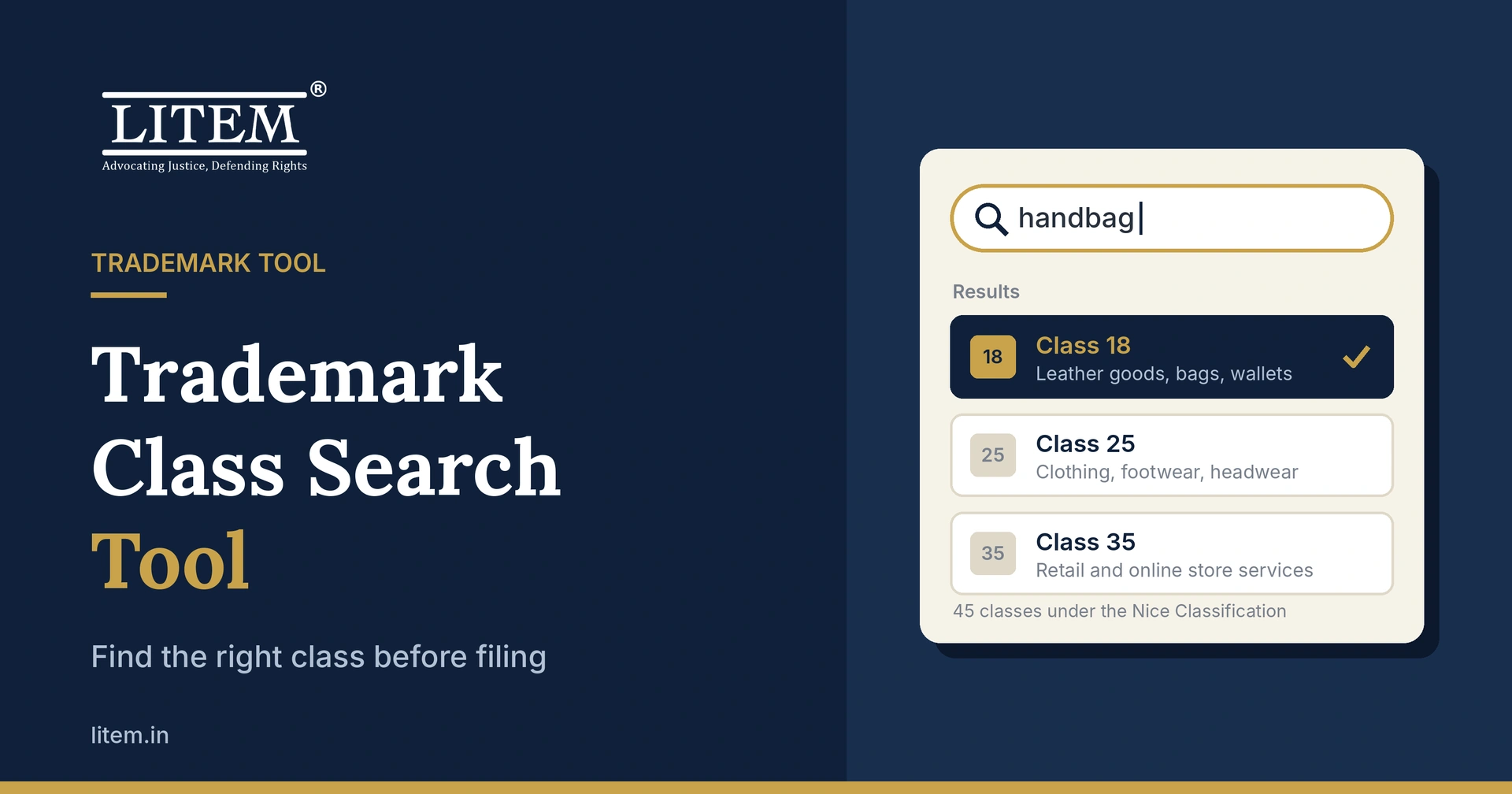
Most trademark applications in India get delayed for reasons that a trademark class search tool could catch at the start.One of the most common is picking the wrong class. A brand files for one class, assumes the protection covers everything it sells, and later discovers that a competitor has registered the same name for a related product in a different class. Fixing that usually means a fresh application, extra fees and months of waiting.
A tool like this removes most of this guesswork. Before getting into how it works, it helps to understand why classes matter in the first place.
What Is Trademark Class?
India follows the Nice Classification, an international system that sorts every product and service into 45 classes. Classes 1 to 34 cover goods, and Classes 35 to 45 cover services. A registration protects the mark only in the classes named in the application.
Each class carries its own government fee. For e-filing, the fee is ₹4,500 per class for individuals, startups and small enterprises, and ₹9,000 per class for others. Choosing classes carefully keeps the cost under control while still protecting the brand where it actually trades.

Why Finding the Right Class Is Harder Than It Looks
The full trademark class list runs into thousands of entries, and many products do not sit where people expect them to. A few examples show how easy it is to get this wrong:
Sunglasses fall in Class 9, alongside electronics, not with clothing or jewellery.
Mobile apps sold as downloads belong to Class 9, but the same app offered as an online service moves to Class 42.
A bakery selling packaged cakes needs Class 30, while its café service sits in Class 43.
Class 35 covers online stores and retail services, separate from the products they sell.
Searching through the official classification manually takes time, and the wording of each entry is often technical. This is where a search tool helps.
How the Trademark Class Search Tool Works
The Trademark Class Search Tool by Litem Legalis answers one simple question which class does a product or service belong to?
Instead of scrolling through all 45 classes, the user types in a keyword that describes the business, such as “shoes”, “skincare”, “software”, “restaurant” or “coaching classes”. The tool then shows the matching class, so the applicant knows exactly where the product or service fits.
A practical way to use it:
List every product and service the brand offers today.
Add anything planned for the next two to three years.
Search each item in the tool and note the class it falls under.
Group the results to see the final set of classes the application needs.

This takes a few minutes and gives a clear picture before the brand spends any money on filing.
Where the Tool Fits in the Registration Process
Class selection is the first real step in trademark registration. Once the classes are known, the next step is a trademark search on the IP India public database, checked within those same classes, to see whether a similar mark already exists. After that, the application is filed on Form TM-A, which can cover multiple classes in a single filing.
Getting the class right at the start also helps later. A search carried out in the wrong class can miss a conflicting mark, which then shows up as an objection under Section 11 during examination. The right class means the right search, and the right search means fewer surprises.
Who Can Use It
The tool is useful for anyone preparing a trademark application:
Startup founders checking classes before launching a brand.
Small business owners expanding into new products or services.
D2C and e-commerce sellers who sell both products and an online store service.
Students and professionals who want to understand how trademark classification works.
No legal background is needed. A plain description of the product is enough to start.
Common Class Mistakes the Tool Helps Avoid
Filing only for the main product and ignoring related items is the mistake seen most often. A clothing brand that later launches bags, perfume or an online store needs more than Class 25.
Copying a competitor’s classes is another. Two businesses in the same industry can sell very different product mixes.
Some applicants also describe their goods too broadly or too narrowly. Checking each item separately in the tool makes it easier to describe the goods accurately in the application.
Final Thoughts
The class decides what a trademark actually protects. A few minutes spent on a trademark class search before filing can save months of objections and the cost of a second application. For applicants who want to go further, Litem Legalis also publishes detailed guides on trademark registration, objections and oppositions on its website. More guides on starting and growing a brand are available in the business section of this site.