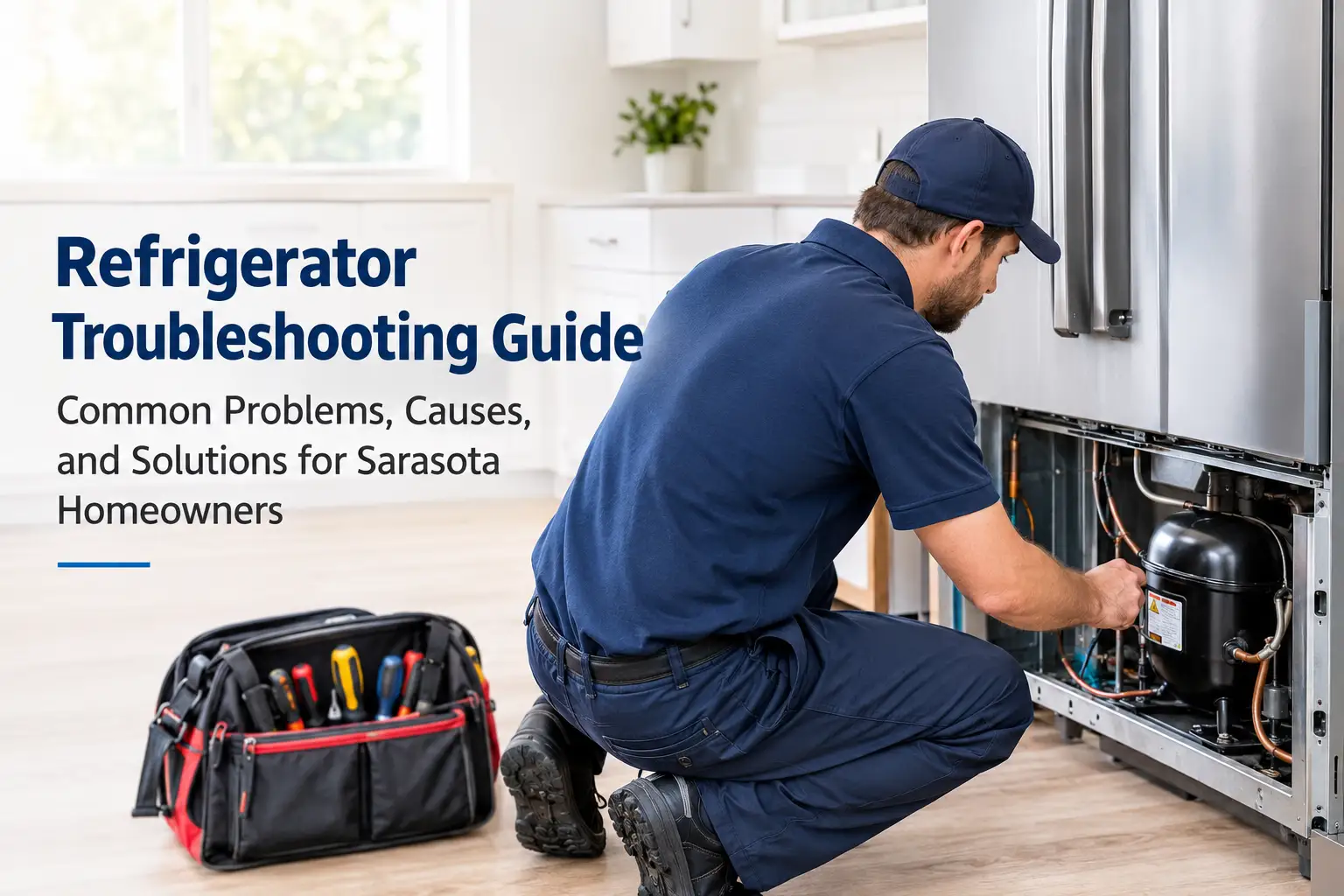
A refrigerator is one of the most important appliances in any home. It keeps food fresh, preserves frozen items, and helps prevent food waste. When it stops cooling properly, begins leaking water, or makes unusual noises, identifying the cause early can help prevent further damage and unnecessary expenses.
For homeowners in Sarasota, Florida, refrigerator problems can be especially frustrating during warm weather. High indoor temperatures, frequent door openings, humidity, and seasonal periods when a home sits unoccupied can all affect refrigerator performance. Some issues are simple enough to check at home, while others require professional diagnosis and repair.
This guide explains the most common refrigerator problems, their likely causes, practical troubleshooting steps, and the warning signs that indicate it is time to call a technician. Whether you own a standard top freezer refrigerator, a French door model, a side by side unit, or a premium built in refrigerator, understanding these symptoms can help you make informed decisions about maintenance and repairs.
Why Is My Refrigerator Not Cooling Properly?
A refrigerator that runs continuously but does not keep food cold may have an airflow problem, dirty condenser coils, a damaged door gasket, or a malfunctioning component. The first step is to determine whether the refrigerator compartment, freezer compartment, or both are affected.
The recommended refrigerator temperature is 40 degrees Fahrenheit or below, while the freezer should remain at 0 degrees Fahrenheit. Use an appliance thermometer to check actual temperatures rather than relying only on the control panel.
Check the Temperature Settings
Temperature settings can change accidentally during cleaning, loading groceries, or a power interruption. Check the refrigerator and freezer controls to make sure they are set appropriately.
After adjusting the settings, allow sufficient time for the appliance to stabilize. A refrigerator that has been unplugged, recently stocked with groceries, or left with its doors open may need several hours to return to its normal operating temperature.
If the temperature remains too high, additional troubleshooting may be necessary.
Inspect the Door Gasket
The rubber gasket around the refrigerator door creates an airtight seal that keeps cold air inside. When the gasket becomes dirty, cracked, loose, or deformed, warm air can enter the compartment and force the cooling system to work harder.
Clean the gasket gently with warm water and mild soap. Inspect the entire perimeter for visible damage and check whether the door closes completely.
If the seal is torn or no longer fits correctly, replacement may be necessary. A damaged gasket can contribute to condensation, frost accumulation, higher energy consumption, and inconsistent cooling.
Look for Blocked Air Vents
Many refrigerators circulate cold air between the freezer and fresh food compartments through internal vents. Large containers, tightly packed groceries, or ice buildup can obstruct this airflow.
Move food away from the vents and avoid overloading shelves. If the freezer is cold but the refrigerator compartment remains warm, a blocked vent, failed evaporator fan, or defrost system problem may be responsible.
If clearing the vents does not improve cooling, a technician can inspect the airflow system and related components.
Why Is My Refrigerator Leaking Water?
Water pooling beneath a refrigerator or collecting inside the fresh food compartment usually indicates a drainage problem, a water supply leak, or excessive condensation.
The location of the water can help narrow down the cause.
A Clogged or Frozen Defrost Drain
During normal operation, many refrigerators periodically melt frost from the evaporator coils. The resulting water travels through a drain tube into a collection pan, where it evaporates.
If the drain becomes blocked by food particles, residue, or ice, water may accumulate beneath the crisper drawers or leak onto the floor.
You can remove visible debris from the accessible drain opening, following the manufacturer’s instructions. Avoid sharp objects, boiling water, and forceful attempts to clear an internal drain because these can damage components.
If the drain repeatedly freezes or water continues to collect, the defrost system or drain assembly may require professional attention.
A Damaged Water Supply Line
Refrigerators with ice makers or water dispensers use a water supply line connected to the household plumbing. A loose connection, cracked tube, or damaged inlet valve can cause a persistent leak.
Inspect accessible connections for moisture, kinks, or visible damage. If water is actively leaking, shut off the refrigerator’s water supply if it is safe to do so.
Do not pull the refrigerator out forcefully, as this can stretch or damage the supply line. If the leak continues or its source is unclear, arrange an inspection before further water damage occurs.
An Overfilled Drain Pan or Excess Condensation
A drain pan collects water produced during defrost cycles. If the pan is displaced, damaged, or unable to evaporate water normally, moisture may appear beneath the appliance.
Condensation can also develop when warm, humid air enters through an improperly closed door. Check that food packages are not preventing the door from shutting and inspect the gasket for damage.
Persistent leaks should not be dismissed as a normal result of Florida’s humidity.
Why Is My Refrigerator Making Strange Noises?
Refrigerators produce some sounds during normal operation. A gentle hum, occasional clicking, water flowing through a line, or a brief crackling sound may be part of the cooling and defrost cycles.
However, a new, persistent, or unusually loud noise may indicate a component that needs attention.
Buzzing or Clicking Sounds
A refrigerator may buzz when the compressor operates, when the ice maker fills with water, or when a fan runs. Occasional clicking can also occur as components switch on and off.
Repeated clicking accompanied by a refrigerator that fails to cool may indicate a problem with the compressor start relay, electrical controls, or compressor itself.
Check that the refrigerator is standing level and that it is not touching nearby cabinets or walls. If the noise continues and cooling performance declines, avoid repeatedly switching the appliance on and off. A technician can test the starting components and determine whether the compressor is operating correctly.
Rattling or Grinding Noises
Rattling may result from loose items on top of the refrigerator, an uneven floor, or contact between the appliance and nearby cabinetry.
Grinding or scraping sounds may point to a fan blade contacting ice or a worn fan motor. Some refrigerators have evaporator fans inside the freezer compartment, while condenser fans are commonly located near the compressor.
Remove loose objects from the exterior and check that the refrigerator is stable. If a grinding sound appears to come from inside the appliance, do not remove protective panels or reach into moving components. Professional inspection can identify the source without risking damage.
Why Is the Freezer Cold but the Refrigerator Warm?
When the freezer maintains its temperature but the fresh food compartment becomes warm, the refrigerator may have a problem with cold air circulation.
Many refrigerator designs rely on a shared cooling system that distributes cold air between compartments. A fault affecting airflow can therefore cause different temperatures in the freezer and refrigerator.
A Failed Evaporator Fan
The evaporator fan moves cold air through the refrigerator’s internal passages. If the motor fails, becomes obstructed by ice, or operates intermittently, the refrigerator may not receive enough cold air.
Possible symptoms include unusual noises from the freezer, inconsistent temperatures, and food spoiling in the refrigerator while frozen items remain solid.
Some fan motors stop when the door is open, so a lack of fan noise with the door open does not necessarily indicate a fault. Avoid bypassing door switches or accessing internal electrical components.
Ice Blocking the Airflow System
Excessive frost around internal vents can restrict the movement of cold air. This may occur when a door is left open, the door gasket leaks, or the automatic defrost system fails.
If frost repeatedly returns after the appliance has been properly defrosted, simply removing the ice will not resolve the underlying cause. A technician may need to inspect the defrost heater, temperature sensors, drain, and control system.
Why Is Frost Building Up Inside the Freezer?
A light amount of frost may occur under certain operating conditions, but thick ice on freezer walls, shelves, or food packages can indicate a problem.
Warm Air Entering Through the Door
Every time the freezer door opens, warm air enters and introduces moisture. If the door remains open or the gasket does not seal properly, that moisture can freeze on interior surfaces.
Check whether food packages are preventing the door from closing. Clean the gasket and inspect it for cracks, gaps, or areas that have become detached.
A Defrost System Failure
Frost naturally develops on the evaporator during refrigeration. An automatic defrost system periodically removes that frost to maintain airflow.
If the defrost heater, sensor, thermostat, or control board fails, ice may accumulate until air circulation becomes restricted. The freezer may then struggle to maintain consistent temperatures even though the compressor continues running.
A professional diagnosis can identify the failed component and prevent repeated ice buildup.
Why Is My Refrigerator Ice Maker Not Producing Ice?
An ice maker depends on a reliable water supply, appropriate freezer temperatures, and properly functioning mechanical and electrical components. When ice production stops, several issues may be responsible.
Check the Water Supply
Confirm that the refrigerator’s water supply valve is open and that the accessible supply line is not kinked. A closed valve or restricted line can prevent the ice maker from filling.
If the refrigerator has a water filter, check whether it needs replacement according to the manufacturer’s schedule. A clogged filter can reduce water flow.
Inspect the Ice Maker Settings
Some models have an ice maker switch or control setting that can be turned off accidentally. Check the user manual to confirm the correct operating mode.

Also, make sure the ice bin is positioned correctly and is not obstructing the mechanism.
Consider a Faulty Water Inlet Valve
If the water supply is available but the ice maker does not fill, a defective inlet valve, frozen fill tube, or failed ice maker assembly may be responsible.
These components require testing to determine the actual cause. Replacing parts without confirming the fault can add unnecessary expense.
What Should You Do If Your Refrigerator Stops Working After a Power Outage?
Power interruptions and electrical surges can affect refrigerator controls, starting components, and other electrical systems. After an outage, the appliance may fail to restart normally or may operate without cooling effectively.
Check the Power Supply Safely
Confirm whether the home’s electricity has returned and check whether the refrigerator’s display or interior light operates.
If the outlet or circuit breaker appears to be the problem, follow safe household electrical practices. Never handle exposed wiring, open electrical panels inside the appliance, or repeatedly reset a breaker that trips again.
If you notice a burning smell, sparks, smoke, or a damaged power cord, keep away from the appliance and disconnect power only if it is safe to do so. Seek qualified assistance.
Protect Food During the Outage
Food safety is important when refrigeration stops. According to standard food safety guidance, a closed refrigerator generally keeps food at a safe temperature for approximately four hours without power. A full freezer may maintain its temperature for approximately 48 hours, or about 24 hours when half full, provided the doors remain closed.
Use a food thermometer to check temperatures whenever possible. Perishable food that has been above 40 degrees Fahrenheit for two hours or longer should generally be discarded. Do not taste food to decide whether it is safe.
After electricity returns, verify that the refrigerator resumes cooling and monitor its temperature before assuming that everything is back to normal.
When to Arrange Professional Inspection
If the refrigerator has power but does not cool, displays an error code, clicks repeatedly, or behaves differently after a surge, the cause may involve the control board, compressor starting system, or another electrical component.
A qualified technician can inspect the appliance and identify the fault before recommending a repair. Homeowners who need help diagnosing these symptoms can explore professional refrigerator repair options in Sarasota.
How Sarasota’s Climate Can Affect Refrigerator Performance
Refrigerators in Sarasota operate in a warm, humid environment for much of the year. Although modern refrigerators are designed for normal household conditions, surrounding temperatures, ventilation, and maintenance can influence how efficiently they operate.
High Temperatures and Poor Ventilation
When a refrigerator is installed in a warm room or has insufficient clearance around its ventilation areas, the cooling system may have to work harder to remove heat.
Keep the appliance within the installation clearances specified by the manufacturer. Avoid storing items against ventilation openings or placing heat producing appliances too close to the refrigerator.
If the refrigerator is located in a garage, confirm that the model is rated for the temperatures it experiences there. Not every refrigerator is designed to operate reliably in an unconditioned Florida garage.
Humidity and Door Seal Problems
High humidity can increase condensation when warm air enters a refrigerator. Frequent door openings, damaged gaskets, and improperly closed doors can make this problem worse.
Wipe away excess moisture, check the door seals regularly, and avoid leaving doors open while unloading groceries. If condensation persists despite these steps, the appliance may have a sealing or temperature control issue that needs further investigation.
Seasonal Homes and Extended Absences
Sarasota has many seasonal residents who leave their properties unoccupied for extended periods. Before leaving a home, check the refrigerator manufacturer’s instructions for extended absences.
If the refrigerator will remain in operation, inspect accessible water line connections, confirm that the ice maker is functioning correctly, and consider how a power interruption would be detected while nobody is home.
If you plan to switch the refrigerator off, remove perishable food, clean and dry the interior, and follow the manufacturer’s recommendations for leaving the doors open to prevent mold and odors. This is particularly important in Florida’s humid climate.
Refrigerator Maintenance That Can Prevent Common Problems
Regular maintenance can help reduce avoidable breakdowns and support reliable cooling. The following practices are useful for many household refrigerators.
Clean the Condenser Coils
Dust and pet hair can accumulate on condenser coils and restrict heat transfer. Depending on the refrigerator design, these coils may be underneath or behind the appliance.
Check the manufacturer’s instructions before cleaning. Disconnect power where required, use an appropriate soft brush or vacuum attachment, and avoid bending the coils or damaging nearby wiring.
Some models have enclosed or maintenance free condenser systems that should not be accessed by homeowners. If you cannot safely reach the coils, have a technician inspect them.
Check Door Seals Regularly
Inspect the gasket for dirt, cracks, loose sections, or visible gaps. Clean it gently and make sure the door closes without obstruction.
A damaged gasket can contribute to excessive compressor operation, condensation, frost buildup, and inconsistent temperatures.
Maintain Proper Food Storage
Avoid blocking internal air vents with large containers or tightly packed groceries. Allow sufficient space for cold air to circulate and close the doors promptly after use.
Do not place large quantities of hot food inside the refrigerator at once. Divide leftovers into smaller, shallow containers so they cool more efficiently.
Monitor Refrigerator Temperatures
Use an appliance thermometer to verify that the refrigerator remains at or below 40 degrees Fahrenheit and the freezer stays near 0 degrees Fahrenheit.
Check the temperatures periodically, particularly after a power interruption, extended absence, or change in appliance performance.
When Should You Repair or Replace a Refrigerator?
Deciding whether to repair an appliance or purchase a replacement depends on its age, condition, repair cost, energy efficiency, and the nature of the fault.
A relatively new refrigerator with a failed fan motor, door gasket, or water inlet valve may be worth repairing. An older appliance with repeated breakdowns or an expensive compressor failure may require a more careful financial comparison.
Signs That Repair May Be the Better Choice
Repair may be a sensible option when the refrigerator is otherwise in good condition, the problem involves a replaceable component, and the estimated cost is reasonable compared with replacement.
Consider the following factors:
- The refrigerator has a history of reliable operation.
- The repair addresses a specific, identifiable fault.
- Replacement parts are available.
- The total repair cost is substantially lower than purchasing a comparable refrigerator.
- The appliance has not required frequent repairs in recent years.
Signs That Replacement May Be Worth Considering
Replacement may make more financial sense when a refrigerator is approaching the end of its expected service life, has recurring problems, or requires an expensive sealed system repair.
Compare the repair estimate with the cost of a replacement, including delivery, installation, disposal, and any changes needed to accommodate a different appliance.
Do not assume that every older refrigerator needs replacing or that every newer model should be repaired. A proper diagnosis and a clear estimate make the decision easier.
Frequently Asked Questions About Refrigerator Troubleshooting
Why Is My Refrigerator Running but Not Getting Cold?
Common causes include dirty condenser coils, a damaged door gasket, blocked airflow, a failed fan motor, or a problem with the compressor or cooling system. Check the temperature settings and ensure that vents are clear. If the appliance continues running without reaching a safe temperature, arrange a professional inspection.
How Long Should I Wait for a Refrigerator to Cool After Adjusting the Settings?
Allow several hours for temperatures to stabilize, depending on the model, the amount of food inside, and how long the doors have been open. Follow the manufacturer’s instructions and use a thermometer to confirm that the refrigerator reaches a safe temperature.
Is It Normal for a Refrigerator to Run Continuously?
A refrigerator may run for extended periods during hot weather, after loading groceries, or when its doors are opened frequently. However, continuous operation combined with poor cooling, unusual noises, or excessive condensation may indicate a problem with airflow, the door seal, or a cooling component.
Why Is There Water Under My Refrigerator?
Possible causes include a clogged defrost drain, a leaking water supply line, a damaged inlet valve, or a displaced drain pan. If the water is near an electrical connection, avoid touching the wet area or appliance components and seek assistance.
Can I Repair a Refrigerator Myself?
Basic checks such as adjusting temperature settings, cleaning accessible coils, inspecting door seals, and removing items blocking vents are generally suitable for homeowners when performed according to the manufacturer’s instructions.
Electrical components, compressor problems, refrigerant leaks, and sealed system repairs require specialized knowledge and equipment. These repairs should be handled by an appropriately qualified professional.
How Quickly Should I Address a Refrigerator That Is Not Cooling?
Address the problem as soon as possible because perishable food can become unsafe when temperatures rise. Keep the doors closed, monitor the temperature, and transfer vulnerable food to safe refrigeration when necessary. If the refrigerator cannot maintain a safe temperature, arrange repair promptly.
Get Reliable Refrigerator Troubleshooting and Repair in Sarasota
A refrigerator that leaks, produces excessive frost, makes unusual noises, or fails to maintain a safe temperature should not be ignored. Simple checks can resolve some problems, but persistent symptoms often indicate a component that needs professional diagnosis.
The most effective approach is to identify the underlying cause before replacing parts or deciding to purchase a new appliance. Regular maintenance, correct temperature settings, unobstructed airflow, and properly sealed doors can also help reduce avoidable problems.
Elite Appliance Repair Sarasota provides appliance repair services for homeowners across Sarasota and nearby communities, including Siesta Key, Longboat Key, Gulf Gate, and Palmer Ranch. The service process includes diagnosing the problem and explaining the repair price before work begins.
For information about the company’s repair services, service areas, and scheduling options, visit the Elite Appliance Repair Sarasota website.
If your refrigerator is no longer cooling properly, leaking water, or making unfamiliar noises, start with the basic troubleshooting steps in this guide. If the problem continues, a professional diagnosis can help you understand the available repair options and make a practical decision for your home.