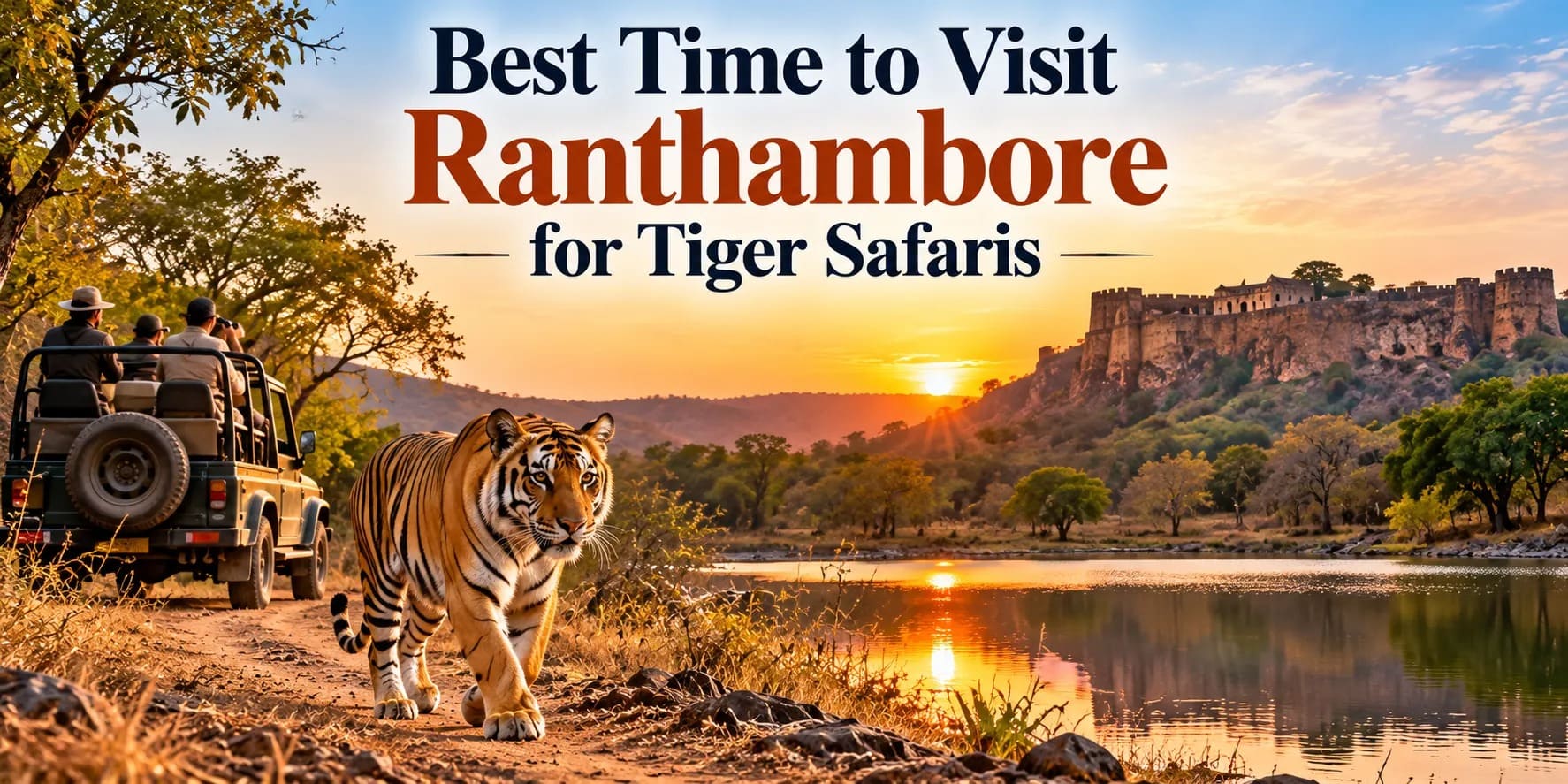
Ranthambore offers something quite different from the forts, palaces and busy markets that Rajasthan is famous for. Here, the focus shifts to forests, lakes, wildlife and the possibility of seeing a Bengal tiger moving through its natural habitat.
Located near Sawai Madhopur, Ranthambore National Park is one of Rajasthan’s best-known wildlife destinations. The reserve is home to tigers along with leopards, sloth bears, hyenas, deer, nilgai, monkeys and numerous bird species.
For travellers planning their first safari, the biggest question is often simple: when should you go?
The answer depends on weather, comfort and the kind of wildlife experience you want.

Understanding the Ranthambore Safari Season
Ranthambore National Park is generally open for tourism from October to June. The remaining months are affected by the seasonal closure of the park for tourism activities. Current rules and safari availability should always be checked before finalizing travel plans.
The safari season can broadly be divided into cooler months and hotter months.
October through March is generally easier for travellers who are not comfortable with intense heat. April through June is much warmer but can offer a different type of wildlife experience.
There is no single month that guarantees a tiger sighting. Wildlife is unpredictable, and that is part of what makes a safari different from ordinary sightseeing.
October: A Fresh Beginning for Wildlife Travel
October is an attractive month for travellers who want to visit Rajasthan after the hotter part of the year.
Temperatures begin to become more manageable, especially compared with the peak summer months. The surrounding landscape can also feel more refreshed after the rainy period.
This is a good period for combining Ranthambore with other Rajasthan destinations. A traveller could spend several days in Jaipur before travelling to Sawai Madhopur for wildlife activities.
For international visitors arriving in India during autumn, October can therefore be a practical starting point for a Rajasthan itinerary.
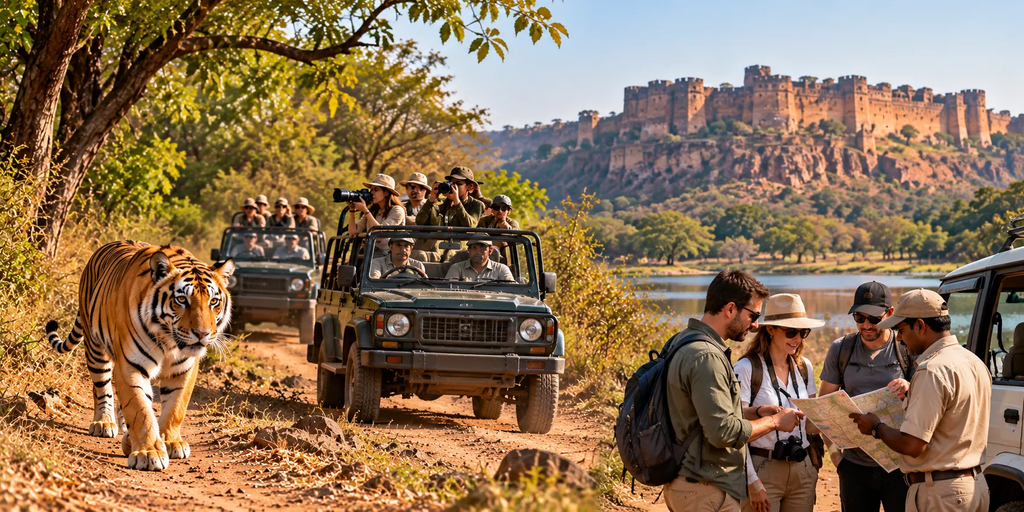
November to February: Cooler and Comfortable
The winter months are among the most popular periods for tourism in Rajasthan. Rajasthan Tourism describes October through March as the cooler part of the year and notes that winter generally provides pleasant conditions for visiting the state.
For a Ranthambore Tiger Safari Tour, this means comfortable daytime conditions, but early morning drives can still be cold.
A simple layered outfit works well. You can remove a sweater or jacket as the morning warms up.
These months are particularly suitable for travellers who want to combine wildlife with sightseeing. After the safari, you can continue your India holiday in Jaipur, Agra, Delhi, Pushkar or Udaipur.
March: A Transition Month
March sits between the cooler winter period and the hotter summer.
Days start becoming warmer, but the extreme heat of May and June has not yet arrived. This can make March useful for travellers who want reasonably comfortable sightseeing and a wildlife-focused experience.
If you are creating a longer itinerary, March also allows you to balance outdoor activities with cultural sightseeing.
The important point is not to plan every activity during the middle of the day. Early mornings and evenings are often more comfortable.
April to June: Hotter but Interesting
Summer is not for everyone.
Rajasthan can become extremely hot between April and June, and temperatures can reach very high levels.
However, some wildlife enthusiasts intentionally choose this period because animals may be easier to observe near water sources when the weather is hot.
The experience is demanding, though. Travellers should be prepared for strong sunlight and high temperatures. Light clothing, sun protection and plenty of water are important.
If you are travelling with children, older family members or anyone who finds extreme heat uncomfortable, the cooler months may be a better choice.
What Can You See Besides Tigers?
It is easy to think that Ranthambore is only about tigers. It is not.
The reserve supports a variety of wildlife. Rajasthan Tourism lists species such as sloth bear, leopard, caracal, jackal, fox, hyena, mongoose, sambar, chital and nilgai, along with many birds.
Birdwatchers can also enjoy the park’s lakes, trees and open areas.
This is why travellers should not judge a safari only by whether a tiger appeared. A leopard crossing the road, a large sambar calling from the forest or a group of birds around a water body can all make a drive worthwhile.
The Importance of Patience on Safari
Wildlife does not follow an itinerary.
You might drive for a long time without seeing a large animal. Then, suddenly, your guide may notice movement in the vegetation or hear an alarm call.
The best approach is to stay patient and observe the environment.
Look at the trees, listen for calls and watch the behaviour of deer and monkeys. Experienced guides often use these clues to understand what may be happening nearby.

Even when a tiger remains hidden, you are still experiencing a real forest ecosystem.
How to Plan Your Safari Days
If your schedule allows, consider staying for at least two nights around Ranthambore.
This gives you the possibility of taking more than one game drive. Every drive is different because weather, animal movement and route conditions change.
Rajasthan Tourism’s suggested itineraries include both morning and evening game drives, noting that these periods can have cooler temperatures and active wildlife.
The exact safari timings and access rules can change, so travellers should check the current official information before their visit.
Booking Your Safari
Safari permits are regulated, and advance planning is sensible, especially during popular travel periods.
The Rajasthan Forest Department provides an online permit and booking facility for Ranthambore Tiger Reserve.
International travellers should avoid leaving safari arrangements until the last moment when possible. Your safari dates need to fit with your hotel stay and transportation schedule.
A local travel company can also coordinate the safari with the rest of your itinerary.
Getting to Ranthambore
Sawai Madhopur is the main gateway for visitors travelling to Ranthambore. Rajasthan Tourism notes that Sawai Madhopur is connected by rail with major Indian cities, while road travel is also available. Jaipur Airport is approximately 150 to 170 kilometres away.
For international travellers, a common option is to include Ranthambore between Jaipur and Agra.
For example:
Delhi → Agra → Jaipur → Ranthambore
Another option is:
Delhi → Agra → Ranthambore → Jaipur → Udaipur
The best route depends on flight schedules, travel dates and the number of days available.
Adding Ranthambore to India Tour Packages
Ranthambore can add variety to an India holiday.
Many visitors arrive expecting a trip focused mainly on monuments and cities. Adding a wildlife destination changes the pace. After exploring historic forts and palaces, you can spend a couple of days surrounded by forests and open landscapes.
When comparing India Tour Packages, check whether the itinerary includes enough time for the safari itself. A rushed visit may leave little room for multiple drives.
Also look at transportation, hotel location, meals and sightseeing arrangements. These practical details can make a major difference to the overall trip.
Why Choose Heritage Route Travels?
Heritage Route Travels is a Jaipur-based India travel company offering private and customized tours for international travellers.
A local operator can help connect different parts of an itinerary without making the traveller manage every transfer separately. For a Rajasthan holiday, this can include chauffeur-driven travel between Jaipur, Ranthambore and other destinations.
The itinerary can also be planned around personal interests. Someone interested mainly in wildlife may want more time in Ranthambore, while another traveller may prefer a stronger focus on heritage, food and local culture.
The idea is simple: build the trip around the traveller rather than trying to fit every visitor into exactly the same schedule.
What to Carry on a Safari
A few basic items can make the safari more comfortable:
- Lightweight and comfortable clothes
- Warm layers during winter mornings
- Sunglasses
- Sunscreen
- Hat or cap
- Comfortable shoes
- Drinking water
- Camera and spare batteries
- Binoculars, if available
- Any personal essentials you normally carry while travelling
Avoid carrying unnecessary items into the vehicle and follow the instructions provided by safari staff.
Respecting the Forest
Ranthambore is a protected wildlife environment, so responsible behaviour matters.
Do not shout at animals, play loud music or ask the driver to move too close to wildlife. Avoid feeding animals and follow all park rules.
A respectful safari protects both visitors and wildlife. It also helps preserve the natural setting that makes Ranthambore special.
Final Thoughts
Choosing the Best Time to Visit Ranthambore for Tiger Safaris depends largely on your comfort with weather and your travel goals. October to March is generally more comfortable for many visitors, while April to June offers hotter conditions and can provide interesting opportunities to observe wildlife around water.
A well-planned Ranthambore Tiger Safari Tour should include enough time for more than one safari whenever possible. Keep expectations realistic, listen to your guide and enjoy the wider wildlife experience rather than focusing only on a tiger sighting.
When included in suitable India Tour Packages, Ranthambore adds a completely different dimension to a holiday that may already include Delhi, Agra, Jaipur and other Rajasthan destinations.
With local planning from Heritage Route Travels, international visitors can combine wildlife, heritage and cultural sightseeing into a practical private India itinerary.