Blacksmithing is a demanding craft that combines heat, strength, precision, and experience. Whether you are shaping hot metal at a forge, grinding steel, or working with hand tools, the right protective clothing can make a major difference. A leather blacksmith apron is one of the most useful pieces of protective gear for anyone who spends time in a metalworking environment.
Designed to provide coverage across the front of the body, a quality leather apron helps protect clothing and skin from sparks, metal particles, dirt, and everyday workshop wear. At the same time, it can provide convenient storage for small tools and accessories.
What Is a Leather Blacksmith Apron?
A leather blacksmith apron is a heavy-duty protective apron made from leather and designed specifically for workshop and metalworking environments. Unlike lightweight kitchen or fabric aprons, blacksmith aprons are generally constructed with durability in mind.

The leather acts as a strong barrier between the wearer and common workshop hazards. A well-designed apron can cover the chest, waist, and upper legs while allowing enough freedom of movement for bending, hammering, and working around an anvil.
Why Leather Is a Good Choice for Blacksmithing
Leather has been used for protective workwear for generations because of its durability and practical characteristics. It can handle demanding workshop conditions better than many lightweight fabrics.
A good leather apron can help protect against flying sparks, sharp edges, dust, and general abrasion. It also tends to become more comfortable with use as the material naturally develops its own character.
For blacksmiths who regularly work around high temperatures and metalworking tools, leather offers a useful combination of protection, toughness, and traditional workshop style.
Protection Around the Forge
The forge is one of the most important parts of a blacksmith’s workspace, but it is also an area where sparks and hot particles can become airborne. A leather apron provides an additional layer of protection over the front of the body.
It should not be considered a replacement for proper safety equipment, however. Blacksmiths should still use suitable gloves, eye protection, footwear, hearing protection, and other protective equipment appropriate to the task.
Heavy-Duty Construction
A blacksmith apron needs to withstand regular movement and physical work. For this reason, construction is just as important as the leather itself.
Look for features such as reinforced stitching, strong straps, durable hardware, and securely attached pockets. These details can help an apron perform better during repeated workshop use.
The thickness of the leather should also suit the work being performed. A heavier apron may provide greater durability, while a slightly lighter design can offer improved flexibility.
Comfort and Freedom of Movement
Protection is important, but an apron should not make blacksmithing uncomfortable. A poorly designed apron can restrict movement when you bend over, lift tools, or move around an anvil.
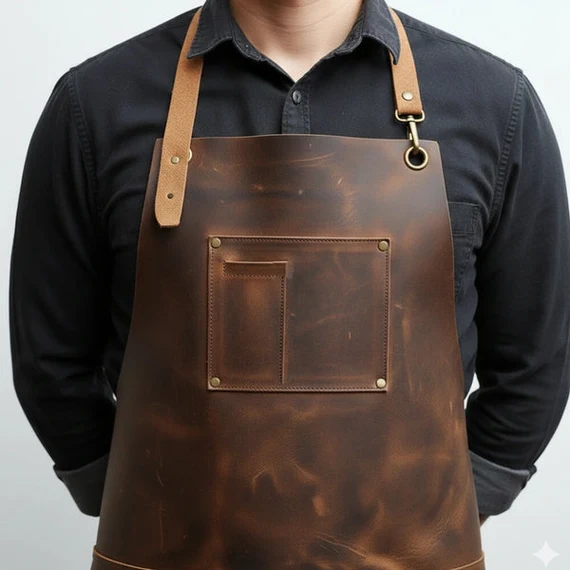
Adjustable shoulder or waist straps can make it easier to achieve a comfortable fit. Cross-back straps are another popular option because they can distribute the weight of the apron more evenly across the body.
Before choosing an apron, consider your usual working position and how much movement your craft requires.
Useful Pockets for Blacksmiths
Some leather blacksmith aprons include large front pockets designed to hold frequently used workshop accessories. Depending on the design, these pockets can be useful for items such as measuring tools, pencils, markers, or small hand tools.
However, pockets should be used carefully around a hot forge. Avoid placing flammable materials or objects that could become dangerously hot inside them.
A simple pocket layout is often better than an apron overloaded with storage compartments.
Full-Length vs Waist Aprons
Blacksmith aprons come in different shapes and lengths. A full-length apron offers more coverage and can be useful for demanding forging and fabrication work.
A shorter waist-style apron may be more convenient for lighter workshop tasks where maximum leg coverage is not necessary.
The best choice depends on the type of metalworking you perform, your working environment, and the level of coverage you prefer.
How to Choose the Right Leather Blacksmith Apron
When shopping for a leather blacksmith apron, consider several factors before making a decision.
Leather Quality
Choose leather that feels durable and suitable for heavy workshop use. The material should be strong without being so stiff that it prevents natural movement.
Fit
An apron should cover the areas you want protected without becoming unnecessarily bulky. Adjustable straps make it easier to customize the fit.
Stitching
Pay attention to the stitching around straps, pockets, and other high-stress areas. Reinforced stitching can improve long-term durability.
Hardware
Buckles, rivets, rings, and other hardware should be securely attached and appropriate for repeated use.
Coverage
Consider whether you need protection mainly across the torso or prefer a longer design that covers more of your legs.
Caring for Your Leather Apron
Proper care can help extend the life of a leather blacksmith apron. After working, remove loose dust and debris with a soft brush or dry cloth.
Keep the apron stored in a dry, ventilated location. Avoid leaving it wet or exposed to unnecessary moisture for long periods.
Leather conditioning may also be useful depending on the type of leather and the manufacturer’s recommendations. Always use a conditioner appropriate for the specific leather rather than applying random oils or chemicals.
Most importantly, inspect the apron regularly. Check the straps, stitching, rivets, and leather for signs of serious wear or damage.
Leather Apron vs Fabric Apron
Fabric aprons can be comfortable and lightweight, but they may not provide the same level of durability as a purpose-built leather apron in demanding metalworking environments.
Leather is generally favored when abrasion resistance and rugged construction are priorities. Fabric may be more suitable for cleaner or lighter workshop tasks.
For serious forging work, choosing protective clothing specifically designed for the environment is more important than simply choosing the cheapest apron available.
Can Beginners Use a Leather Blacksmith Apron?
Absolutely. A leather blacksmith apron is not only for experienced professionals. Beginners can benefit from wearing appropriate protective clothing from the start of their blacksmithing journey.
Learning safe workshop habits early makes it easier to build good practices as skills develop. A comfortable apron can also make long sessions at the forge more practical.
Beginners should focus on fit, coverage, comfort, and overall construction rather than simply choosing the thickest apron available.
Style and Workshop Character
Beyond protection, leather develops a distinctive appearance over time. Scratches, marks, and changes in texture can give an apron a unique character.
For many craftspeople, this is part of the appeal. A well-used leather apron becomes connected to the work performed in it and can eventually feel like a personal part of the workshop.
The combination of traditional craftsmanship and practical design makes leather aprons popular among blacksmiths, metalworkers, welders, and other skilled trades.
Final Thoughts
A leather blacksmith apron is a practical investment for anyone working regularly with hot metal, tools, and a forge. Its combination of durable leather, useful coverage, adjustable construction, and traditional workshop design makes it a valuable part of protective workwear.
When choosing one, focus on leather quality, fit, stitching, straps, coverage, and comfort. Most importantly, remember that an apron is only one part of workshop safety. Proper eye protection, gloves, footwear, ventilation, and safe working practices remain essential.
With the right apron and responsible workshop habits, you can work more comfortably while giving your clothing and body an additional layer of protection during demanding blacksmithing projects.