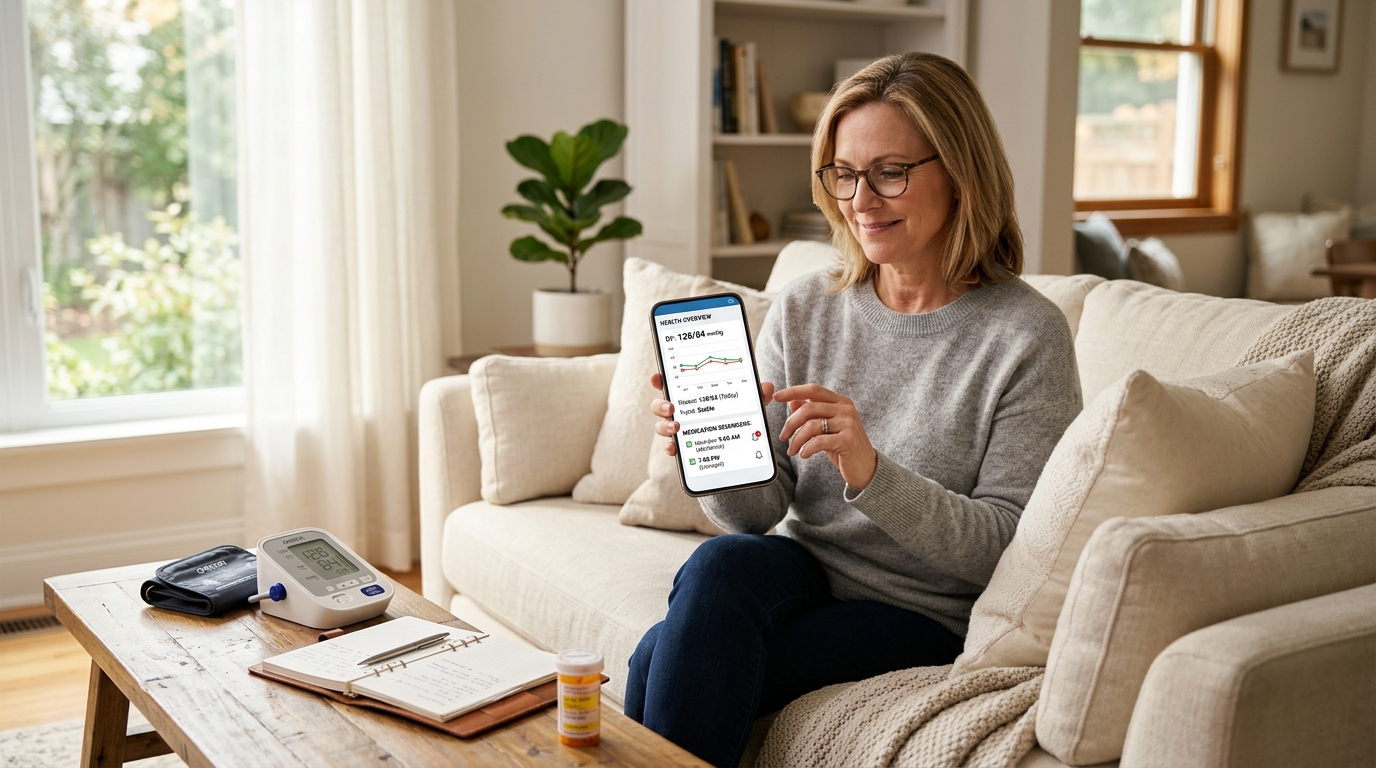
Keeping track of your health is not always as simple as it sounds. Between work, family responsibilities, doctor appointments, and daily medication, important details can easily slip through the cracks. For people managing long-term health conditions, even small tasks such as recording blood pressure or remembering a prescription can become part of a busy routine.
This is one reason digital health tools are becoming a practical part of everyday life. Instead of relying entirely on paper notes or memory, people can use their phones to organize health information, set reminders, and review their progress. A home health monitoring app can help bring these tasks together, making personal health management easier to maintain at home.
The goal is not to replace medical care. It is to make the everyday work of looking after yourself more organized and less stressful.
Why Home Health Monitoring Matters
Home health monitoring allows people to keep an eye on selected health measurements without having to visit a clinic every time they want to record a reading. Depending on their needs, they may monitor blood pressure, blood glucose, weight, or other measurements recommended by a healthcare professional.

Having these records in one place can make it easier to notice changes over time. For example, someone who checks their blood pressure regularly may want to compare readings from different days rather than rely on memory. A clear record can also help them explain their observations during a medical appointment.
A digital tool can make this process more convenient. With a home health monitoring app, users can record information as part of their normal routine instead of searching through notebooks or loose pieces of paper.
However, recording a measurement is only one part of the process. Readings need to be understood in context, and unusual results should be discussed with an appropriate healthcare professional.
Making Daily Health Tracking More Practical
Keeping Blood Pressure Records in One Place
Blood pressure readings can vary throughout the day. Activity, stress, caffeine, medication, and the way a measurement is taken can all affect the result. This is why keeping a consistent record can be useful for people who have been advised to monitor their blood pressure.
A blood pressure tracker app offers a convenient way to record readings and review previous results. Rather than trying to remember whether a measurement was higher last week, users can check their history and identify patterns worth discussing with their doctor.
For more useful records, it helps to follow a consistent routine. Sit quietly before measuring, use the monitor correctly, and follow the instructions provided by your healthcare professional. Record the date, time, and any other details that may be relevant.
An app can support this routine, but it should not independently diagnose a condition or encourage users to change prescribed medication.
Understanding Changes in Everyday Measurements
Blood pressure is not the only measurement people may need to monitor. Some individuals also track blood glucose, particularly when managing diabetes under medical supervision.
A glucose and blood pressure tracker can help users keep these records organized alongside other relevant health information. Having a clear history may make it easier to prepare for appointments and discuss how daily routines relate to recorded measurements.
A health record becomes more useful when it includes accurate information. Entering readings promptly, checking units, and avoiding estimates can reduce confusion later.
People should also remember that different measurements have different meanings. Blood glucose results, for example, may need to be interpreted in relation to meals, medication, activity, and the testing method. A digital log provides information, but clinical interpretation remains important.
Building a Reliable Health History
A health vitals log app can help people maintain a record of their measurements over weeks or months. This can be particularly helpful when a healthcare professional requests regular monitoring or wants to review changes between appointments.
The same principle applies to anyone who wants to track vital signs app records as part of a structured home-care routine. The most useful approach is to record only the measurements that are relevant to the person’s needs and follow the recommended schedule.
It is also worth checking how an app stores information, whether records can be exported, and what privacy protections are available. Health information is personal, so users should understand who can access it and how it is handled.
Medication Management Without the Daily Confusion
Monitoring health measurements is only one side of home care. Medication routines can be equally challenging, especially when several prescriptions have different instructions.
Some medicines need to be taken at particular times, while others may have specific instructions relating to food or other medicines. Keeping everything straight can become difficult when a person has a busy schedule or manages prescriptions for a family member.
Why Medication Reminders Can Help
A medication schedule app can help users organize medication times and review their daily routine. Instead of depending entirely on memory, they can refer to a schedule and use available reminders to stay organized.

For families caring for an older relative, a pill reminder app for family can also help coordinate responsibilities. One person might arrange a prescription refill, while another helps a relative follow the schedule provided by their healthcare professional.
The important thing is to keep the information accurate. Medication names, doses, and instructions should be entered carefully and checked against the current prescription or pharmacist’s guidance.
Reminders are useful prompts, but they cannot confirm that a medicine was actually taken. Users should avoid recording a dose as completed unless they know it was taken.
Staying Ahead of Prescription Refills
Running out of a regular medicine can disrupt a person’s routine. This is particularly frustrating when a prescription requires advance planning, a pharmacy visit, or contact with a healthcare provider.
A refill reminder app can help users keep an eye on their remaining supply and plan ahead. By checking refill dates before medication runs low, they may have more time to contact the pharmacy or arrange any necessary prescription renewal.
Refill planning is especially important for people taking several medicines. Availability, prescription validity, and pharmacy processing times can vary, so reminders should be treated as planning aids rather than guarantees that a prescription is ready.
Supporting Family Members Through Shared Care
Family caregiving often involves many small responsibilities. Someone may need to remember an appointment, check whether a prescription needs renewing, or help a parent record a health measurement.
When several people are involved, information can become scattered across text messages, phone calls, and handwritten notes. A shared and clearly organized system can make communication easier, provided everyone understands their responsibilities.
Tools that help families track medications for multiple people can be useful when caring for children, older adults, or relatives who need assistance with daily medication routines. Keeping each person’s information separate helps reduce the risk of confusing one person’s prescription with another’s.
Before using shared features, families should check how access permissions work. Each person should have access only to information they are authorized to see, and sensitive details should be handled respectfully.
It is also helpful to agree on a simple process. Decide who checks medication supplies, who updates the record after a prescription changes, and who contacts the healthcare professional when questions arise. Clear communication matters just as much as the technology itself.
Choosing a Health App That Fits Your Routine
Not every health app will suit every household. Some people need a simple place to record blood pressure, while others want medication reminders and support for managing more than one person’s information.
Before choosing a tool, consider what you actually need. Look for an interface that is easy to understand, a straightforward way to review previous entries, and reminders that can be adjusted to your routine. If you plan to share information with a clinician or caregiver, check whether the app supports that process safely.
Privacy deserves equal attention. Review the app’s privacy policy, data-sharing practices, security features, and account controls before adding personal health details.
MedKeep is one option people can explore when looking for digital support with everyday health and medication organization. You can learn more about the platform at https://medkeep.app and assess whether its available features meet your needs.
The best choice is the one that fits your actual routine, rather than one with the longest list of features.
Making Small Changes That Last
Digital health tools work best when they support habits people can realistically maintain. Trying to record every possible measurement or set too many reminders may make a routine harder to follow.
Start with the tasks that matter most. Record the measurements recommended by your healthcare professional, review your medication schedule, and set reminders for the things you are most likely to forget. Once the routine feels manageable, you can make adjustments where needed.
It is also useful to review your records before appointments. Write down questions, note any missed measurements, and tell your healthcare professional about changes you have noticed. Honest, consistent information is more valuable than a record that looks perfect but leaves out important details.
A home health monitoring app cannot take the place of a doctor, pharmacist, or appropriate medical assessment. What it can do is reduce some of the everyday effort involved in staying organized.
When health records, medication reminders, and family responsibilities are easier to manage, people can spend less time searching for information and more time focusing on their well-being. Sometimes, better health organization begins with a small habit and a simple tool that makes it easier to keep going.