Introduction
The 2048 game is a popular number-based puzzle game that combines mathematics, logic, strategy, and entertainment. It was created by Italian developer Gabriele Cirulli in March 2014. The game quickly became popular around the world because of its simple rules, attractive design, and challenging gameplay. Although it looks easy at first, achieving the goal of creating a tile with the number 2048 requires careful planning, logical thinking, patience, and decision-making skills.
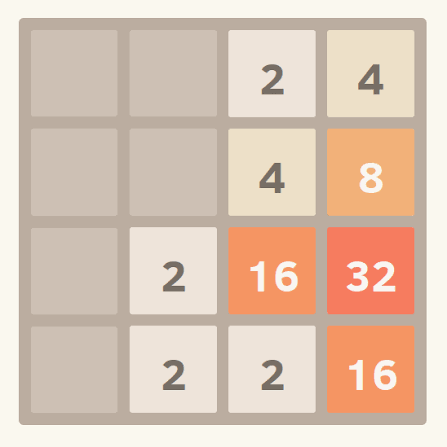
The game is played on a square grid containing numbered tiles. Players move these tiles in four directions: up, down, left, and right. When two tiles with the same number collide, they merge into a single tile with twice their original value. For example, two tiles numbered 2 combine to form 4, two tiles numbered 4 combine to form 8, and so on. The main objective is to create a tile numbered 2048. However, players can continue playing even after reaching this goal, attempting to achieve higher scores and larger tiles.
The 2048 game is more than a source of entertainment. It encourages strategic thinking, develops problem-solving abilities, and teaches players the importance of planning ahead. Its combination of simplicity and complexity has made it an influential example of how a small, well-designed game can attract millions of players.
History and Development of the 2048 Game
The 2048 game was developed by Gabriele Cirulli, a web developer from Italy. He created it as a free browser-based game in March 2014. The game was inspired by earlier puzzle games, particularly Threes! and similar number-merging games. Cirulli designed 2048 as a personal project to explore the concept of combining numbers on a grid.

One of the main reasons for its rapid success was its accessibility. Players did not need expensive equipment, special software, or advanced gaming knowledge. They could simply open the game in a web browser and begin playing. Its basic controls made it suitable for people of different ages and backgrounds.
Within a short period, the game spread through social media, online communities, and word of mouth. Many players shared their scores and challenged their friends to reach the target tile. The game was also adapted for smartphones and tablets, allowing people to play it almost anywhere.
Another important feature of its development was its open-source nature. The original game’s source code was made publicly available, encouraging other developers to create their own versions. As a result, numerous adaptations appeared, including versions with different colors, themes, grid sizes, and number systems.
The success of 2048 demonstrates that a game does not always require advanced graphics or complicated storylines to become popular. A simple idea, combined with thoughtful design and an engaging challenge, can create a memorable gaming experience.
Rules and Basic Gameplay
The 2048 game is generally played on a grid consisting of four rows and four columns, giving players sixteen spaces for tiles. At the beginning, the board contains two tiles, usually numbered 2 or 4. The remaining spaces are empty.
The player uses the arrow keys on a computer or swipes in different directions on a touchscreen to move the tiles. Each move shifts all the tiles as far as possible in the selected direction. When two tiles with the same value meet during a move, they merge into one tile with twice the value.
For example, if two tiles numbered 2 are moved together, they become a single tile numbered 4. Two tiles numbered 4 can merge into 8, while two tiles numbered 8 can merge into 16. This process continues as the player combines larger and larger numbers.
After a valid move, a new tile, usually a 2 or 4, appears in an empty space. This addition makes the game increasingly difficult because the available space gradually decreases. Players must therefore combine tiles efficiently while preserving enough empty spaces to continue moving.
The primary objective is to create the 2048 tile. However, the game can continue after this achievement, and players may try to create tiles such as 4096 or 8192.
The game ends when the board is full and no legal move remains. This happens when no adjacent tiles can be merged and the player cannot move any tile into an empty space. Therefore, players must constantly balance the desire to create larger numbers with the need to maintain enough space for future moves.
Strategy and Logical Thinking
Although the rules of 2048 are simple, success depends heavily on strategy. Random movements may produce some progress, but they often lead to a crowded board and an early defeat. Effective players think ahead and consider how each move will affect the arrangement of tiles.
One widely used strategy is to keep the largest tile in a corner. For example, a player may decide to keep the largest tile in the bottom-right corner and arrange smaller tiles around it. This approach creates a stable structure and makes it easier to combine tiles in a planned sequence.
Another useful strategy is to concentrate movements in two main directions. A player who keeps the largest tile in the bottom-right corner might frequently move tiles downward and to the right. Occasional movements in other directions may be necessary, but unnecessary changes can disrupt the arrangement.
Players should also pay attention to the order of the numbers. Ideally, tiles near the largest tile should form a descending sequence. For instance, a large tile of 1024 may be placed beside a tile of 512, followed by 256 and 128. This arrangement makes it easier to combine matching tiles without destroying the overall structure.
Planning is equally important. Before making a move, players should consider whether it will create useful combinations, block important spaces, or separate tiles that need to be merged. Sometimes, the best move is not the one that immediately increases the score but the one that preserves future opportunities.
However, no strategy guarantees success in every game. New tiles appear in empty spaces, and their positions can disrupt even a well-planned board. Players must therefore remain flexible and adjust their strategies according to changing conditions.
Mathematical Concepts in 2048
Mathematics is at the heart of the 2048 game. Every tile represents a power of two, beginning with 2, 4, 8, 16, and continuing upward. Each number is twice the value of the previous number.
The sequence can be represented as follows:
2, 4, 8, 16, 32, 64, 128,…
Mathematically, the values are powers of two. The tile numbered 2048 is equal to 211. This means that eleven successive doublings from 1 produce 2048, although the game begins with tiles of 2 or 4 rather than 1.
The merging process illustrates exponential growth. As the tiles increase, the numerical values rise rapidly. For example, a tile numbered 256 is only eight merging levels below 2048 because:

256×23=2048
Thus, three successful doublings can transform 256 into 512, then 1024, and finally 2048.
The game also involves addition, numerical comparison, spatial reasoning, and an understanding of sequences. Players must recognize which tiles can combine and identify the most efficient way to arrange them.
Another mathematical concept related to the game is combinatorial complexity. Even though the board contains only sixteen spaces, the number of possible arrangements and sequences of moves is extremely large. Each move changes the board, and the appearance of a new tile introduces further uncertainty.
This makes 2048 an interesting example of how elementary mathematical rules can generate a complex problem. It also demonstrates that mathematics can be engaging when presented through interactive activities rather than traditional exercises alone.
Benefits of Playing the 2048 Game
One major benefit of 2048 is that it encourages logical thinking. Players must examine the current board, identify possible combinations, and select moves that support their long-term goals. Repeated practice may help players become more comfortable with structured problem-solving.
The game can also improve planning skills. A successful player does not focus only on the immediate result of a move. Instead, the player considers several possible consequences and attempts to preserve useful options for the future. This resembles planning in many real-life situations, where decisions must be made with incomplete information.
Another potential benefit is improved concentration. Players need to observe the entire board, track the positions of important tiles, and notice opportunities for merging. Losing focus for even a short time may result in an ineffective move that disrupts the arrangement.
Patience is another important lesson. Reaching 2048 usually requires many moves, and players may fail several times before achieving the target. They learn that progress often comes through repeated effort, observation, and gradual improvement rather than immediate success.
The game may also provide a useful form of mental recreation. Its short rounds make it convenient for brief breaks, while its increasing difficulty keeps players interested. Unlike games that depend primarily on quick reactions, 2048 gives players time to consider their choices.
Furthermore, teachers and parents can use number-merging games as informal learning activities. Such games may help introduce powers of two, numerical patterns, and basic strategic reasoning. Nevertheless, the educational value depends on how the game is used, and playing it alone does not guarantee measurable improvements in general intelligence or academic performance.
The Role of Technology and Digital Entertainment
The popularity of 2048 reflects the important role of technology in modern entertainment. The game can be played on computers, smartphones, and tablets, demonstrating how digital platforms make interactive experiences widely accessible.
Its minimal design is an important part of its appeal. The game does not require realistic graphics, complicated sound effects, or a detailed storyline. Instead, it uses a grid, simple colors, and clear numbers to communicate its rules. This allows players to concentrate on solving the puzzle.
The game also illustrates the influence of online communities. Players share screenshots of high scores, discuss strategies, and develop alternative versions. This participation helps a simple game remain interesting beyond its original release.
Additionally, 2048 demonstrates the possibilities of browser-based game development. A relatively small program can offer an engaging experience without requiring large downloads or powerful hardware. This makes the game an example of how creative programming and effective user-interface design can be more important than technological complexity.
However, the convenience of digital games also creates certain challenges. Players may become distracted from studying, working, exercising, or spending time with family if they play for too long. The game should therefore be treated as a recreational activity rather than a replacement for important responsibilities.
Challenges and Limitations
Despite its advantages, the 2048 game has some limitations. One major challenge is that the appearance of new tiles introduces uncertainty. Even when players make sensible decisions, an unfavorable tile placement may reduce their available options.
The game can also become repetitive. Its basic mechanics remain largely the same throughout a session, and some players may lose interest after extended play. Others may become frustrated when a nearly successful attempt ends because the board becomes full.
Another limitation is the possibility of excessive gaming. Because each round is short and restarting is easy, players may repeatedly attempt to improve their scores. Without self-control, this behavior can consume more time than intended.
Furthermore, while the game encourages strategic thinking within its own rules, its benefits should not be exaggerated. Being good at 2048 does not automatically mean that someone will become better at every type of problem-solving task. The skills developed in a game may not transfer directly to unrelated activities.
To enjoy the game responsibly, players should establish reasonable time limits, take breaks, and balance digital entertainment with physical activity, education, and social interaction.
Conclusion
In conclusion, the 2048 game is a simple yet challenging puzzle that combines mathematics, logic, strategy, and digital entertainment. Created by Gabriele Cirulli in 2014, it became widely popular because of its accessible rules, minimalist design, and increasingly difficult gameplay.
The objective of combining numbered tiles to reach 2048 encourages players to plan carefully, recognize patterns, manage limited space, and adapt to changing circumstances. Its mathematical foundation introduces powers of two and exponential growth, while its strategic demands make every move an important decision.
Beyond entertainment, the game can provide opportunities to practise concentration, patience, and logical reasoning. It also demonstrates how a small software project can achieve worldwide recognition through an effective idea and thoughtful design. At the same time, players should remember that gaming is most beneficial when enjoyed in moderation.
Ultimately, the 2048 game shows that meaningful challenges do not always require complicated rules or expensive technology. Sometimes, a simple grid of numbers is enough to create an engaging experience that tests the mind, rewards careful planning, and encourages players to keep learning from their mistakes. Its lasting appeal lies in the balance between simplicity and difficulty, making it an excellent example of the creativity and educational possibilities of modern digital games.