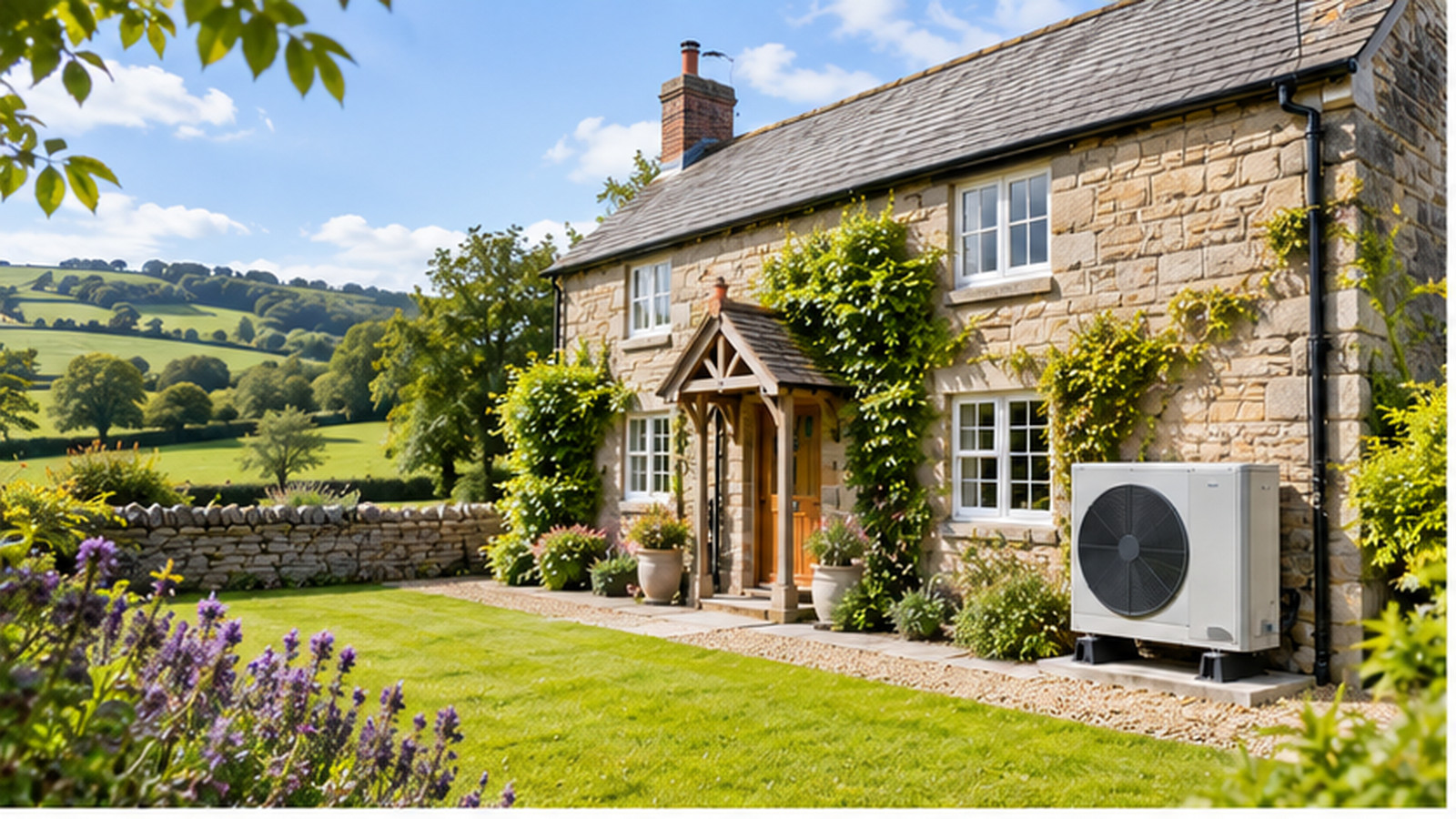
Many rural households use heating oil or liquefied petroleum gas (LPG) because a mains gas connection is unavailable. If that sounds familiar, the boiler upgrade grant UK search may lead you to a significant opportunity: an enhanced heat-pump grant for certain off-gas-grid homes in England and Wales.
The amount is not automatically available to every countryside property. Eligibility depends on your existing heating, gas connection, choice of equipment and the scheme rules. Here is what to check before making a financial commitment.
What is the £9,000 grant?
The government’s Boiler Upgrade Scheme (BUS) contributes towards the upfront cost of qualifying low-carbon heating systems. Most eligible air-to-water and ground source heat pumps receive a £7,500 grant. However, a temporary £9,000 amount applies to qualifying off-gas-grid properties replacing oil or LPG heating with an eligible air-to-water or ground source heat pump.
The enhanced amount has been available since 21 July 2026 and is scheduled to run until 31 March 2027. This is a grant for the heating installation, not a general payment for installing a replacement oil boiler.
Which rural homes may qualify?
Start with these questions:
- Is the property in England or Wales? BUS does not cover Scotland or Northern Ireland.
- Do you own the property? Owners of eligible homes, including certain rented homes, can apply through an installer.
- Is there a mains gas connection or gas meter record? A home may not meet the scheme’s off-grid definition simply because its occupants do not currently use gas.
- Are you replacing an oil or LPG heating system? The uplift depends on the existing fuel, not just a rural postcode.
- Is the proposed system eligible? The £9,000 uplift applies to qualifying air-to-water or ground source systems, not the £2,500 air-to-air category.
Your MCS-certified installer should verify the technical requirements and evidence rather than guessing from a photograph or postcode.
What if your home uses coal or electric heating?
Some rural properties currently use coal or direct electric heating. They may still be able to access the standard £7,500 grant for a qualifying air-to-water or ground source heat pump, but that does not mean they receive the enhanced £9,000 oil/LPG amount.
Biomass boilers are a separate category, normally carrying a £5,000 grant where the rural, off-grid and emissions criteria are met. It is worth comparing equipment suitability rather than pursuing a grant amount in isolation.
Work out the real project budget
The grant reduces an eligible installation price; it does not guarantee a free heat pump or a particular payback period. Costs can include the heat pump, hot-water cylinder, pipework, radiator changes, electrical work and any groundwork.
As a simple illustration, a qualifying system quoted at £15,000 with the £9,000 grant would leave £6,000 to pay. That is an example, not a market quotation or a promise of eligibility. Ask for a detailed, property-specific quote.

Check whether the installer has included every necessary component. Also ask about annual servicing, warranties, electricity tariffs and the expected running costs for your home. Heat pumps can be efficient, but savings vary with property heat loss, design and energy prices.
Why insulation matters in off-grid houses
A stone cottage and a modern insulated bungalow can have very different heat requirements. Good loft insulation, sensible draught-proofing and appropriate wall insulation can improve comfort and reduce the heating demand placed on the new system.
An installer should carry out a heat-loss calculation and discuss whether your existing radiators or heating controls need adjusting. An Energy Performance Certificate is no longer a mandatory BUS prerequisite for applications made from 28 April 2026, but that does not make a building survey unnecessary.
How is the funding claimed?
Homeowners do not normally file the voucher application themselves. Choose an MCS-certified installer, obtain and accept a quotation showing the discount, then let the installer apply to Ofgem. Ofgem contacts the owner to confirm consent and eligibility information. The grant is reflected in the quote and invoice rather than paid as cash into your bank account.
For a practical starting point, read Berks Insulation’s guide to the boiler upgrade grant UK and discuss what evidence and property assessment you may need.
Frequently Asked Questions
Does every rural property get £9,000?
No. The higher amount is specifically tied to eligible off-grid oil/LPG replacements and qualifying heat-pump technologies.
Can I keep the old oil boiler as a backup?
BUS does not fund a fossil-fuel/heat-pump hybrid arrangement. Discuss system design and the removal of existing fossil-fuel heating with your installer.
When does the higher grant end?
Under the current published rules, the uplift is available until 31 March 2027. Confirm the current position before signing.
Final Word
For the right property, the enhanced grant can make a major difference to initial costs. The strongest approach is to verify the fuel and gas-grid status, commission a proper heat-loss survey and compare clear quotes before deciding.
Official References: GOV.UK, Apply for the Boiler Upgrade Scheme: What you can get; Ofgem, BUS Property Owners (checked 4 November 2026).