Maintaining intimate hygiene requires precise tools engineered specifically for sensitive areas. Standard face or beard trimmers fail to deliver the safety and control necessary for groin grooming. Using improper blades down there increases the risk of painful nicks, ingrown hairs, and skin irritation.
Modern manscaping tools solve these issues with rounded blade teeth, ceramic cutting elements, and ergonomic handles. This guide breaks down top performing intimate trimmers, essential features to evaluate, and safe grooming practices to optimize your routine.
Top Intimate Grooming Tools for Men
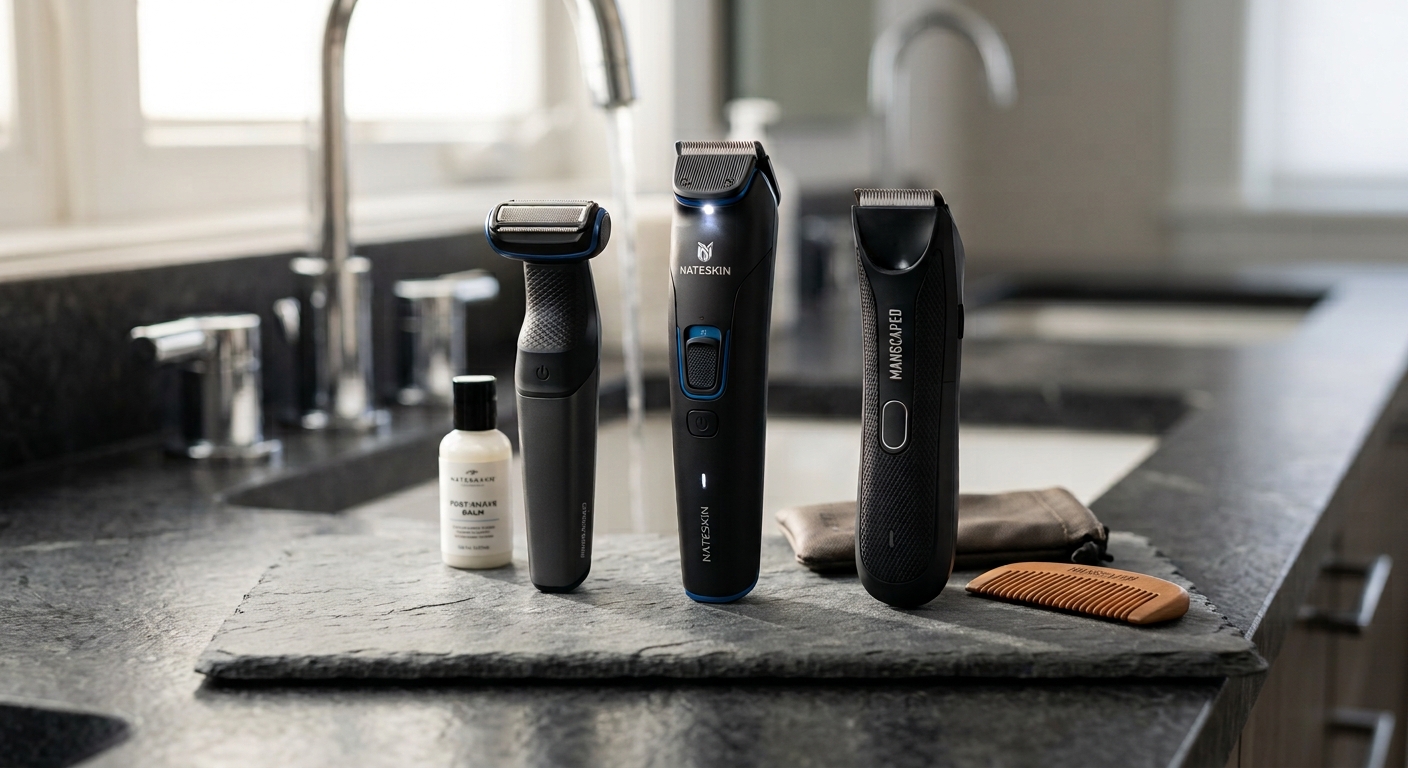
1. Nateskin Bush Trimmer 3.0
The Nateskin Bush Trimmer 3.0 excels in safety and ergonomic control. Its specialized NateSafe blade technology utilizes tightly spaced ceramic teeth to glide over uneven skin contours without pulling or snagging delicate tissue.
A detailed nateskin bush trimmer review reveals several standout characteristics:

- Waterproof Build: Full IPX7 waterproofing lets you shave comfortably in the shower.
- High-Power Motor: A 7,000 RPM motor cuts thick hair cleanly in a single pass without tugging.
- Illuminated View: An integrated LED spotlight highlights hard to see angles for maximum precision.
- Long Runtime: The lithium-ion battery provides up to 120 minutes of continuous power on a single charge.
2. Philips Norelco Bodygroom Series 7000
The Bodygroom 7000 features a dual sided design that offers versatile trim and shave capabilities. One side houses a 3D pivoting foil shaver that adapts to body curves, while the other side features an adjustable trimmer with five length settings. Rounded tips and hypoallergenic foil protect sensitive skin from razor burn.
3. Manscaped The Lawn Mower 5.0 Ultra
Manscaped designed The Lawn Mower 5.0 Ultra explicitly for below the belt care. It combines dual interchangeable blade heads, including a skin safe ceramic blade and a foil shaver head. Wireless charging, a waterproof casing, and dual LED spotlights make it a highly convenient option for wet or dry trimming.
Key Features to Look for in a Pubic Hair Trimmer
Selected below are core specifications that separate high performance pubic trimmers from basic hair clippers:

- Blade Safety Features: Look for rounded blade edges, skin guards, or specialized ceramic blades. Metal clippers intended for thick facial hair lack the skin protection required for loose, sensitive tissue.
- Waterproof Rating: Trimmers with an IPX7 rating allow easy cleaning under running water and safe usage during showers.
- Ergonomic Wet Grip: A non-slip rubberized or textured handle prevents accidental slips during delicate maneuvers.
- Battery Performance: Lithium-ion batteries deliver constant motor torque right up until the charge depletes, preventing painful hair pulls caused by slowing blades.
How to Groom Intimate Areas Safely
Following a structured procedure reduces irritation and keeps skin smooth:
- Pre Trim Prep: Soften body hair and open pores by taking a warm shower before grooming.
- Apply Guard Attachments: Always use an adjustable guard attachment when trimming around loose skin folds to create a protective barrier between the blade and skin.
- Pull Skin Taut: Use one hand to pull the skin tight and flat before running the trimmer across the area.
- Move in Short, Light Strokes: Guide the tool gently in the direction of hair growth without applying excess downward pressure.
- Post Care Maintenance: Rinse the area with cool water to close pores, gently pat dry, and apply a lightweight, fragrance free post shave balm.
Frequently Asked Questions
Is It Safe to Use regular Beard Trimmers Below the Belt?
No, beard trimmers use sharp, widely spaced metal teeth designed for firm facial skin. Using them on loose, sensitive groin tissue increases the risk of painful cuts and skin pinches.
Can Ceramic Blades Cut Your Skin?
While ceramic blades reduce friction and stay cool longer than steel blades, they can still nick skin if you push too hard or fail to pull the skin taut while trimming.
How Often Should You Replace Trimmer Blades?
Grooming experts recommend replacing electric trimmer blades every three to four months depending on usage frequency. Dull blades tug on hair follicles and irritate sensitive skin.
Investing in dedicated manscaping tools transforms your personal care routine by prioritizing safety and precision. Choosing a specialized body groomer equipped with ceramic blades and waterproof protection allows you to trim confidently while avoiding nicks, burns, and ingrown hairs. Select the tool that best fits your grooming preferences, follow proper pre shave prep, and maintain your equipment for clean results every time.
Stay tuned to VestureDebate for expert style guides, practical buying tips, and honest product reviews!