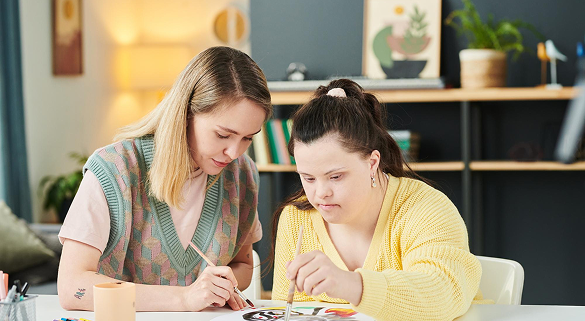
Communication is an important part of a child’s everyday life. It helps children express their needs, share their feelings, build relationships, and participate in activities at home and school. For children with autism, developing communication skills may involve different challenges and learning approaches. Some children may speak using words and sentences, while others may communicate through gestures, pictures, communication devices, or other methods.
Autism therapy can help children develop communication skills that suit their individual needs. With personalized support, consistent practice, and family involvement, children can learn ways to express themselves and interact with the people around them.
Understanding Communication Differences in Children With Autism
Autism affects children differently, including how they understand language, express themselves, and engage in social interactions. Some children may have difficulty asking questions, following spoken instructions, or maintaining conversations. Others may communicate verbally but find it challenging to understand facial expressions, gestures, or the unwritten rules of social interaction.
It is also important to recognize that communication is not limited to spoken language. A child might point toward a favorite toy, lead a parent toward something they need, use pictures to make a choice, or operate a communication device to express a message.
These are meaningful forms of communication. The goal of autism therapy is to help children communicate more effectively in ways that work for them, rather than expecting every child to communicate in the same way.
How Autism Therapy Helps Develop Communication Skills
Autism therapy often focuses on practical skills that children can use in everyday situations. Depending on the child’s strengths, needs, and goals, therapy may address several areas of communication.
1. Encouraging Children to Express Their Needs
One of the first communication goals may be helping a child express basic needs. This can include asking for food, requesting a favorite activity, seeking help, or communicating when they want a break.
Therapists may use structured activities, play, visual supports, or everyday routines to create opportunities for children to practice these skills. For example, during a play activity, a therapist might encourage a child to request a particular toy or indicate which game they want to play.
Children who do not use spoken words can also learn to make requests through gestures, picture cards, sign language, or augmentative and alternative communication (AAC) tools. The approach depends on the child’s communication abilities and individual plan.
2. Building Language and Understanding
Some children with autism benefit from support in understanding spoken language and learning how words relate to objects, actions, and experiences. Therapy may help them identify familiar items, understand simple directions, respond to questions, or learn new vocabulary.
Activities can be adapted to match a child’s developmental level. For example, a therapist might use toys to teach action words, picture cards to connect words with objects, or daily routines to practice following instructions.
Learning in familiar, meaningful situations can help children understand how language is used outside a therapy session. Progress may happen gradually, so activities should be adjusted as the child develops new skills.
3. Supporting Social Communication
Communication also involves learning how to interact with other people. Children may need support with taking turns, responding to others, sharing interests, or starting an interaction.
Therapy can provide opportunities to practice these skills through games, group activities, and guided social interactions. For example, children might practice taking turns during a board game or learn different ways to join a shared activity.
These experiences can help children become more comfortable participating in social situations. The aim is not to make every child interact in exactly the same way, but to help them develop communication skills that support their relationships and personal goals.
4. Using Applied Behavior Analysis (ABA) Principles
Applied Behavior Analysis (ABA) is one approach used in some autism therapy programs. It examines how learning takes place and uses structured teaching and meaningful everyday experiences to help children develop useful skills.

When applied to communication, therapy may focus on teaching children to request items, respond to questions, identify objects, or communicate with others during daily activities. Therapists may break a skill into manageable steps, provide prompts when needed, and gradually adjust support as the child learns.
Natural Environment Teaching is another approach that uses familiar activities and surroundings as learning opportunities. For example, snack time can become an opportunity to practice requesting a drink, choosing between foods, or asking for assistance.
Programs such as UCP Heartland’s autism services use ABA principles and individualized treatment goals to support children’s development, including communication, social skills, and independence.
The Importance of Individualized Communication Goals
Every child has a different combination of strengths, interests, preferences, and support needs. For this reason, communication therapy should begin with an understanding of how the child currently communicates and which skills would be most useful in everyday life.
One child may benefit from learning to combine words into short sentences. Another may need support using a communication device to express choices. A third may speak fluently but need help understanding conversational cues or explaining feelings.
Individualized goals allow therapists to focus on meaningful progress rather than following the same plan for every child. Progress should also be reviewed regularly so that strategies can change as the child’s needs develop.
Speech-language pathologists may play an important role in assessing language and communication needs. Depending on the child’s situation, families may also work with behavioral therapists, educators, occupational therapists, and other professionals to coordinate support.
How Parents and Caregivers Can Reinforce Communication at Home
Children have many opportunities to practice communication outside therapy sessions. Parents and caregivers can support learning by creating a patient, responsive environment where different forms of expression are recognized.
Helpful strategies include:
- Use clear, simple language: Short instructions and familiar words can make messages easier to understand.
- Allow time to respond: Give children time to process a question and communicate their answer without rushing them.
- Follow their interests: Join activities the child enjoys and use those moments to encourage interaction.
- Offer choices: Asking whether a child wants a book or a puzzle creates a natural opportunity to express a preference.
- Recognize different communication methods: Respond to gestures, pictures, signs, and communication devices as meaningful ways to share a message.
- Practice during everyday routines: Mealtimes, play, dressing, and shopping can provide opportunities to communicate naturally.
Families do not need to turn every interaction into a lesson. Responding to a child’s attempts to communicate and making space for back-and-forth interaction can be valuable on their own.
Recognizing Progress Beyond Spoken Words
Communication progress does not always mean a child begins speaking more words. A child might become better at asking for help, making choices, communicating discomfort, or using a picture to express a need. Another child may begin initiating interactions or responding more consistently when someone speaks to them.
These developments can make everyday routines more manageable and give children greater opportunities to participate in family, school, and community life.
Progress also varies from child to child. Some skills develop quickly, while others require ongoing support and practice. Families and therapists should recognize meaningful improvements while respecting each child’s pace and communication preferences.
Conclusion
Autism therapy can support children’s communication by helping them express needs, understand language, participate in social interactions, and develop practical skills for everyday life. The most helpful approach is one that recognizes each child’s abilities, respects their preferred communication methods, and focuses on goals that matter to them and their family.
With individualized therapy, consistent opportunities to practice, and collaboration between caregivers and professionals, children can build communication skills that support greater participation and independence. Every meaningful attempt to communicate is an opportunity to understand a child better and help them connect with the world around them.