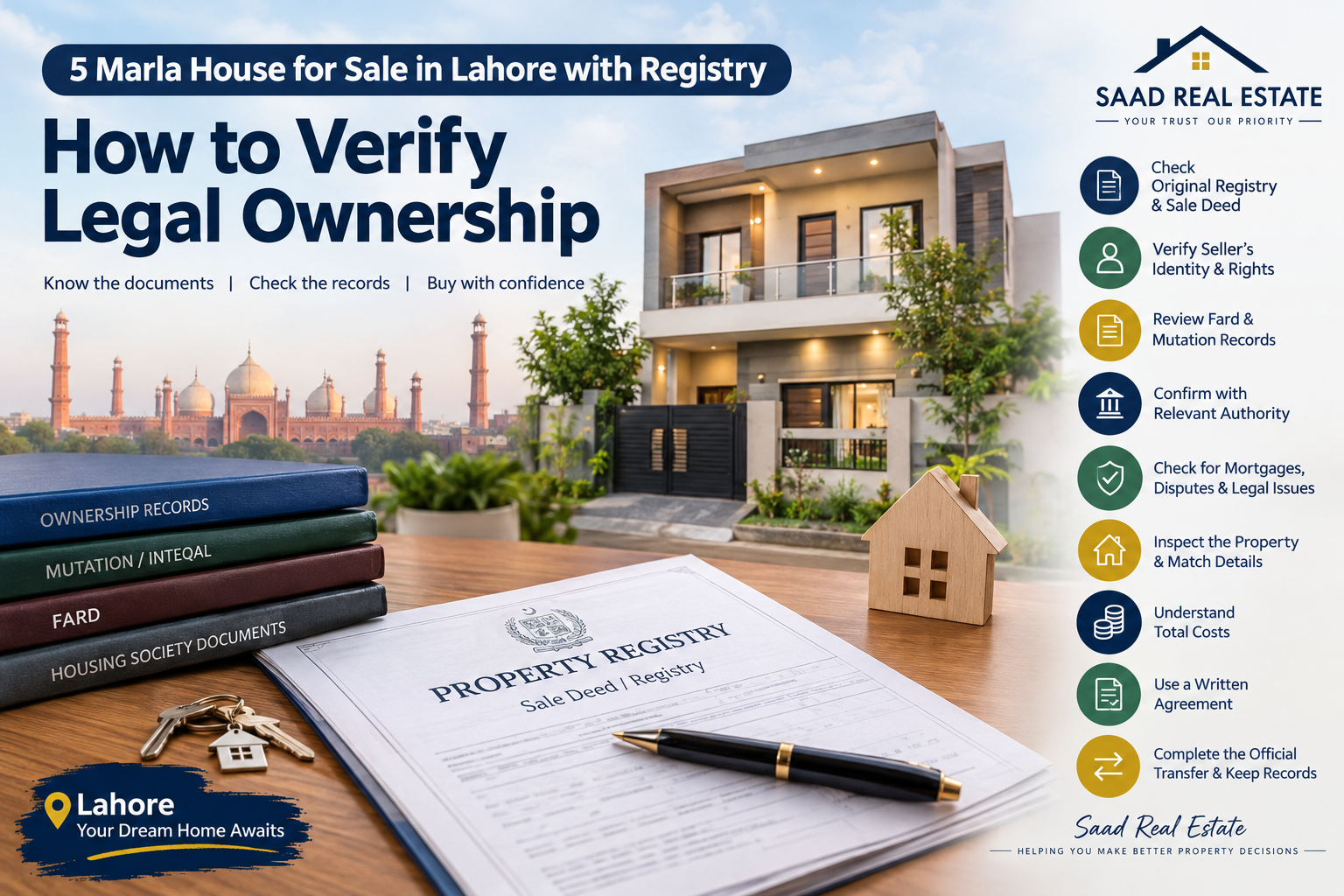
Buying a house is a big decision because it involves years of savings, family security, and future planning. In Lahore, many buyers focus on the location, price, construction quality, and nearby facilities, but checking the legal documents is equally important. In my view, a buyer should never finalize a property deal just because the house looks attractive or the seller offers a reasonable price. When searching for a 5 Marla House for Sale in Lahore with Registry, it is important to understand the ownership documents, verify the seller’s identity, and confirm that the property can legally be transferred to the new owner. Taking these steps before making a payment can help buyers avoid unnecessary disputes and financial losses.
Why Legal Ownership Verification Matters When Buying a House in Lahore
Lahore has a wide range of residential properties, from established neighbourhoods to developing housing societies. Buyers can find houses in areas such as Johar Town, Wapda Town, Bahria Town, DHA, Valencia Town, and locations along Raiwind Road. However, the legal requirements and property records may differ depending on the location and the authority responsible for the property.
Legal ownership verification helps establish whether the seller has the right to sell the house. It can also reveal potential problems involving disputed ownership, unpaid dues, mortgages, inheritance claims, or restrictions on property transfer.
Before paying a token amount or signing an agreement, buyers should confirm the property’s legal status. A professional property dealer can help coordinate the process, but buyers should independently verify important documents through the relevant government department, land record office, or housing authority.

What Does Registry Mean in Property Transactions?
In Pakistan, the term registry commonly refers to a registered sale deed or another registered instrument documenting a property transaction. It is an important document, but buyers should understand that property ownership verification may require more than checking a single paper.
Depending on the property’s history and location, relevant records may include:
- Registered sale deed or registry.
- Previous ownership documents and transfer history.
- Mutation or inteqal record, where applicable.
- Fard or other relevant land ownership records.
- Allotment letter or transfer letter for properties in housing societies.
- Possession letter, where applicable.
- Approved property details and identification of the relevant plot or house.
The applicable documents depend on whether the property is located in a traditional revenue-recorded area, a private housing society, or a development authority’s jurisdiction.
A registry should be checked for authenticity and consistency with the official property record. Registration alone should not be treated as a guarantee that every legal issue has been resolved.
1. Check the Original Registry or Registered Sale Deed
The first step is to request the available original ownership documents from the seller. Carefully examine the registered sale deed or registry and compare the information with other property records.
Pay attention to the following details:
- Full name and identification details of the recorded owner.
- Property address and location.
- Plot number, house number, and other identifying information.
- Property area and boundaries.
- Date and registration details of the transaction.
- References to earlier ownership documents, where relevant.
The information should match the actual property being purchased. For example, if the documents describe a different plot number or property area, do not ignore the difference.
Ask the relevant registration office or qualified property lawyer how the document can be authenticated. Photocopies and screenshots can be useful for an initial review, but they should not replace official verification.
2. Verify the Seller’s Identity and Ownership Rights
A genuine-looking registry does not automatically mean that the person offering the house for sale has the legal authority to complete the transaction.
Ask the seller to provide valid identification and compare their details with the ownership records. If the property is jointly owned, determine whether all necessary owners must participate in the sale.
Special attention is required in cases involving inherited property, a power of attorney, or a representative acting on behalf of the owner.
For inherited houses, verify the relevant succession and inheritance documentation and establish who has the authority to transfer the property. Where a power of attorney is involved, its validity, scope, and continued legal effectiveness should be checked.
If the seller’s name differs from the name appearing in the documents, ask for a clear and legally supported explanation before proceeding.
3. Check the Fard and Mutation Record Where Applicable
A fard is commonly used to refer to an extract of the land ownership record, while mutation, or inteqal, records a change in the revenue record following a transaction or another legally recognized event.
These records can help buyers understand the recorded ownership history. However, their significance depends on the property’s legal framework, and a mutation entry should not automatically be treated as conclusive proof of title.
For properties covered by the Punjab land records system, buyers can inquire through the relevant Arazi Record Centre or official land record service. For properties managed under a separate housing society or development authority system, the applicable authority may maintain the principal transfer records.
Check whether the available records agree with the registered documents. If an ownership transfer appears incomplete or the records contain conflicting names or property details, get professional advice before paying the seller.
4. Confirm the Property’s Status with the Relevant Authority
Lahore properties may fall under different administrative systems. Depending on the location, the relevant institution could include the Lahore Development Authority (LDA), a private housing society, a cantonment authority, or the revenue department.
Contact the authority responsible for the specific property and ask which records are required to verify ownership and transfer eligibility.
For a house in a private housing society, relevant checks may include:
- Verification of the allotment or transfer record.
- Confirmation of the registered member or recorded owner.
- Outstanding maintenance charges or other society dues.
- Restrictions affecting resale or transfer.
- Confirmation that the property details match the society’s records.
Where applicable, check whether the house or plot has the necessary approvals and whether any restrictions affect its transfer or use.
Do not assume that every house in Lahore follows the same documentation procedure. The correct process depends on the property’s location, ownership history, and governing authority.
5. Check for Mortgages, Disputes, and Other Legal Problems
Before completing a purchase, investigate whether the property is subject to a mortgage, court dispute, attachment, inheritance claim, or another restriction that could affect the transaction.
A seller may possess ownership papers while a separate legal or financial issue remains unresolved. This is why document verification should include more than checking names and registration numbers.
Ask the seller to disclose any loans, litigation, claims by family members, or other interests affecting the property. A qualified property lawyer can help identify the appropriate searches and confirmations for the particular case.
If the property has been mortgaged, obtain reliable evidence of the lender’s release or the legally required arrangements for clearing the mortgage. If litigation or a competing ownership claim is discovered, pause the transaction until its implications are understood.
Never rely entirely on a verbal assurance that a property is clear of disputes.
6. Inspect the Physical House and Match Its Details with the Documents
Legal paperwork and physical inspection serve different purposes. Even if the ownership records appear consistent, buyers should inspect the house to ensure that the property being sold matches the description in the documents.
For a five-marla house, check the following:
- Actual plot size and property boundaries.
- Number of floors and room layout.
- Access road and entrance.
- Parking space and available utilities.
- Signs of structural damage, dampness, or water leakage.
- Condition of electrical wiring, plumbing, and drainage.
- Any extensions or construction that may require approval.
If the house has been extended or modified, ask whether the changes comply with applicable building regulations. Where necessary, obtain a professional inspection from a qualified engineer or building expert.
Also compare the house number, plot number, and location with the available records. If the physical property differs from the documented property, resolve the discrepancy before proceeding.

7. Understand the Total Cost of Buying a Five-Marla House
The asking price is only one part of the total purchase cost. Buyers should prepare a realistic budget that includes transaction expenses and any outstanding charges.
Potential costs may include:
- Applicable stamp duty and registration charges.
- Relevant government taxes and withholding taxes.
- Mutation or transfer fees, where applicable.
- Housing society or development authority transfer charges.
- Legal consultation and document verification expenses.
- Outstanding utility bills or society dues, if payable by the buyer under the agreed terms.
- Repairs, maintenance, and moving expenses.
The exact amount depends on the property’s value, location, transaction structure, and applicable tax rules at the time of purchase. Ask the relevant authority or tax professional to confirm current rates rather than relying on an old estimate.
Agree in writing on which party will pay each expense. This can prevent disagreements at the time of transfer.
8. Use a Written Agreement Before Making a Major Payment
Once the preliminary checks are satisfactory, prepare a written sale agreement that clearly records the terms of the transaction.
The agreement should identify the buyer and seller, describe the property, specify the agreed price, explain the payment schedule, and establish the expected transfer arrangements.
It should also address outstanding dues, the consequences of a party failing to complete the transaction, and any conditions that must be fulfilled before the final transfer.
Avoid paying a large amount based only on an informal receipt or verbal promise. Keep records of payments and obtain signed receipts for any token or advance amount.
Before signing, have a qualified property lawyer review the agreement, especially if the transaction involves joint owners, inheritance, a mortgage, or unusual transfer conditions.
9. Complete the Official Transfer and Keep Your Records Safe
After the necessary checks and contractual requirements are completed, proceed with the official transfer through the relevant registration office, land record system, or housing authority.
The precise procedure depends on the property’s legal framework. In some cases, a registered sale deed is central to the transaction; in others, the housing authority’s transfer process and supporting records are also essential.
Confirm that all required parties have signed the appropriate documents and that the official process has been completed. Obtain the registered deed, transfer confirmation, updated ownership record, or other relevant evidence applicable to the property.
Keep copies of the sale agreement, payment receipts, tax documents, transfer records, and correspondence with the seller and relevant authorities.
After the transaction, verify that the ownership records have been updated as required. This final step helps ensure that the paperwork reflects the completed purchase.
Common Mistakes Buyers Should Avoid
First-time buyers sometimes focus on price and location while overlooking the legal side of the transaction. Avoid these common mistakes:
Relying only on photocopies: Request the appropriate original documents and verify them through official channels.
Ignoring differences in property records: Even a small discrepancy in the owner’s name, plot number, or property area deserves clarification.
Paying before verification: Avoid large advance payments until the seller’s ownership and the property’s legal status have been checked.
Assuming a registry solves every problem: Check the wider ownership history and any applicable restrictions or claims.
Ignoring housing society requirements: Confirm transfer eligibility and outstanding dues where relevant.
Skipping professional advice: A property lawyer can help identify risks that may not be obvious to an inexperienced buyer.
Failing to keep receipts: Maintain a written record of every payment and important agreement.
A careful approach may take additional time, but it can reduce the risk of expensive disputes later.
How Saad Real Estate Can Help Buyers in Lahore
At Saad Real Estate, our focus is to help property buyers understand the practical steps involved in selecting and purchasing residential property in Lahore. Finding a suitable house involves more than comparing prices. Buyers should also consider location, construction quality, access to daily facilities, documentation, and the conditions of the transaction.
Our property-related guidance can help buyers prepare questions for sellers, identify documents that may require further checking, and understand why official verification matters before committing their savings.
However, buyers should independently confirm ownership and transfer eligibility with the relevant authority and seek qualified legal advice where needed. A property dealer’s assistance does not replace official title verification or legal review.
If you are considering purchasing a five-marla house, start by defining your budget, preferred location, and family requirements. Then compare suitable properties and make document verification an essential part of your decision.
Conclusion
Buying a home in Lahore requires careful planning, particularly when it comes to legal ownership and property transfer. A house may look perfect, but its documentation must be examined before the buyer makes a significant financial commitment.
When evaluating a 5 Marla House for Sale in Lahore with Registry, verify the registered sale deed, confirm the seller’s identity and ownership rights, review the relevant land or housing authority records, investigate potential disputes, and complete the official transfer process. Remember that the exact requirements vary by property type and location, so use the appropriate authority and qualified legal professionals for confirmation.
Saad Real Estate encourages buyers to make informed property decisions by considering both the physical condition of a house and its legal status. A careful verification process can help you move towards homeownership with greater confidence and a clearer understanding of the transaction.
Frequently Asked Questions (FAQs)
1. What documents should I check before buying a five-marla house in Lahore?
Depending on the property, you may need to check the registered sale deed or registry, previous ownership records, relevant fard or mutation records, housing society transfer documents, seller identification, and evidence of transfer eligibility. The exact requirements depend on the property’s location and legal status.
2. Is a registry alone enough to prove that a house has clear ownership?
Not necessarily. The registry is an important document, but buyers should also examine the ownership history, verify the document through official channels, and investigate any mortgages, disputes, or restrictions that could affect the transaction.
3. Where can I verify property ownership in Lahore?
The appropriate place depends on the property’s location and administrative system. Buyers may need to contact the relevant Punjab land records service, registration office, LDA, housing society, or another responsible authority.
4. Can I buy a five-marla house if the seller has not completed the transfer process?
The answer depends on the documents, the property’s legal framework, and the nature of the incomplete transfer. Do not assume the seller can legally complete the sale. Ask a qualified property lawyer to review the ownership chain and confirm the steps required before making a payment.
5. Should I hire a lawyer before purchasing a house in Lahore?
Hiring a qualified property lawyer is advisable, particularly for a high-value purchase or a transaction involving inherited property, joint ownership, a power of attorney, a mortgage, or conflicting records. A lawyer can review the documents, identify potential risks, and explain the legal steps required to complete the purchase.