At the beginning of 2021, it felt that there would never be a stop to scientists identifying new variants of the Coronavirus. It was a time of global high alert when a new variant originated from India in the first quarter of this year. The variant contains two primary mutations, E484Q and L452R. The two were present separately in previous variants, but scientists found them combined in a single strain this time. Around April 2021, the medical director of Stanford’s clinical virology laboratory, Dr. Benjamin Pinsky discovered the presence of a Double Mutant COVID Variant in the US.
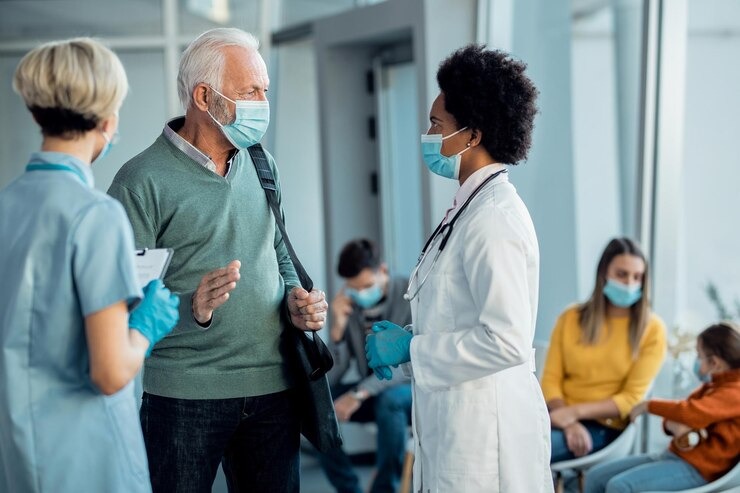
The upsurge of Double Mutant COVID Variant was a shock to international health departments after months of decreasing cases. The hospitals are doing everything to fight back the impact of the double Mutant COVID variant and make things easier for both medical staff and patients.
Using AI to maximum advantage
Stanford clinicians and researchers are exploring whether AI (artificial intelligence) can be used to curb a potential rise in the number of COVID-19 patients. With this technology, clinicians can identify patients who need intensive care ahead of time to save them from worse conditions. The US hospitals are working to find out the way of integrating an off-the-shelf algorithm into clinical operations. Chinese researchers and New York University have created an AI tool that might support the physicians to predict which patients tend to have a severe impact on the lungs, even if the initial case is mild in nature.
Creating space
Like other countries trying to make more space to accommodate COVID-19 patients, the US has also begun converting its convention centers, hotels, closed hospitals, and arenas to field hospitals with sufficient professionals to serve in the facility. More hospitals are facilitating their own labs to develop COVID-19 tests to avoid the long wait for results.


Changing ways of communication
Hospitals are changing their communication methods to save staff and family members of patients from possible contamination. With the emergence of new variants, hospitals have become more careful. A telephonic communication system is set between medical staff and family members to avoid waiting in the hospital premises. Doctors are closely collaborating with social workers to prepare the families for the torment of hearing the news about their patient’s condition and progress. The high risk of virus transmission forces patients and their family members to stay apart for many days. In this scenario, the hospital staff is trained to become the bridge that helps concerned people to remain connected during treatment.
Exchange Program for supplies
The main thing that is creating a problem at the global level is the scarcity of medical supplies needed in the COVID-19 situation. Hospitals and other relevant institutes launched a trading platform where medical facilities can exchange supplies. The known companies formed a cloud-based platform that enables hospitals to identify the inventory imbalance for the medical supplies. The hospital with more supply of one thing can exchange the resource with the hospital that lacks that specific medical resource.
Supporting healthcare staff
The love and vocation for their work keep the hospital staff revitalized and on their toes to serve the patients. However, they are human beings as well, besides being a part of the medical team. They have feelings, and sometimes the workload and the surrounding distress can dampen their enthusiasm during duty hours. Therefore, hospitals are now taking special care to keep their staff encouraged and energized at all times. Several counseling programs are set up to help doctors and nurses deal with the new Double Mutant variant of COVID-19. Hospitals are engaging more seriously in team-building activities, such as providing embroidered lab coats and scrubs to the healthcare workers. The gesture cheers them up, and most of all, it unites them as a team. The lesson of teamwork is not more apparent anywhere more than in hospitals in the current pandemic. Doctors from various disciplines, including surgeons, internists, anesthesiologists, etc., join hands to become a care team. If nothing can be done, they work together to lessen the patients’ suffering and distress in the new wave of the pandemic. While researchers continue to investigate the new variants of the Coronavirus to find a cure, hospitals have now moved from planning and preparation to actions and serious measures. They are doing everything to curb its spread. The healthcare departments and hospitals are taking it seriously to prepare and drill measures to mitigate pandemic-related risks as fast as possible. They are equipping themselves as best they can to serve as a resource and protect public health. Since healthcare staff is the best resource, hospitals invest in bringing out the best in them through counseling and team-building activities such as preparing thoughtful gifts like embroidered lab coats and scrubs. You can take updates about the new variant of the virus from LivingSwag and find more details about the current status of the pandemic.