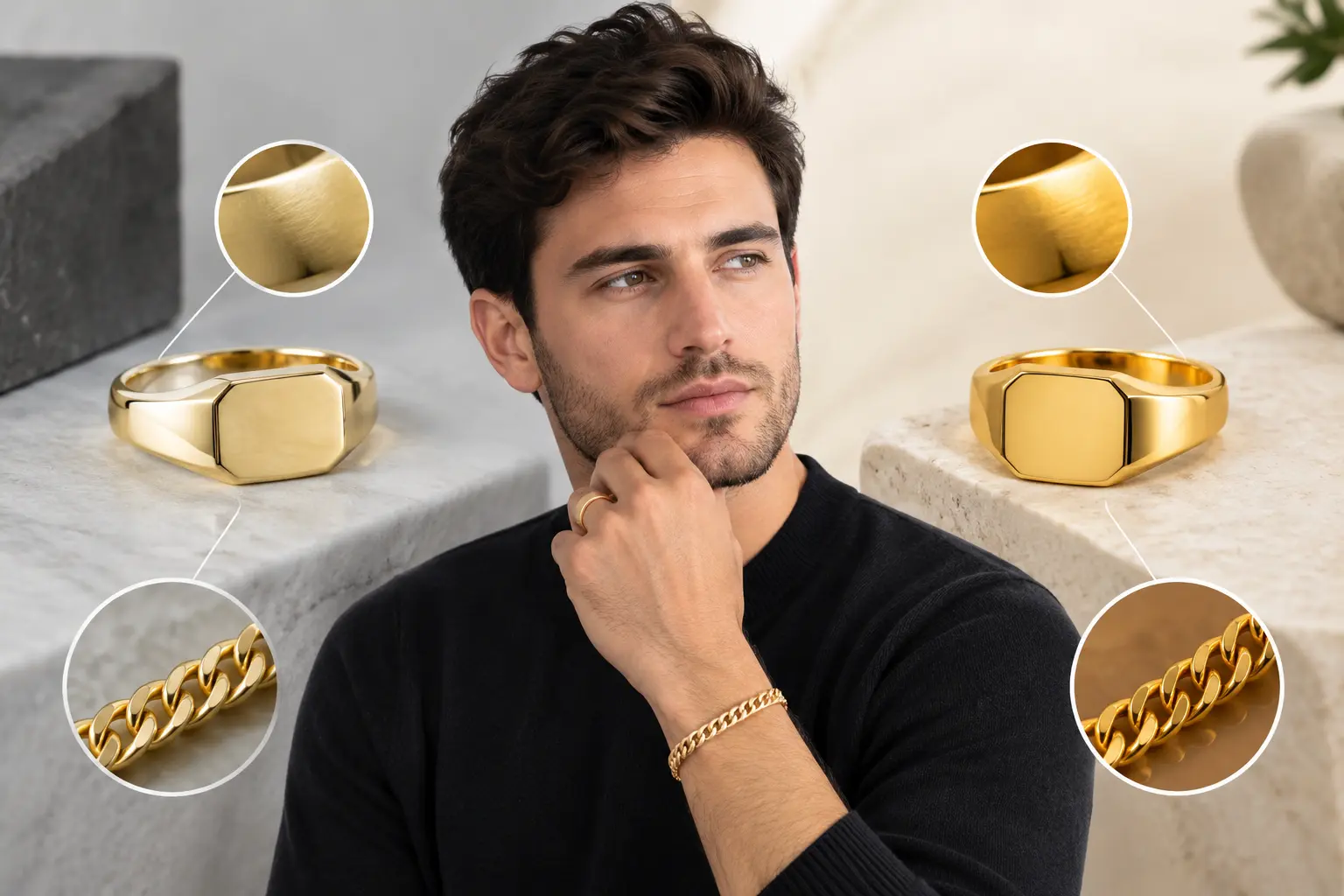
Most men assume 18K is the upgrade. Higher number, more gold, better piece. For a ring you wear every day, it’s often the opposite.
The karat number tells you how much gold is in the metal. It tells you nothing about how that metal handles a gym bag zipper, a car door, or ten years of gripping a steering wheel. Those are separate questions, and for anything that lives on your hands, the second answer usually points to 14K.
Here’s how to choose without overpaying, or ending up with a ring that looks tired by next summer.
What the Number Actually Means
Gold purity is measured in 24 parts. Pure gold is 24 karat. 18K is 18 parts gold and 6 parts other metals, which works out to 75% gold. 14K is 14 parts gold, about 58.3%, and the other 41.7% is alloy: usually copper, silver, and zinc, sometimes nickel or palladium. Scientific American has a clear breakdown of how the math and the alloys work.

Look inside the band or on the clasp and you’ll usually find a stamp. 750 means 18K. 585 means 14K. In the U.S., the FTC’s Jewelry Guides treat misrepresenting gold content as deceptive, so that stamp is the seller putting the claim in writing. A “solid gold” piece with no mark at all deserves a question.
Put plainly: the same ring in 18K carries roughly 29% more pure gold by weight than it would in 14K. That extra gold is what you’re paying for.
Why Harder Beats Purer on Your Hands
Pure gold is soft enough to bend and dent in normal wear. Alloys are what make jewelry wearable, and more alloy means a harder metal.
So 14K holds up better against scratches, dents, and bending. On a ring, that matters more than anything else. Your hands hit everything: desks, weights, door handles, the other rings on your fingers. A polished flat surface, like the face of a signet ring, shows every scuff, and on 18K those scuffs show up sooner.
One thing most buyers don’t know: a scratch on gold doesn’t remove the metal. It pushes it around, which is why a worn ring looks dull rather than thinner. A jeweler can polish it bright again, but every polish takes off a fine layer. A softer ring that needs polishing more often loses more metal over the years. If the ring holds a stone, harder metal also keeps the setting in shape after the knocks it will take.
Where 18K Earns Its Price
18K isn’t a bad buy. It’s a bad buy in the wrong place.
A pendant that sits under a shirt, a pair of cufflinks, or a single earring rarely takes a hit. In those pieces, 18K can last decades without its softness ever becoming a problem. Chains fall in the middle. A substantial 18K chain wears well, while very fine, delicate links are where the softer alloy shows its limits first.
The easiest way to make this call is to buy from a maker that offers the same design in both karats. Aequa & Co., for example, lists many of its rings and pendants in solid 14K or 18K. The choice then comes down to how you’ll wear the piece, not which design you had to settle for.
There’s also a market angle. Because 18K holds more gold, its price moves harder with the gold market. When gold climbs, the gap between the 14K and 18K versions of the same piece gets wider.

The Color Difference You Can See
18K yellow is deeper and warmer, closer to the color most people picture when they hear “gold.” 14K is paler and slightly brighter. Neither is wrong, but they don’t always sit well together.
Wear an 18K yellow gold watch with a 14K bracelet and the bracelet can look washed out beside it. The fix is simple: match the karat to the piece you already wear most, which for most men is the watch.
Rose gold gets its color from copper. 14K has more room in its alloy for copper, so 14K rose often reads pinker, while 18K rose sits closer to a soft peach.
Skin, White Gold, and the Plating Nobody Mentions
If a cheap ring ever left your finger itchy or red, nickel is the usual suspect. 18K is only 25% alloy against 41.7% in 14K, which makes it the safer bet for sensitive skin. The alloy recipe matters too: ask whether a white gold piece uses palladium instead of nickel.
White gold has a catch most men find out after buying. Gold is naturally yellow, so white gold is alloyed with white metals and then plated with rhodium for that bright, silvery finish. That plating wears, fastest on rings, and needs redoing every so often. 18K white gold contains more yellow gold, so its natural tone is warmer underneath. With white gold, the plating does more for the look than the karat does. On a daily ring, plan for the occasional re-plate.
A Simple Rule: Choose by Where It Lives
- Rings and bracelets: 14K. These take the most contact and the most wear.
- Chains: Either. Pick 14K for fine links; 18K is fine for heavier ones.
- Pendants, cufflinks, earrings: 18K, if you want the richer color.
- Sensitive skin: Lean 18K, or ask for a nickel-free alloy.
Before you buy, watch your hands for a week. Notice what they grab, knock, and drag across. That’s the life your ring is signing up for.
A higher number on the stamp doesn’t make a piece better. Gold that still looks right after five years of your actual life does.
Frequently Asked Questions
Is 14K gold real gold?
Yes. 14K is solid gold all the way through, made of 58.3% pure gold mixed with harder metals. It isn’t plated or filled. Look for a 585 stamp, which confirms the karat.
Is 18K gold worth the extra cost?
It depends on the piece. For pendants, cufflinks, and earrings that rarely get knocked around, 18K’s deeper color is worth paying for. For a ring or bracelet you wear every day, 14K usually gives you more for your money because it holds up better.
Which is better for a men’s wedding band, 14K or 18K?
For most men, 14K. A wedding band is worn every day for decades, and the harder alloy resists scratches and dents better. Choose 18K if you have sensitive skin or strongly prefer the richer yellow.
Can I wear 14K and 18K gold together?
You can, but the difference in color shows when the pieces sit close together, like a ring next to a watch. 18K reads deeper and warmer, and 14K reads paler. Match new pieces to the karat of what you wear most, usually your watch.
How can I tell if my gold is 14K or 18K?
Check for a stamp inside the band or near the clasp. 585 or 14K means 14K, and 750 or 18K means 18K. If there’s no stamp, a jeweler can test the metal for you.