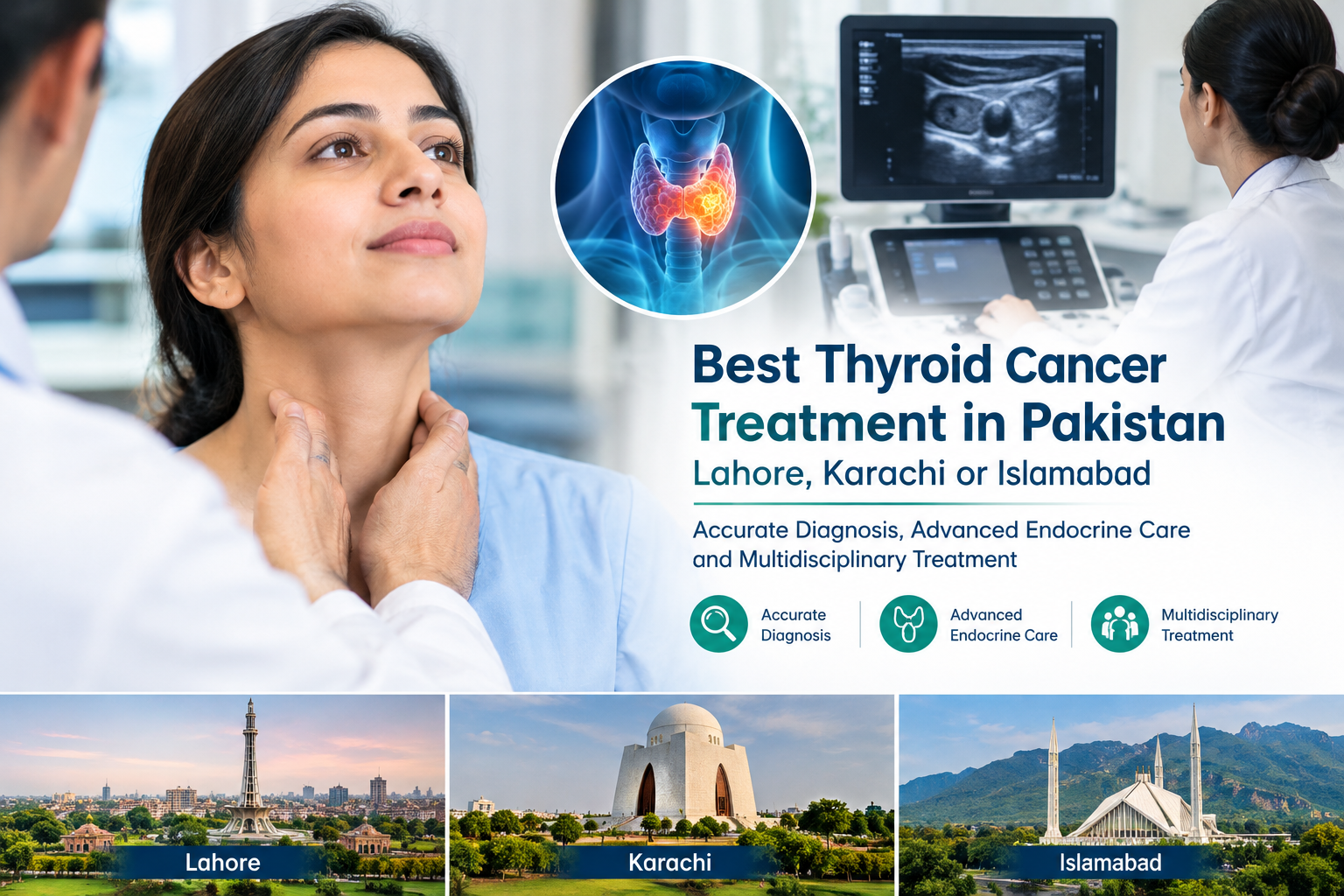
Finding the best thyroid cancer treatment in Pakistan – Lahore, Karachi or Islamabad begins with understanding the diagnosis, exploring suitable treatment options, and choosing a qualified medical team with experience in thyroid cancer management. Although a thyroid cancer diagnosis can feel overwhelming, many thyroid cancers have effective treatment pathways, and the outlook varies according to the cancer type, stage, and individual health circumstances.
The thyroid gland is located at the front of the neck and produces hormones that help regulate metabolism, body temperature, and other essential functions. When cancer develops in this gland, treatment may involve surgery, radioactive iodine therapy, thyroid hormone medication, or other specialised approaches, depending on the specific diagnosis.
Why Choosing the Best Thyroid Cancer Treatment Specialist Matters
The best thyroid cancer treatment specialist is one who can assess the disease accurately and develop a management plan based on the patient’s specific needs. Thyroid cancer care often involves collaboration between endocrinologists, head and neck surgeons, endocrine surgeons, pathologists, radiologists, nuclear medicine specialists, and oncologists.
Choosing the best thyroid cancer treatment in Pakistan – Lahore, Karachi or Islamabad starts with obtaining an accurate diagnosis, understanding the available treatment approaches, and selecting an experienced medical team specialising in thyroid cancer care.

This multidisciplinary approach can be particularly valuable when the diagnosis is complex or the cancer requires treatment beyond surgery.
Common types of thyroid cancer include:
- Papillary thyroid cancer: The most common type, which often grows slowly and generally has a favourable prognosis.
- Follicular thyroid cancer: A differentiated thyroid cancer that may require surgery and, in selected cases, radioactive iodine treatment.
- Medullary thyroid cancer: A less common type arising from specialised thyroid cells and sometimes associated with inherited genetic changes.
- Anaplastic thyroid cancer: A rare, aggressive form that requires urgent specialist assessment and an individualised treatment strategy.
Each type behaves differently, so treatment decisions should be based on confirmed pathology, imaging findings, disease extent, and other relevant clinical factors.
Best Thyroid Cancer Treatment in Lahore – What Patients Should Consider
Lahore is an important healthcare centre for patients seeking thyroid cancer diagnosis, surgery, and specialist follow-up. When evaluating the best thyroid cancer treatment in Lahore, patients should look for a hospital or medical team with experience in thyroid and head and neck conditions.
The diagnostic process may include a physical examination, thyroid ultrasound, fine-needle aspiration biopsy, and additional investigations when indicated. If cancer is confirmed, the medical team reviews the pathology findings and assesses whether the disease is limited to the thyroid or has spread to nearby lymph nodes or other parts of the body.
Depending on the tumour’s characteristics, a surgeon may recommend removing part or all of the thyroid gland. In selected cases, nearby lymph nodes may also require removal.
Before proceeding, patients should discuss the proposed operation, potential complications, expected recovery, and the likelihood of needing long-term thyroid hormone replacement. Access to experienced surgeons, reliable pathology services, and coordinated postoperative care can make the treatment process more manageable.
Best Thyroid Cancer Treatment in Karachi – Comprehensive Specialist Care
Karachi has a broad healthcare network serving patients who need cancer assessment and specialised endocrine treatment. People searching for the best thyroid cancer treatment in Karachi should consider whether the selected hospital can coordinate surgery, pathology review, nuclear medicine services, and long-term monitoring when necessary.
After surgery, some patients with differentiated thyroid cancer may benefit from radioactive iodine therapy. This treatment uses radioactive iodine to target susceptible thyroid tissue and certain thyroid cancer cells. It is not required for every patient, and the decision depends on the cancer’s risk profile and other clinical findings.
Patients with medullary thyroid cancer generally require a different management approach because this cancer does not respond to radioactive iodine in the same way as differentiated thyroid cancers. Genetic assessment and specialised systemic treatments may be relevant in selected cases.
A suitable treatment centre should explain why a particular therapy is recommended, what benefits are expected, and what risks or limitations should be considered. Patients should also ask how appointments, test results, and follow-up care will be coordinated after the initial treatment.
Best Thyroid Cancer Treatment in Islamabad – Personalised Cancer Management
Islamabad offers access to specialist hospitals and medical services that may support thyroid cancer diagnosis and treatment. When choosing the best thyroid cancer treatment in Islamabad, patients should prioritise clinical expertise, appropriate diagnostic facilities, and a clearly defined care pathway.
Treatment planning is increasingly based on individual risk assessment rather than applying the same approach to every patient. For some people with small, low-risk thyroid cancers, carefully selected management strategies may reduce unnecessary treatment. Other patients may need surgery, additional therapies, or closer surveillance.
The decision depends on the cancer’s size, location, type, evidence of spread, and other medical considerations. Age, existing health conditions, and patient preferences may also influence discussions about treatment.
Patients should feel comfortable seeking a second opinion when they are uncertain about a major treatment decision. Reviewing the pathology report and proposed management plan with an appropriately qualified specialist can help clarify the available options.

Modern Thyroid Cancer Diagnosis – From Biopsy to Staging
A precise diagnosis is essential for identifying the most suitable treatment plan for each patient. The evaluation generally begins with a clinical assessment and thyroid imaging, followed by tissue sampling when indicated.
Thyroid ultrasound helps identify suspicious nodules and assess nearby lymph nodes. Fine-needle aspiration biopsy may provide cells for examination, although some cases require further assessment or surgical pathology to establish the final diagnosis.
Following confirmation, clinicians determine the cancer type and evaluate its extent. Depending on the situation, this may involve additional imaging, specialised laboratory tests, or genetic testing for selected forms of thyroid cancer.
The pathology report is particularly important because it can reveal the tumour’s characteristics and help guide decisions about surgery and additional treatment.
Not every patient needs every investigation. A qualified medical team selects tests according to the clinical findings rather than recommending a standard package for everyone.
Thyroid Cancer Treatment Options – Surgery, Radioactive Iodine and Beyond
Treatment depends on the cancer subtype, disease stage, recurrence risk, and the patient’s overall condition.
Radioactive iodine therapy: This may be recommended for selected patients with differentiated thyroid cancer after surgery.
Thyroid hormone replacement: Patients who undergo total thyroid removal generally need lifelong thyroid hormone medication. In some cases, clinicians also adjust treatment to keep thyroid-stimulating hormone within an appropriate target range for the patient’s cancer risk.
External beam radiation and systemic therapies: These may be considered for selected advanced, persistent, or aggressive cancers when other treatments are insufficient or unsuitable. Targeted medicines can be helpful for certain cancers with specific molecular changes.
Treatment decisions should involve a discussion of expected benefits, possible side effects, alternatives, and the patient’s priorities.
Recovery, Follow-Up and Long-Term Thyroid Cancer Monitoring
Completing the initial treatment is an important milestone, but follow-up remains essential. The follow-up schedule is tailored to the specific type of cancer, the treatment received, and the likelihood of the disease returning.
For many patients with differentiated thyroid cancer, follow-up may include clinical examinations, neck ultrasound, thyroid function testing, and thyroglobulin measurements when appropriate. Depending on the type of cancer, patients may need additional blood tests and tailored follow-up procedures to monitor their condition.
Patients should report new or persistent neck swelling, changes in their voice, difficulty swallowing, or breathing problems promptly. Difficulty breathing or a sudden increase in neck swelling warrants immediate medical attention.
A balanced diet, appropriate physical activity, medication adherence, and regular appointments can support recovery. However, supplements and lifestyle changes should not be treated as substitutes for prescribed cancer care.
Choosing the Best Thyroid Cancer Treatment Centre in Pakistan for Specialised Care
Before selecting a facility in Lahore, Karachi, or Islamabad, consider these essential factors:
- Verify specialist qualifications: Confirm relevant training, registration, and experience in thyroid cancer care.
- Review the treatment team’s expertise: Complex cases may benefit from multidisciplinary assessment.
- Evaluate Diagnostic Facilities: Ensure the centre provides access to pathology assessments, thyroid ultrasound, and any additional tests required for accurate diagnosis and treatment planning.
- Understand the proposed treatment: Request a clear explanation of the diagnosis, options, benefits, and potential risks.
- Check follow-up arrangements: Long-term monitoring and medication management are important parts of care.
- Consider practical needs: Treatment costs, travel, appointment availability, and access to additional therapies may affect continuity of care.
The priority is access to appropriate, evidence-based treatment and a medical team that communicates clearly.
Conclusion – Making an Informed Decision About Thyroid Cancer Care
Finding the best thyroid cancer treatment in Pakistan – Lahore, Karachi or Islamabad means choosing qualified specialists who can provide accurate diagnosis, appropriate treatment, and consistent follow-up. Each thyroid cancer type requires a different approach, making personalised medical assessment essential.
By reviewing specialist credentials, asking informed questions, and seeking coordinated care, patients can make more confident decisions about their treatment journey. Early evaluation of suspicious symptoms and timely specialist consultation can help ensure that appropriate care begins without unnecessary delay.