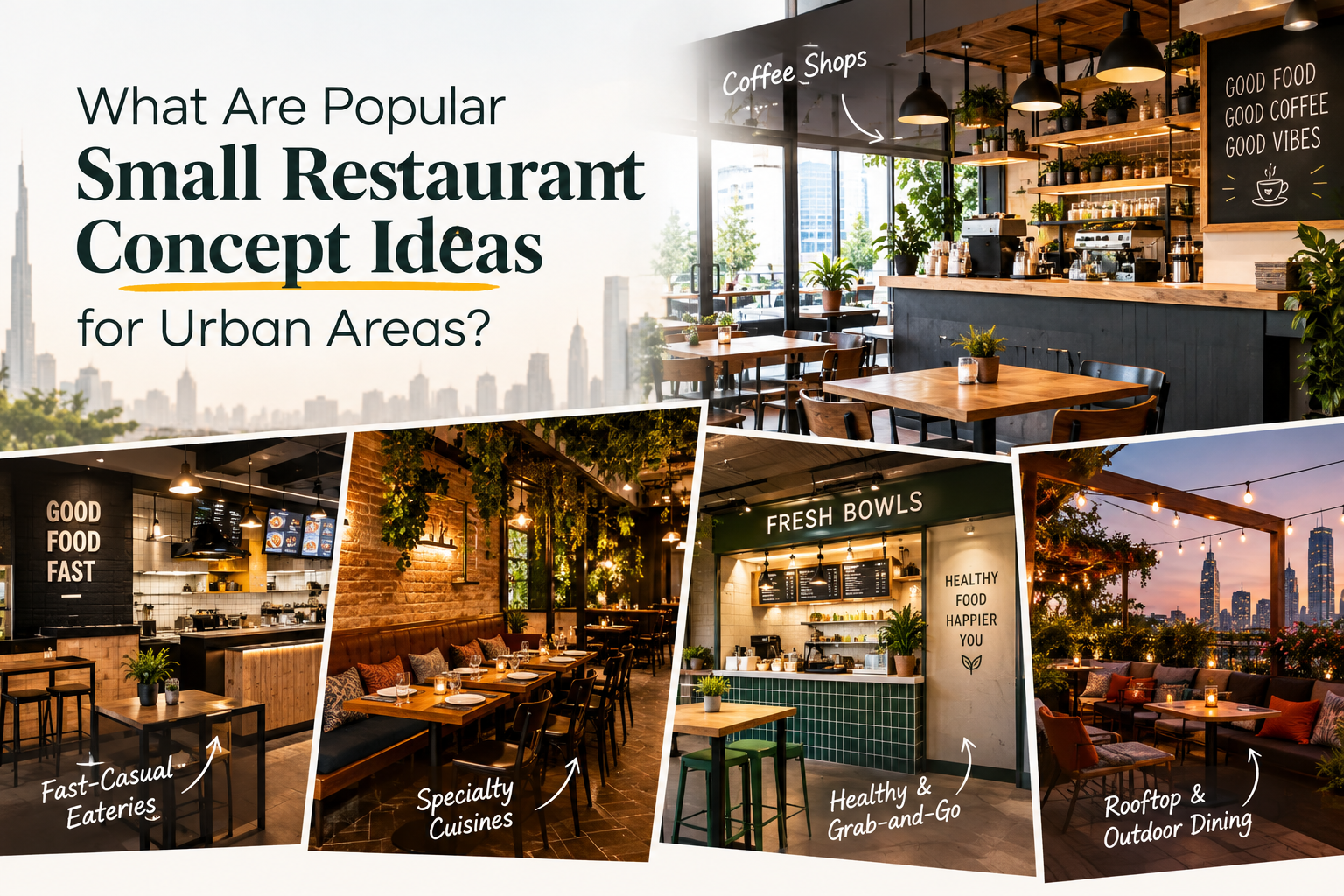
A compact restaurant can focus on one strong product, a short menu, and a kitchen. Small restaurant concept ideas can suit Dubai operators who want to control space, staffing, and menu complexity. According to Dubai Municipality figures cited in a 2025 USDA Foreign Agricultural Service report, Dubai had 8,617 restaurants and 5,240 coffee shops and cafeterias.
With thousands of food outlets already operating, a clear concept helps customers understand what the restaurant is known for. This guide covers suitable formats, costs, and how to choose.
Why Compact Formats Suit Urban UAE Markets
Three factors create room for smaller restaurant formats in the UAE.

- Tourism: Dubai welcomed 18.72 million international overnight visitors in 2024, according to the Dubai Department of Economy and Tourism.
- Diverse demand: The UAE’s multicultural population supports demand for different cuisines and dining preferences.
- Fast-casual growth: Mordor Intelligence projects quick service restaurants to grow at a 19.55% CAGR through 2031.
A smaller footprint can reduce the amount of space you need to lease, but the savings depend on the format. A delivery kitchen may need only production and storage areas, while a cafe still needs space for seating, customer flow, and service.
Popular Small Restaurant Ideas for Dubai and Abu Dhabi
Quick Service Restaurant With a Limited Menu
A quick service restaurant can work well as a small format when the menu is built around a few dishes rather than too many choices. Fewer items can shorten prep times, reduce food waste, and make staff training more manageable.
IMARC Group reports that quick service restaurants held a 43.6% share of the UAE food service market in 2025. That share shows how established the format is in the UAE. A focused menu can help small operators serve quick meals without adding unnecessary kitchen complexity.
Small Cafe Concept Ideas
Small cafe concept ideas can take shape around a specific customer habit rather than a broad food menu. For example, a compact cafe could focus on office coffee runs, late-night desserts, or a single regional drink and snack pairing.
The key is matching the concept to its surroundings, such as morning commuters near offices or residents looking for a convenient evening stop.
Cloud Kitchens and Delivery-First Models
A cloud kitchen can reduce the need for customer-facing space. This allows more of the initial budget to go toward kitchen equipment, packaging, technology, and delivery operations.
The challenge is building recognition without a physical storefront. Delivery apps, packaging, food photography, and customer reviews become key ways for people to discover and trust the brand.
Food Truck to Permanent Counter
SALT is a UAE example of starting with a food truck before expanding into permanent locations. It launched at Kite Beach with a focused menu of sliders and fries, allowing the concept to build an audience before taking on larger premises.
The model shows how a food truck can test demand before committing to a long-term restaurant lease.
Single-Dish Specialists
The right neighborhood depends on the target customer and concept. Tourist-focused formats may suit high-visitor areas, while residential districts can work better for family dining and everyday food concepts.
Before signing a lease, compare foot traffic, nearby businesses, customer profiles, parking, and delivery demand.
Low-Cost Restaurant Ideas: What Investment Really Looks Like
A lower-cost restaurant concept is not simply a smaller version of a full-service restaurant. The format, kitchen requirements, staffing, and amount of customer space can all affect how much capital you need.

Small Restaurant Concept Ideas With Low Investment
The lower-cost options usually reduce either customer-facing space or kitchen complexity.
- Limited-menu concepts: Fewer ingredients and preparation steps can reduce equipment and inventory requirements.
- Counter-service formats: Less dining space can lower the area needed for tables and front-of-house operations.
- Delivery-first concepts: Removing customer seating shifts the budget toward kitchen equipment, packaging, and delivery operations.
- Home-based food businesses: Where permitted, these can avoid commercial premises costs, but licensing and food-safety requirements still apply.
Costs That Catch New Operators Off Guard
Even a compact food business needs the right licenses, food safety approvals, equipment, and operating setup. These requirements should be mapped out before choosing the concept.
Working capital also matters. Plan for ongoing expenses such as ingredients, packaging, utilities, staffing, and delivery commissions before launch.
Profitable Small Restaurant Concept Ideas: What Separates Winners
A small restaurant needs to make each part of its space work harder. The goal is not simply to fit in more tables, but to serve customers efficiently without creating bottlenecks.
Space-Saving Strategies for Small Restaurants
A small restaurant can improve capacity and workflow without increasing its footprint.
- Counter seating: Uses less floor area than conventional table seating.
- Open kitchens: Lets the kitchen become part of the customer experience without adding a separate display area.
- Vertical storage: Uses wall and overhead space for supplies instead of expanding the back-of-house footprint.
- Outdoor seating: Can add customer capacity where the site and local permits allow.
Menu Discipline
A compact kitchen works better when dishes share ingredients and preparation steps. Reusing core ingredients across several dishes can reduce waste and simplify purchasing.
Ask one question before adding any dish: does it justify the space, ingredients, and prep time it requires?
Matching Your Small Dining Space to the Right Neighborhood
The same restaurant concept can work differently depending on who lives, works, and spends time nearby. Downtown Dubai can suit premium, tourist-facing concepts, while Dubai Marina can support international casual dining for its large expat population.
Jumeirah is a natural fit for family-friendly and beachside formats. Deira and Bur Dubai can work well for concepts built around authentic regional food and accessible pricing.
Validating a Concept Before You Commit
Before signing a lease, define your target guest, core offer, menu structure, and service style. This gives landlords and mall operators a clear picture of what you plan to open and how it will operate.
Dubai-based hospitality consultancies such as Finisya Hospitality Solutions develop concept profiles for this stage. Their work can cover market research, menu architecture, and service model planning across the UAE and Saudi Arabia.
Frequently Asked Questions
What makes a small restaurant concept scalable?
A simple menu, repeatable kitchen processes, and an operating model that can work across multiple locations.
How many menu items should a small restaurant have?
There is no fixed number, but every item should justify its ingredients, equipment, preparation time, and sales potential.
Should a small restaurant offer dine-in and delivery?
That depends on the location, target customer, and kitchen capacity. Adding delivery should not disrupt dine-in service.
How can I test a restaurant concept before opening?
Use pop-ups, food trucks, limited-time menus, or delivery-only trials to collect customer feedback before committing to a permanent location.