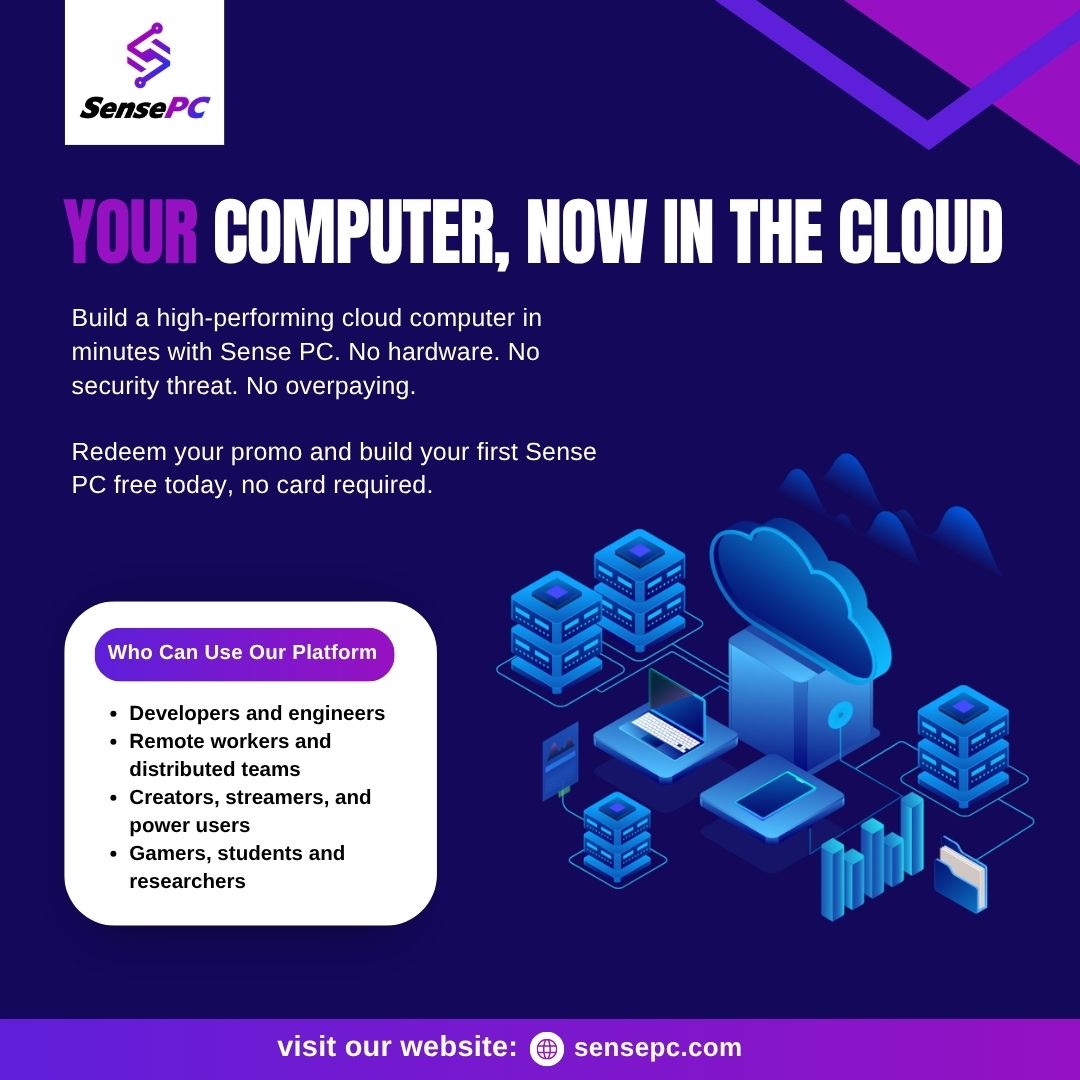
Gaming no longer has to depend entirely on the computer sitting on your desk. With modern cloud gaming platforms, players can access powerful computing hardware remotely and stream games to compatible devices. This approach is changing how people think about gaming hardware, storage, upgrades, and even where a gaming session can take place.
Instead of purchasing a high-end graphics card or replacing an aging computer, cloud based PC gaming allows demanding applications and games to run on remote servers while the player’s device handles the streaming experience.
What Is Cloud Based PC Gaming?
Cloud based PC gaming uses remote computing resources to run games rather than relying solely on the local computer. The game runs on a server equipped with suitable CPU, GPU, memory, and storage resources. Video output is then streamed to the player’s device, while keyboard, mouse, or controller inputs are sent back to the remote machine.
This model can be useful for people whose laptops or desktops do not have enough local hardware for demanding games. It can also provide access to a more flexible gaming environment without requiring frequent hardware upgrades.
The quality of the experience depends heavily on the internet connection, server location, available hardware, and the provider’s streaming technology.
How Cloud Gaming Platforms Work
A typical cloud gaming platform follows a relatively simple process:
- The user selects a game or remote gaming environment.
- The provider allocates computing resources on a cloud server.
- The game runs on that remote hardware.
- The resulting video is streamed to the user’s device.
- Player inputs are transmitted back to the cloud machine.
Because the processing takes place remotely, network performance becomes an important part of the overall experience. A stable connection with low latency can make cloud gaming feel considerably more responsive.
This is why choosing a provider based solely on advertised hardware specifications may not be enough. Server location and network quality can matter just as much.
Choosing a Cloud Game Service
Different cloud game service providers can offer very different experiences. Before selecting one, players should consider several factors.
Hardware: Check the available CPU, GPU, RAM, and storage. More demanding games may require stronger configurations.
Latency: The physical distance between the player and the server can influence responsiveness. A nearby server is generally preferable when available.
Game compatibility: Not every service supports every game or launcher. Check the provider’s supported titles and software before subscribing.
Pricing: Plans can range from limited free access to monthly subscriptions or usage-based options. Compare what each plan actually includes.
Session and usage limits: Some services may restrict session duration, concurrent usage, storage, or access during busy periods.
Device support: Consider whether the platform works with your preferred laptop, desktop, browser, tablet, or other compatible device.
Why Cloud Gaming Can Be More Flexible
One of the biggest advantages of cloud gaming is separating computing power from the physical device. A lightweight laptop, for example, may not contain a desktop-class GPU but can still potentially access a remote gaming environment through a suitable cloud service.
This flexibility can also be useful for people who move between locations or use multiple devices. Instead of maintaining a powerful gaming machine everywhere, they can access a remote PC when needed.
Cloud gaming can also reduce the pressure to upgrade local hardware whenever a new generation of games arrives. However, the cost of a long-term subscription should still be compared with the cost of owning a traditional gaming PC.
Cloud Gaming Is Not Just About Games
A modern cloud PC can provide capabilities beyond gaming. Depending on the provider and configuration, a remote machine may be useful for software development, creative applications, productivity, testing, and other GPU-intensive workloads.
This broader approach makes cloud computing attractive to users who want one remotely accessible computer for several purposes rather than a system dedicated exclusively to gaming.
For users exploring these possibilities, SensePC provides cloud PC environments designed to give users remote access to computing resources without requiring all of the hardware to be installed locally.
The Future of Cloud Gaming
Cloud gaming platforms continue to evolve alongside faster internet connections, improved data centers, better GPUs, and more efficient streaming technologies. As these systems improve, the distinction between a traditional gaming computer and a remotely hosted gaming environment may become less important for some users.
Still, cloud gaming is not a universal replacement for local hardware. Players who prioritize maximum control, high performance cloud gaming offline access, or extremely low latency may prefer a physical gaming PC. Others may value the convenience of accessing a powerful remote computer without purchasing and maintaining the hardware themselves.
The right choice ultimately depends on the games being played, internet conditions, budget, and how much flexibility the user wants.
Final Thoughts
Cloud based PC gaming offers an alternative way to access demanding games and computing resources. By moving processing to remote servers, cloud gaming platforms can make powerful hardware accessible from a wider range of devices.
Whether someone is exploring a new cloud game service, looking for flexible gaming hardware, or considering a remote PC for multiple workloads, understanding factors such as latency, hardware, compatibility, pricing, and usage limits is essential. As cloud infrastructure continues to develop, remote gaming is likely to remain an important part of the changing PC gaming landscape.