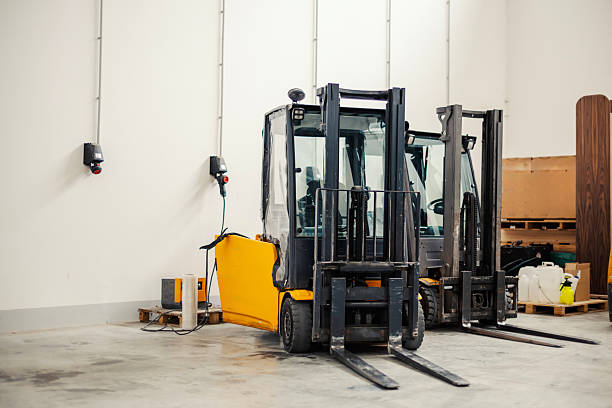
An electric forklift requires routine attention to its battery, motors, brakes, tyres, hydraulic system, and electrical connections. Neglecting these components leads to unplanned downtime, higher repair costs, and safety risks on the warehouse floor. A structured maintenance schedule — covering both daily checks and periodic servicing — keeps equipment running efficiently and extends its operational lifespan significantly.
Fleet owners and maintenance teams in Singapore often underestimate how proactive servicing directly impacts uptime. Unlike diesel equipment, electric forklifts have fewer moving parts — but the parts they do have demand consistent, informed attention. This guide walks through exactly what needs checking, how often, and why it matters to your bottom line.
Why Electric Forklift Maintenance Deserves a Dedicated Schedule
Electric forklifts are increasingly the preferred choice in warehouses, cold stores, and manufacturing facilities across Singapore. Their lower emissions, quieter operation, and reduced fuel costs make them attractive — but that value only holds if maintenance keeps pace with daily wear.

A poorly maintained electric forklift doesn’t just break down. It creates cascading problems: a weakened battery strains the motor, worn tyres affect load stability, and faulty brakes become a direct safety liability. Regular electric forklift maintenance isn’t optional — it’s what separates a productive asset from an expensive liability.
The Battery: Your Highest-Priority Maintenance Item
The battery is the heart of any electric forklift. It accounts for a significant portion of the unit’s total cost and directly determines how many productive hours you get per shift. Most industrial electric forklifts in Singapore use either lead-acid or lithium-ion batteries, each with specific maintenance requirements.
Lead-Acid Battery Maintenance
Lead-acid batteries require the most hands-on attention. Key maintenance tasks include:
- Water top-ups: Check electrolyte levels weekly. Distilled water must be added after charging — never before — to avoid overflow and acid damage.
- Terminal cleaning: Corrosion on battery terminals increases resistance and reduces efficiency. Clean terminals monthly with a baking soda solution and rinse thoroughly.
- Equalisation charging: Perform a deliberate overcharge every 5–10 cycles to prevent sulphation and balance cell voltage.
- Temperature monitoring: Batteries charging in poorly ventilated areas risk overheating. Singapore’s ambient heat makes this especially relevant — ensure your charging zone is well-ventilated.
Lithium-Ion Battery Maintenance
Lithium-ion batteries are largely maintenance-free but still require periodic checks on the Battery Management System (BMS), connector integrity, and temperature sensors. Avoid deep discharging below 20% capacity, as repeated deep cycles degrade cell health faster than normal use.
Electric Motors and Controllers: Catching Problems Early
The drive motor and hydraulic pump motor handle the bulk of mechanical work on an electric forklift. Dust, moisture, and heat — all common in Singapore’s industrial environments — accelerate wear on motor windings and brush contacts (in older brush-type motors).
During routine forklift inspection, check for:
- Unusual heat emanating from the motor housing after operation
- Vibrations or grinding sounds during travel or lift cycles
- Worn carbon brushes on brush-type motors (replace when worn below 50% of original length)
- Controller error codes displayed on the dashboard — don’t dismiss these as minor alerts
Motor controllers regulate power flow between the battery and motors. Loose wiring connections or moisture ingress into the controller housing are the most common failure points. Inspect wiring harnesses and controller enclosures during every scheduled service visit.
Braking System: Non-Negotiable for Workplace Safety
Electric forklifts typically use a combination of regenerative braking and mechanical disc or drum brakes. Regenerative braking recovers energy and reduces mechanical brake wear — but it doesn’t eliminate it.
Brake inspection frequency depends on application intensity. For high-cycle operations (multiple shifts, ramp use, heavy loads), inspect brake pads and shoes every 250 operating hours. In lighter applications, every 500 hours is a reasonable benchmark.
Watch for these warning signs between scheduled checks:
- Increased stopping distances
- Pulling to one side during braking
- Squealing or grinding during deceleration
- Brake pedal requiring excessive travel before engaging
Tyres: The Foundation of Load Stability
Forklift tyres directly affect steering precision, load stability, and operator comfort. Electric forklifts commonly use cushion tyres (for smooth indoor floors) or pneumatic tyres (for outdoor or uneven surfaces). Both types wear unevenly depending on load weight, turning frequency, and floor surface.
What to Check During Tyre Inspections
- Wear indicators: Cushion tyres have moulded wear lines. Once the tyre reaches the wear indicator, replace immediately — do not extend use.
- Chunking and cuts: Pieces missing from the tyre surface indicate excessive stress or sharp debris contact. This is a replacement trigger, not a monitoring point.
- Uneven wear patterns: Wearing on one side suggests alignment or load balance issues that need separate investigation.
- Pneumatic tyre pressure: Check daily. Underinflation causes instability under load; overinflation accelerates centre-tread wear.
Hydraulic System: Lifts, Tilts, and Attachments
The hydraulic system controls mast movement, fork tilt, and any attachments fitted to the forklift. Hydraulic fluid degrades over time, absorbing moisture and contaminants that accelerate seal wear and reduce lift performance.
Key maintenance tasks for the hydraulic system include:
- Check hydraulic fluid level and condition monthly — fluid should be clear to light amber, not dark or milky
- Inspect hydraulic hoses for cracks, abrasion, or signs of weeping fluid at fittings
- Test mast chains for elongation and lubricate with manufacturer-specified chain oil every 250 hours
- Replace hydraulic fluid per the manufacturer’s service interval, typically every 2,000 operating hours or annually
Electrical Connections and Wiring: Small Issues, Big Consequences
Loose, corroded, or chafed wiring is one of the most common causes of unexpected electric forklift downtime. In Singapore’s humid conditions, oxidation on connector pins can develop surprisingly fast — especially in outdoor staging areas or near loading docks exposed to rain.
During forklift servicing in Singapore, a qualified technician should inspect:
- Main contactor and fuse conditions
- Plug and socket connectors for heat damage or pin corrosion
- Wiring routes for any signs of rubbing against sharp metal edges
- Indicator lights, horn, and safety switches for correct operation
Recommended Maintenance Schedule at a Glance
| Frequency | Maintenance Task |
|---|---|
| Daily (pre-shift) | Battery charge level, tyre condition, hydraulic fluid visual, lights and horn, mast and forks visual |
| Weekly | Battery water levels (lead-acid), terminal inspection, brake pedal feel, connector checks |
| Monthly | Hydraulic fluid level and condition, terminal cleaning, motor housing temperature check |
| Every 250 hours | Brake inspection, mast chain lubrication, motor brush check, controller diagnostics |
| Annually / 2,000 hrs | Hydraulic fluid replacement, full electrical system audit, tyre replacement assessment |
The Role of Professional Forklift Inspections
Operator-level checks catch obvious issues, but they don’t replace professional inspection. A qualified technician uses diagnostic tools to read fault codes, measure motor insulation resistance, assess battery capacity under load, and check torque on critical fasteners — none of which are visible to the naked eye.
In Singapore, the Workplace Safety and Health (WSH) Act requires that lifting equipment used in workplaces meets defined safety standards. Scheduled professional servicing ensures your equipment stays compliant and your team stays protected. The Ministry of Manpower (MOM) outlines inspection requirements for lifting equipment under the WSH (Operation of Cranes) Regulations, which applies to certain forklift use scenarios.
For fleet owners managing multiple units, tracking service intervals through a digital log — even a simple spreadsheet — significantly reduces the chance of a service milestone being missed during busy periods.
When to Consider an Electric Forklift Sale or Replacement
Even with excellent maintenance, electric forklifts have a finite service life. Battery replacement costs, repeated motor repairs, and accumulating frame wear eventually tip the economics toward replacement rather than repair.
Common indicators that replacement is more cost-effective than continued servicing:
- Battery capacity has dropped below 70–75% of original rating and replacement cost is high
- Repeated motor or controller failures within short intervals
- Structural frame cracks or mast damage that cannot be safely repaired
- Operational requirements have changed and the existing unit no longer fits the task profile
Exploring an electric forklift sale makes sense when repair costs over the next 12 months are projected to exceed 50–60% of the replacement unit’s value. This is a practical rule of thumb used by fleet managers across logistics and manufacturing sectors in Singapore.
Practical Takeaways for Maintenance Teams
Keeping an electric forklift in peak condition comes down to consistency — not complexity. Assign clear pre-shift checklists to operators, schedule professional service intervals in advance, and act on warning signs immediately rather than deferring them to the next service window.
The maintenance areas covered in this guide — battery, motors, brakes, tyres, hydraulics, and wiring — represent the core of what drives uptime and reliability. Miss any one of them consistently, and you’ll see the effects in both productivity and repair bills.
For fleet owners and maintenance teams in Singapore looking for reliable equipment support, ANG Equipment provides professional forklift servicing, inspections, and equipment supply across a range of electric and material handling solutions.
Frequently Asked Questions
How often should an electric forklift be serviced?
An electric forklift should undergo professional servicing every 250 operating hours or every three months, whichever comes first. Daily pre-shift checks by operators should also be performed to catch early signs of wear, fluid loss, or electrical faults before they escalate into costly repairs.
What is the most important part to maintain on an electric forklift?
The battery is the most critical component to maintain on an electric forklift. Its condition directly impacts runtime, motor performance, and overall uptime. Regular water top-ups (for lead-acid types), terminal cleaning, and proper charging habits can significantly extend battery life and reduce replacement costs.
What does forklift servicing in Singapore typically include?
Forklift servicing in Singapore typically covers battery inspection, brake checks, tyre assessment, hydraulic system service, electrical connection testing, and controller diagnostics. Reputable service providers also check for WSH compliance and provide a service report documenting findings and any recommended corrective actions for fleet records.
How do I know if my electric forklift needs a forklift inspection before the scheduled service?
Schedule an unplanned forklift inspection if you notice reduced battery runtime, unusual motor noises, longer stopping distances, hydraulic drift, or dashboard fault codes. These symptoms often indicate developing faults that worsen quickly under load and are best addressed before they cause a full operational stoppage.
How long do electric forklift batteries last?
A well-maintained lead-acid electric forklift battery typically lasts 1,500 to 2,000 charge cycles, or approximately five years in standard single-shift operations. Lithium-ion batteries can last longer with fewer maintenance requirements. Battery lifespan shortens significantly with improper charging, deep discharges, and poor storage conditions.
What are the signs that it is time to look at an electric forklift sale for replacement?
Consider replacing your unit when battery capacity falls below 75% of original rating, repeated motor or controller faults occur within short intervals, or projected repair costs over the next year exceed 50–60% of a replacement unit’s purchase price. At that point, a new electric forklift sale offers better long-term value.