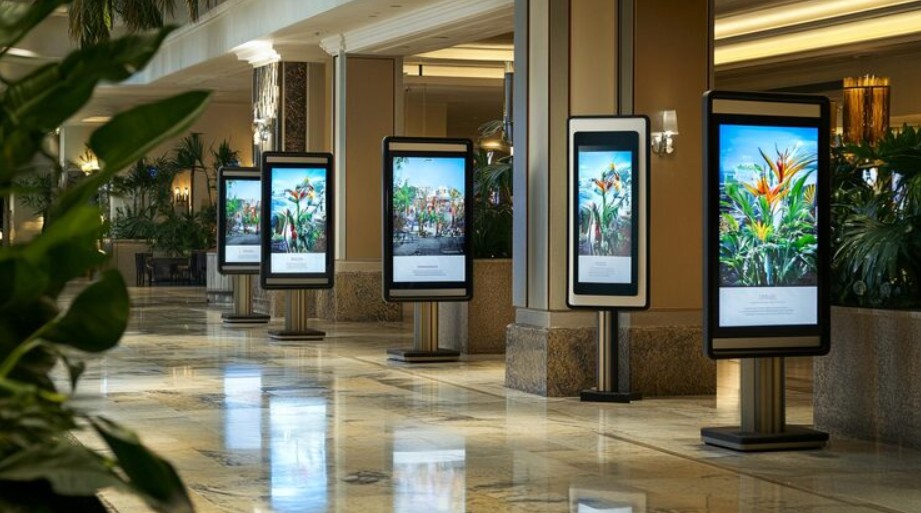
For Singapore businesses choosing between digital and traditional signage, digital wins on flexibility, engagement, and long-term cost-efficiency. Traditional signage has lower upfront costs but cannot compete with real-time content updates, interactive features, or measurable ROI. For high-footfall retail and commercial environments, a digital signage system in Singapore consistently delivers stronger results over time.
Why This Comparison Matters for Singapore Retailers and Business Owners
Singapore’s retail landscape is fast-moving. Orchard Road flagship stores, Changi Airport terminals, hawker centre directories, and MRT station concourses all compete for the same limited attention span. The signage you choose directly affects how customers perceive your brand, navigate your space, and make purchase decisions.
Both digital and traditional formats have a role — but they serve very different business goals. Understanding the practical difference helps you invest wisely.
Digital Signage vs Traditional Signage: A Direct Comparison
| Factor | Digital Signage | Traditional Signage |
|---|---|---|
| Content Updates | Instant, remote, no print cost | Requires reprint and reinstallation |
| Upfront Cost | Higher initial investment | Lower upfront spend |
| Long-Term Cost | Lower (no recurring print costs) | Higher (ongoing reprinting, materials) |
| Engagement | Motion, video, interactivity | Static, limited visual impact |
| Flexibility | Schedule-based, multi-campaign | One message at a time |
| Analytics | Viewership data, campaign tracking | No measurable data |
| Environmental Impact | Reduces print waste over time | Generates paper and vinyl waste |
Flexibility: Digital Signage Wins by a Wide Margin
Traditional printed banners and posters lock you into a single message. Once printed, there is no adjustment without reprinting — and in Singapore’s competitive retail environment, promotional cycles move fast. A weekend sale, a public holiday campaign, or a sudden price change requires immediate action.
With digital advertising screens, you update content remotely within minutes. A single screen can cycle through multiple promotions in one day — breakfast menu in the morning, lunch specials at noon, and dinner promotions by evening. That level of agility is simply not possible with static print.
Content Updates: Real-Time Control vs Reprint Delays
One of the most underestimated advantages of electronic signage in Singapore is the ability to push content changes in real time. Whether you manage one outlet or a chain across multiple malls, a cloud-based content management system (CMS) lets you update all screens from a single dashboard.
Traditional signage, by contrast, requires a full production and installation cycle every time a message changes. For businesses with frequent promotions — such as F&B operators, pharmacies, or fashion retailers — those print costs and downtime add up fast.
How Often Do Singapore Businesses Update Their Messaging?
Retail campaigns in Singapore typically shift weekly or bi-weekly, especially around major sales events like Great Singapore Sale, Hari Raya, Chinese New Year, and year-end promotions. A static banner printed for one event is obsolete within days. Digital screens remove that bottleneck entirely.
Customer Engagement: Motion Captures Attention That Static Cannot
Research consistently shows that moving visuals attract significantly more attention than static ones. In high-traffic environments — shopping malls, hotel lobbies, clinic waiting rooms — a bright, animated display stands out in a way that a printed poster simply cannot match.
Digital signage supports video playback, animated graphics, live social media feeds, QR code integrations, and even touch interactivity. These features drive dwell time and give customers a reason to stop and engage with your content rather than walk past it.
Use Case: Retail Stores in Singapore Malls
A fashion retailer in VivoCity or Ion Orchard using digital window displays can showcase seasonal lookbooks, highlight promotions, and display real-time pricing — all without reprinting a single banner. Footfall to the store increases, and staff spend less time manually changing displays.
Long-Term Costs: Which Option Is Actually Cheaper?
Traditional signage appears cheaper upfront. A vinyl banner or foam-board poster costs far less than a commercial-grade display screen. But the total cost of ownership tells a different story.
Factor in recurring print production, design fees, installation labour, and disposal costs each time a campaign changes — and traditional signage becomes expensive at scale. Digital screens carry a higher initial cost but eliminate almost all ongoing material costs. Over a 3–5 year period, most Singapore businesses that switch to digital report a clear reduction in total signage spend.
What About Maintenance Costs?
Commercial digital displays are built for continuous operation and typically come with warranties and support contracts. Routine maintenance is minimal. The real savings come from removing the repetitive cycle of print, ship, install, and dispose that traditional signage demands.
When Traditional Signage Still Makes Sense
Traditional signage is not always the wrong choice. There are specific situations where it remains practical:
- Permanent wayfinding in low-traffic areas where the message never changes
- Outdoor locations without reliable power access
- Short-term events or pop-ups where a single-use banner is more cost-effective
- Budget-constrained startups at the very early stage of business setup
For these use cases, a well-designed static sign does the job. But for any business that needs to run multiple campaigns, update messaging regularly, or drive meaningful customer engagement, digital is the stronger long-term investment.
Digital Signage vs Traditional Signage: Which Should You Choose?
The answer depends on your business model. If your signage carries the same message for months at a time and is in a location with no power supply, traditional may still be appropriate. But if you operate in retail, F&B, hospitality, healthcare, or any sector where communication needs to stay current — digital signage delivers measurably better outcomes.
Singapore businesses that have made the switch report faster campaign execution, reduced print waste, and improved customer experience. The upfront investment pays for itself when you stop paying for reprints that become outdated within weeks.
If you are evaluating options for your business, Visual King offers end-to-end digital signage solutions in Singapore — from screen hardware and content management systems to installation and ongoing support — helping businesses communicate smarter across every customer touchpoint.
Frequently Asked Questions
Is digital signage more expensive than traditional signage in Singapore?
Digital signage has a higher upfront cost, but lower long-term expenses since there are no recurring print or installation costs. Over 3–5 years, most Singapore businesses find digital signage more cost-effective, especially those running frequent promotional campaigns.
Can digital signage be used outdoors in Singapore’s climate?
Yes. Commercial-grade outdoor digital displays are built to withstand humidity, heat, and rain — conditions common in Singapore. They come with weatherproof enclosures and high-brightness panels that remain visible even in direct sunlight.
How quickly can content be updated on a digital signage system?
Content can be updated in real time using a cloud-based CMS, often within minutes. Businesses managing multiple locations across Singapore can push changes to all screens simultaneously from a single dashboard, with no physical installation required.
What types of Singapore businesses benefit most from digital signage?
Retail stores, F&B outlets, hotels, clinics, corporate offices, and transportation hubs see the strongest results. Any business that regularly updates promotions, menus, or announcements benefits significantly from switching to electronic signage in Singapore.
Does digital signage improve customer engagement compared to printed signs?
Yes. Motion graphics, video content, and interactive features attract significantly more attention than static printed signs. In high-traffic environments such as Singapore shopping malls, digital displays drive higher dwell time and stronger recall of promotional messages.
What should I look for when choosing a digital signage provider in Singapore?
Look for a provider that offers commercial-grade hardware, a reliable CMS platform, local installation support, and after-sales service. Experience across multiple industries and the ability to scale across multiple locations are also key factors to evaluate.