
Shipping feels like the easy part of running a small business until a customer opens a box to find a cracked mug, a dented gift set, or a product bent out of shape. For many growing businesses, packaging supplies get treated as an afterthought, something to sort out once the “real” work of making and selling a product is done. In reality, poor shipping decisions quietly drain margins through returns, refunds, and lost repeat customers. Below are the shipping mistakes that trip up small businesses most often and what to do instead.
Mistake #1: Treating All Boxes as Interchangeable
One of the most common and costly assumptions is that a box is just a box. A business shipping lightweight stationery and a business shipping ceramics or electronics have entirely different packaging needs, yet many owners default to whatever box is cheapest or easiest to find.
Why Box Strength Should Match Product Weight
Thin, single wall boxes are fine for soft goods, but they fail quickly under heavier or denser items. Products shift during transit, corners get crushed, and what arrives at the customer’s door doesn’t match what left the warehouse. Matching box strength to product weight isn’t a luxury step; it’s the difference between a five-star review and a refund request.
Reinforced Options for Fragile or Heavy Inventory
For anything breakable, dense, or likely to be stacked during transit, double wall cardboard boxes offer significantly better crush resistance than standard cardboard boxes do. Businesses shipping glassware, candles, electronics, or stacked multi-item orders tend to see a sharp drop in damage claims simply by upgrading their box structure for these specific product lines, without needing to redesign their entire shipping process.


Mistake #2: Underestimating Packing Materials as a “Minor” Expense
Small businesses carefully budget for products and shipping. Yet, they frequently overlook packaging supplies, purchasing them reactively. This habit creates two problems: inconsistent protection across orders and higher per-unit costs.
The Real Cost of Cutting Corners on Tape and Filler
Weak tape and insufficient void fill are behind a surprising number of shipping damage claims. A box that’s structurally sound but poorly sealed or loosely packed still allows products to shift and collide in transit. Customers rarely distinguish between “the box was weak” and “the packing was sloppy”; both are just read as a business that isn’t concerned about quality control.
Standardising Supplies Across Order Types
Businesses that define a clear packing standard tend to see far more predictable shipping outcomes. Consistency reduces both damage rates and the time staff spend second-guessing how to pack each order.
Mistake #3: Ignoring Packaging Needs During Business Relocation or Expansion
Shipping mistakes aren’t limited to customer orders. Businesses that relocate offices, open a second location, or move inventory between warehouses often underestimate how much careful packing matters internally too, and they default to whatever boxes happen to be lying around.
Relocating Inventory and Equipment Safely
When moving stock, display units, or office equipment between locations, sturdy cardboard removal boxes protect inventory the same way they’d protect a household move, which is preventing crushed stock, damaged paperwork, or broken fixtures during transit. Businesses that treat internal moves with the same packaging discipline as customer shipments avoid a surprisingly common source of unplanned inventory loss.

Protecting Showroom or Display Stock
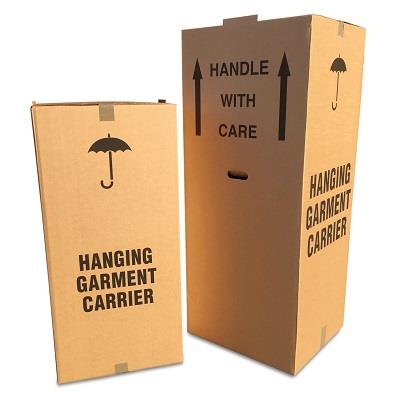
For businesses with physical retail elements, wardrobe storage boxes are a practical, underused solution when relocating or seasonally rotating garment stock and displaying apparel. Hanging boxes keep stock presentation-ready even during a move, avoiding the risk of creasing or crushed packaging that can occur when businesses fold inventory into standard boxes, which is crucial since product appearance directly affects sales.
Mistake #4: One-Size-Fits-All Packaging for Every Product Line
A business selling multiple product types often tries to standardise on a single box size and type for operational simplicity. This saves time upfront but creates damage and waste problems downstream.
Matching Packaging to Product Category, Not Convenience
Lightweight, soft goods rarely need the same structural protection as breakables or electronics. Heavy-duty boxes for every shipment waste money on unnecessary materials. Meanwhile, lightweight boxes risk damaging products that need extra protection. A tiered approach tends to be both more cost-effective and more protective than a single default option.
Right-Sizing to Reduce Dimensional Weight Costs
Oversized boxes allow products to shift in transit. Furthermore, many couriers charge by box size rather than weight, increasing shipping costs. Choosing the right box size minimizes damage and lowers expenses simultaneously. It is a quick and effective strategy for scaling brands.
Mistake #5: No Repeatable Packing Process as Order Volume Grows
Shipping mistakes that are forgivable at ten orders a week become expensive at two hundred. As order volume scales, inconsistent packing turns into a measurable source of damage claims and returns.
Documenting a Packing Standard
A simple internal guide removes guesswork for staff and keeps damage rates predictable as volume grows. This is a low-cost fix that most small businesses don’t implement until after a damage problem forces the conversation.
Revisiting Packaging as Product Lines Change
Packaging needs shifting as a business adds new product lines, enters new markets, or changes suppliers. A packing standard built for a business’s first six months rarely still fits two years later. Periodically reassessing box types, reinforcement needs, and packaging supplies against the current product catalogue prevents the slow drift back into one-size-fits-all packing.
Summing Up
To sum up, packaging for small businesses serves not only to transport a product from A to B but also acts as one of the final tangible touchpoints a customer has with the brand before forming an opinion about its quality. Choosing the appropriate box types for specific products, standardising packing materials, and handling internal moves and inventory storage with the same care as customer shipments all contribute to fewer damage claims, lower return rates, and a stronger first impression. Shipping mistakes are rarely dramatic on their own, and they’re usually small, repeated inefficiencies that quietly compound as a business grows.