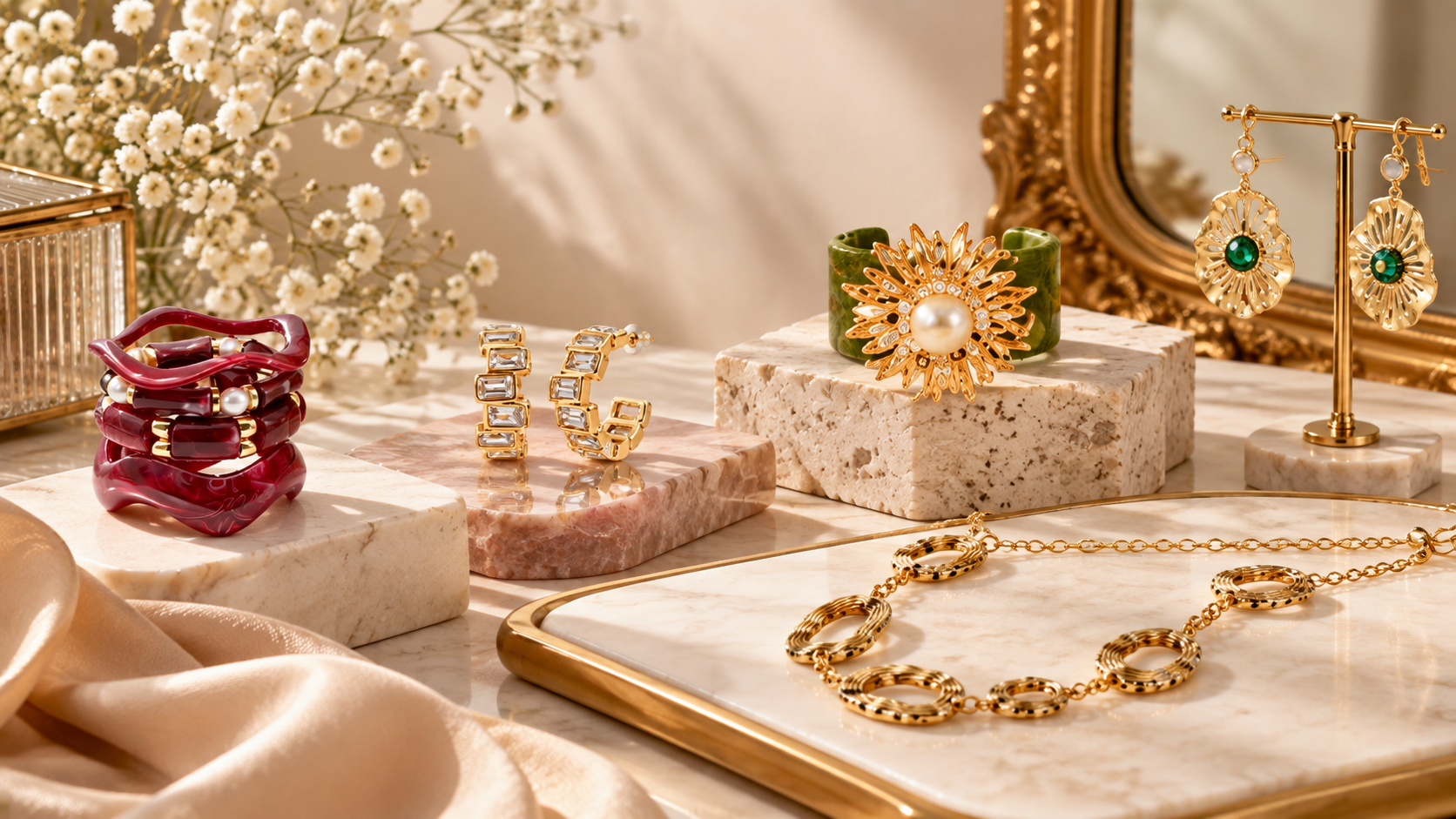
Do you love wearing jewellery every day but get frustrated when your favourite pieces lose their shine? It happens quite often. You buy a pair of earrings or a necklace, wear it a few times, and then notice that the colour has started to fade. This is where anti tarnish jewellery can be a useful choice for your everyday collection.
Whether you wear jewellery to the office, college, or casual outings, you probably want pieces that look good without needing too much care. The good news is that you have plenty of options, from simple gold-tone chains to stainless steel hoops and delicate bracelets.
Still, not every product labelled anti-tarnish offers the same level of durability. The material, coating, construction, and your daily habits all affect how long jewellery keeps its finish.
Let’s look at the best types to consider, what to check before buying, and how to care for your jewellery so you can wear it with confidence.

What Is Anti-Tarnish Jewellery?
Anti-tarnish jewellery is designed to resist tarnishing, discolouration, or loss of shine for longer than comparable pieces without protective features.
Tarnishing happens when certain metals react with substances in their surroundings. Moisture, sweat, air pollutants, and chemicals in perfumes or skincare products can affect the appearance of jewellery.
To reduce these effects, manufacturers may use protective coatings, particular metal alloys, or materials that naturally resist corrosion.
Common options include:
- Stainless steel jewellery with a gold-tone or silver-tone finish
- Gold-plated jewellery with a protective coating
- Silver jewellery with an anti-tarnish treatment
- Jewellery made with materials selected for their resistance to corrosion
The important thing is to check what the product actually contains. A seller’s anti-tarnish claim does not mean the jewellery will remain unchanged forever or never require care.
1. Choose Stainless Steel Jewellery for Daily Use
Stainless steel is one of the materials worth considering when you want jewellery for regular wear.
It contains chromium, which helps form a protective layer on the metal’s surface. This layer improves corrosion resistance and makes stainless steel a practical option for everyday accessories.
You can find stainless steel in many designs, including:
- Small hoops and stud earrings
- Minimalist necklaces and pendants
- Chain bracelets
- Simple rings
- Gold-tone everyday jewellery
Stainless steel can handle regular use better than some less durable base metals. Still, its performance depends on the specific grade, construction, and finish.
For example, a simple stainless steel chain may work well with office outfits, while small hoops can be worn with casual clothes or traditional kurtas.
If you have sensitive skin, check the product’s metal composition. Some stainless steel grades contain nickel, which may cause reactions in people with nickel sensitivity.
2. Look for Gold-Plated Jewellery With a Protective Finish
Gold-tone jewellery is popular because it pairs easily with Indian and Western outfits. You can wear it with a cotton kurta, a formal shirt, or a simple black dress.
But gold-plated jewellery can lose its colour as the outer layer wears away.
If you prefer gold-tone designs, check the following details before purchasing:
- The base metal used in the jewellery
- Whether the item has a protective topcoat
- Available information about plating thickness
- Care instructions from the manufacturer
- Customer reviews mentioning fading or discolouration
A protective coating may help reduce exposure to moisture and other substances. Still, its effectiveness depends on the coating and how you use the jewellery.
Do not assume that every gold-plated piece is waterproof or suitable for continuous wear. Look for specific product information instead.
3. Pick Jewellery That Suits Your Everyday Routine
The best jewellery for daily use should feel comfortable and fit naturally into your routine.
You do not need a large collection to look put together. A few pieces that work with different outfits can be enough.
For office wear
Consider small hoops, simple studs, delicate chains, and slim bracelets. These pieces work well with shirts, trousers, dresses, and kurtas.
For college and casual outings
Try lightweight rings, small pendants, simple hoops, and everyday bracelets. Choose designs that are comfortable enough to wear for several hours.
For daily ethnic wear
Gold-tone jhumkas, small traditional earrings, and delicate necklaces can complement kurtas and other ethnic outfits.
For regular layering
Look for lightweight chains in different lengths. Before buying, check whether the clasps are secure and whether the chains are likely to tangle.
When choosing anti tarnish jewellery, consider how often you will wear each piece. A simple necklace that matches five outfits may be more useful than a statement piece you wear once or twice.
4. Check the Material Before You Buy
Product photographs rarely tell you the whole story. Two pieces may look similar online but use different materials.
That is why reading the product description matters.
| Jewellery type | Main benefit | What to check |
| Stainless steel | Good resistance to corrosion | Steel grade and surface finish |
| Gold-plated jewellery | Gold-like appearance at a lower cost than solid gold | Base metal, plating details, and protective coating |
| Silver jewellery | Classic appearance and suitability for many styles | Silver purity and anti-tarnish treatment |
| Gold-tone alloy | Wide choice of affordable designs | Coating quality and expected wear |
| Silver-tone jewellery | Easy to pair with casual and formal outfits | Base metal and finish durability |
Keep in mind that silver can tarnish even when it has a high silver content. A suitable protective treatment may slow this process, but it does not necessarily prevent it completely.
Similarly, stainless steel is not the same as gold-plated stainless steel. The steel base may resist corrosion, while the decorative coating can still scratch or wear away.
Clear material information helps you understand what you are paying for.
5. Read Reviews Before Ordering Online
Online shopping gives you access to many jewellery designs. Yet product images can sometimes make it difficult to judge weight, finishing, and actual colour.
Customer reviews can help fill those gaps.
Look for reviews that mention:
- How the jewellery looks after several weeks of use
- Whether the colour has faded
- Whether the clasp stays secure
- Whether the product feels heavy or lightweight
- Whether the actual item matches the photographs
- How the seller handles returns and exchanges
Customer-uploaded photographs can also help you understand the size and finish.
For instance, if several buyers mention that a gold-tone chain started fading after a few wears, you may want to compare it with another product.

Do not rely on star ratings alone. A detailed review that explains how someone used a product can be more helpful than a short comment saying it looks nice.
Also, check whether the seller provides clear material details, care instructions, and customer support information.
6. Understand What Waterproof and Sweat-Resistant Claims Mean
You may see jewellery described as waterproof, sweat-resistant, or suitable for daily wear.
These terms can be useful, but they are not interchangeable.
- Water-resistant jewellery may tolerate limited exposure to water under specified conditions.
- Sweat-resistant jewellery is designed to better withstand exposure to perspiration.
- Waterproof jewellery is a stronger claim and should be supported by clear product specifications.
The result also depends on the base material, coating, clasps, and construction.
For example, stainless steel may resist corrosion well, but a gold-tone surface treatment can still wear with friction or repeated exposure to chemicals.
If you exercise regularly or live in a hot and humid climate, check the manufacturer’s care instructions. Even when a product is marketed for everyday use, removing it before swimming or showering can help protect certain finishes.
Choose products based on their actual specifications rather than assuming that every anti-tarnish item can handle water and sweat without any change.
7. Learn How to Care for Your Jewellery
Even jewellery designed to resist tarnishing needs some care. Fortunately, you do not need an elaborate cleaning routine.
A few simple habits can help maintain its appearance.
Wipe it after wearing
Use a soft, dry cloth to remove sweat, oils, and everyday residue.
Apply perfume before putting on jewellery
Perfume, body lotion, hairspray, and some skincare products may affect certain finishes. Let these products dry before wearing your accessories.
Store pieces separately
Keep necklaces, rings, and earrings in separate compartments or pouches. This helps reduce scratches and tangling.
Keep jewellery dry when possible
Unless the manufacturer specifically recommends water exposure, remove jewellery before showering, swimming, or exercising.
Avoid harsh cleaning products
Strong chemicals and abrasive materials can damage protective coatings. Follow the product’s cleaning instructions instead.
These habits take very little time. They can also help you spot loose clasps or visible wear before a piece becomes difficult to use.
8. Choose Comfortable Designs for Long Hours
Durability is only one part of buying jewellery. Comfort matters just as much, especially when you plan to wear a piece throughout the day.
Before ordering, check:
- The weight of earrings
- Necklace length and pendant size
- Ring measurements
- Bracelet circumference
- Clasp design and fastening method
- Whether any edges may catch on clothing
Lightweight hoops may be a better choice for long workdays than heavy statement earrings. Similarly, a simple chain with a secure clasp may be more practical than a complicated layered necklace.
If you have sensitive skin, pay attention to metal composition and avoid products with undisclosed materials. A protective coating does not guarantee that every person will tolerate the jewellery.
Comfortable jewellery is easier to wear regularly, so think about how it feels as well as how it looks.
9. Compare Price, Quality, and Long-Term Value
A low price can be tempting, especially when you find several similar designs online. But the cheapest product may not be the most suitable choice for frequent use.
Compare the total value of each piece.
Consider its material, finishing, construction, comfort, customer feedback, and care requirements. Also, check shipping charges and the return policy before placing your order.
You can start with a small everyday collection:
- One pair of simple hoops
- One pair of stud earrings
- One delicate chain
- One comfortable bracelet
- One or two rings that fit properly
Choose colours and designs that match the clothes you already own. This makes it easier to wear each piece more often.
You do not need to spend more simply because a seller uses the words premium or anti-tarnish. Look for product details that support the price.
Frequently Asked Questions
What is the best anti-tarnish jewellery for everyday wear?
Stainless steel jewellery is a useful option because it generally offers good corrosion resistance. Gold-plated stainless steel, protective-coated jewellery, and treated silver can also be suitable. The best choice depends on the finish, construction, skin sensitivity, and care requirements.
Does anti-tarnish jewellery lose its colour?
It can. Protective coatings may slow discolouration, but they can wear away over time. The result depends on the material, coating quality, friction, moisture, and exposure to chemicals.
Can I wear anti-tarnish jewellery every day?
Many pieces are designed for frequent wear. Check the manufacturer’s instructions and remove jewellery before activities that may damage its finish. Regular cleaning and proper storage can help maintain its appearance.
Is stainless steel better than gold-plated jewellery?
They serve different purposes. Stainless steel offers good corrosion resistance, while gold-plated jewellery provides a gold-like appearance. Gold-plated stainless steel combines a steel base with a decorative coating, but the coating may still wear with use.
How should I store anti-tarnish jewellery?
Wipe each piece with a soft, dry cloth and store it in a clean, dry place. Separate compartments or individual pouches can help prevent scratches and tangling. Follow any material-specific care instructions provided by the seller.
Is anti-tarnish jewellery suitable for sensitive skin?
It depends on the materials used. Check for information about nickel and other metals that may cause reactions. If you have known metal sensitivities, choose products with clear material specifications rather than relying on the anti-tarnish label alone.
Build an Everyday Jewellery Collection That Lasts
You can enjoy wearing jewellery every day without constantly replacing pieces that lose their finish. Start by choosing suitable materials, checking product details, and buying designs that fit your routine.
When shopping for anti tarnish jewellery, focus on the base metal, protective finish, comfort, and seller’s care instructions. Read customer reviews and avoid assuming that claims such as waterproof or fade-resistant mean a product will remain unchanged forever.
A few well-chosen pieces can give you plenty of options for everyday outfits. With the right selection and simple care, you can keep your jewellery looking good for longer.