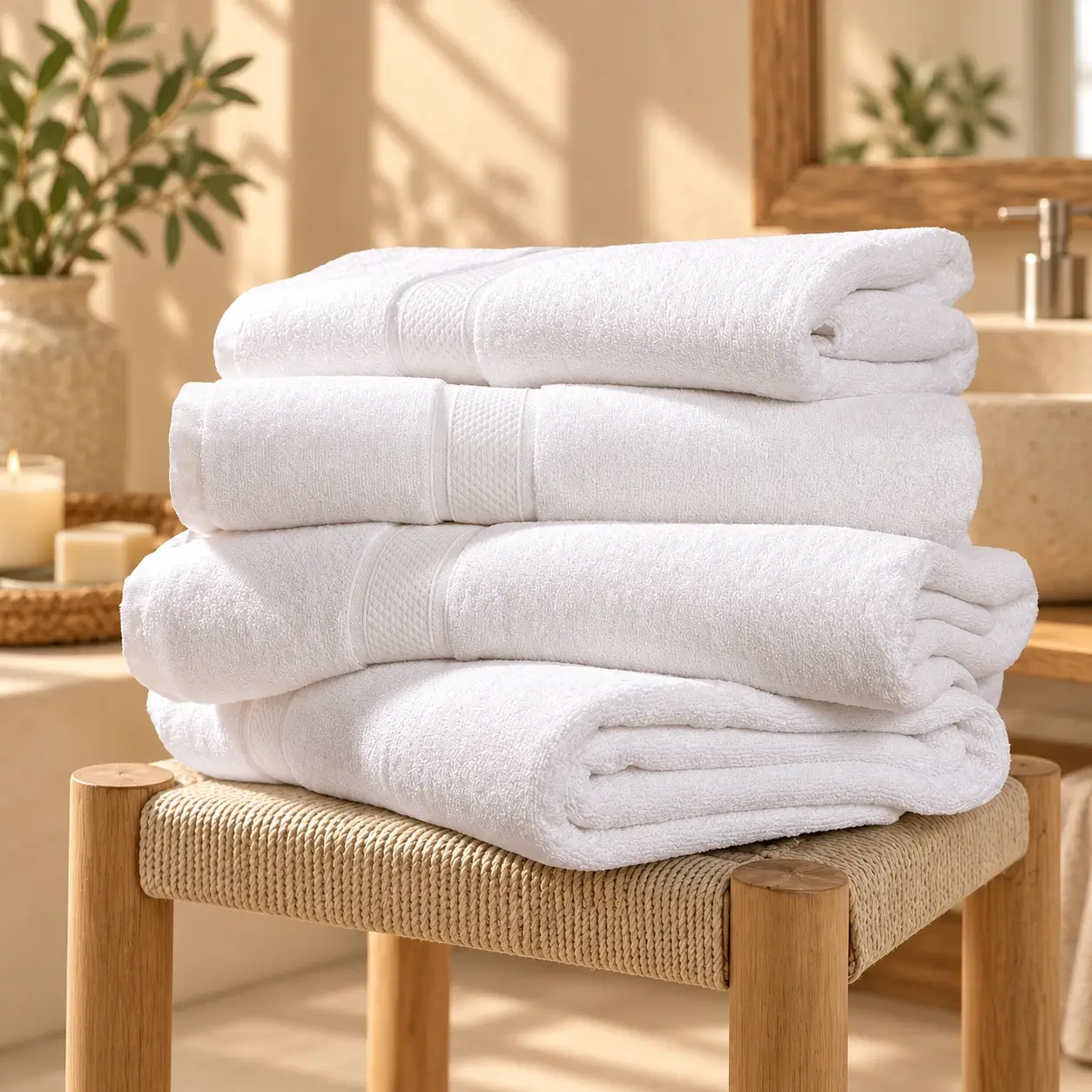
Towels are among the most frequently used and heavily laundered textiles in both residential homes and commercial hospitality environments. While a plush, new towel feels soft and instantly absorbs moisture, many users notice a significant decline in absorbency and pile softness after repeated washing cycles.
Understanding the relationship between cotton fiber structures, detergent chemistry, and thermal laundering is essential to maintaining high towel performance and extending garment longevity.
1. The Structure of Cotton Fiber and Capillary Action
To understand why towels lose absorbency, one must first look at the microscopic structure of cotton. Cotton is composed of natural cellulose polymers organized into microfibrils.
Towels absorb water primarily through capillary action a fluid mechanics phenomenon where liquid is drawn into narrow spaces between the cotton yarns without relying on external forces.
- Loop Geometry: In terry towelling, uncut surface loops increase total surface area, allowing capillary force to pull moisture rapidly away from the skin.
- Yarn Twist: Ring-spun cotton yarns maintain a balanced twist density. A loose twist absorbs water quickly but wears out faster, while a tight twist increases fabric strength at the expense of initial absorbency.
2. Primary Causes of Reduced Towel Absorbency
When towels lose their ability to dry effectively, the issue is rarely a breakdown of the cellulose fibers themselves. Instead, it is usually caused by chemical build-up and incorrect washing routines.
A. Fabric Softener Coating (The Hydrophobic Barrier)
Commercial liquid fabric softeners contain cationic surfactants and silicone-based compounds. These agents deposit a thin, lubricating layer over the cotton loops to make them feel soft. However, these compounds are hydrophobic (water-repelling). Over multiple wash cycles, silicone build-up seals the pores of the cellulose fibers, preventing capillary action.
B. Detergent Residue Build-Up
Using excessive detergent or washing in hard water creates insoluble mineral deposits (lime soap) on the fabric. When detergent is not fully rinsed out, it leaves behind a sticky film that traps minerals, causing the cotton loops to stiffen, mat together, and lose water retention capacity.
C. Thermal Damage and Mechanical Friction
Washing towels at high temperatures without proper moisture control in commercial dryers can cause thermal degradation of natural cotton fibers. Over-drying at high heat breaks the fine micro-fibers, leading to linting, fabric thinning, and hard texture.

3. Combed vs. Ring-Spun Cotton: Why Fiber Selection Matters
The longevity and absorbency retention of a towel depend heavily on the initial manufacturing and spinning process.
| Cotton Construction | Fiber Characteristics | Absorbency & Wash Performance |
|---|---|---|
| Carded Cotton | Short, uneven fibers with loose ends. | High initial softness, but sheds heavily (lint) and degrades rapidly in commercial laundries. |
| Ring-Spun Cotton | Long, twisted fibers forming smooth, continuous yarns. | Superior tensile strength, minimal linting, and high resilience to repeated thermal washing. |
| Combed Ring-Spun Cotton | Fine fibers with short hairs fully combed out. | Maximum pile volume, high capillary speed, and long-term absorbency retention. |
For high-turnover environments such as hotels, healthcare facilities, and spas, high-density ring-spun cotton structures such as those found in commercial-grade 100% cotton wholesale towels—provide the mechanical strength necessary to withstand thermal laundering while preserving loop structure.
4. Evidence-Based Laundry Protocol to Restore Towel Absorbency
When towels develop a stiff feel or a water-repellent coating, their performance can be restored using simple chemical balancing techniques without damaging the cotton cellulose.
Standard Wash Process Lead-in: Standard Wash leads to Fabric Softener Build-up, which ultimately results in a Stiff or Water-Repellent Towel.
Restoration Process Steps:
- First Restoration Step: Wash the towel using Restoration Wash 1 with White Vinegar (1 cup of distilled white vinegar instead of laundry detergent to break down silicone coating and mineral deposits).
- Second Restoration Step: Follow up with Restoration Wash 2 using Baking Soda (1/2 cup of sodium bicarbonate to neutralize odors and loosen matted cotton loops).
Moisture-Controlled Drying
Tumble dry on medium heat. Remove towels immediately when 95–98% dry to prevent thermal fiber brittleness, and shake them thoroughly to open up the terry loops.
Summary Checklist for Long-Lasting Towel Care
To keep cotton towels soft, clean, and highly absorbent over hundreds of wash cycles:
- Avoid Liquid Softeners: Use wool dryer balls instead to fluff loops mechanically.
- Optimize Detergent Dosage: Use the recommended amount of low-foaming detergent to prevent residue build-up.
- Control Dryer Heat: Avoid excessive heat cycles that cause thermal stress on natural fibers.
- Separate Wash Loads: Wash towels separately from synthetic fabrics to avoid lint transfer and static cling.